Building a Secure Digital Insurance Ecosystem in Uzbekistan: InsurTech Adoption and Roadmap for Digital Transformation
The research framework was conducted in 4 analytical stages.
169 documents
The research framework was conducted in 4 analytical stages.
According to KPMG, 71% of surveyed financial firms have deployed AI tools, with global banking sector AI spending estimated at USD 31.3 billion in 2024.
The average insurance penetration in OECD countries increased from 6.0 to 6.2 % of GDP in 2024.
Small and Medium Sized Enterprises across the world utilize FinTech services at approximately 25 percent.
The Insurance Authority launched the TAMEEN digital portal in February 2025 with 36 licensing, approval, supervisory and regulatory services.
The study analyzes a dataset of 47 publicly reported FinTech cyber incidents occurring between 2008 and 2025.
Financial institutions implement Robotic Process Automation (RPA) to automate manual tasks like data entry and loan processing, freeing staff for strategic tasks.
M&A deal volumes in fraud and digital identity grew at ~18% CAGR between 2015–25, with 2025 marked as the most active year on record.
UPI transaction volume grew continuously over five years from 2,233 crore transactions in FY2020-21 to 18,585 crore transactions in FY2024-25.
The research conducted a systematic review following the PRISMA framework starting with an initial pool of 322 articles on blockchain and AI convergence.
The document dataset involved 177 authors with an average citation rate of 18.79 per document and an average age of 3.56 years.
Digital finance has transformed financial services while expanding the cyber-attack surface across banking, FinTech platforms, and decentralized systems [p.1].
EIOPA established the Union-wide Strategic Supervisory Priorities for the 2027-2029 cycle pursuant to Article 29a of Regulation (EU) No 1094/2010.
Neobanking as a concept first emerged in the UK in 2013 and in Germany in 2015.
The paper presents a structural-functional model featuring 3 levels of information and communication support for corporate governance in banks.
In 1967, Barclays introduced an early automated teller machine (ATM) in the United Kingdom, establishing 24/7 self-service consumer banking access.
The study evaluates AI-only, human-only, and hybrid human-AI advisory models through a randomized experiment involving 90 insurance consumers.
The national FinTech ecosystem reached 1,200 companies with daily transactions of USD 890 million or around Rp 14 trillion, growing 62% year-on-year per May 2025.
A technological forecasting sample of 41 patent documents related to smart contracts, blockchain, and contractual automation was retrieved and analyzed.
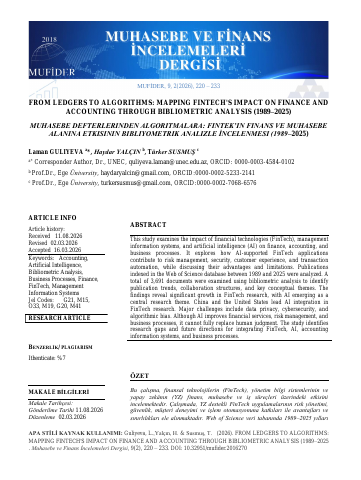
A total of 3,691 documents indexed in the Web of Science database between 1989 and 2025 were analyzed to evaluate academic output in FinTech.
The SafePack business plan in Chapinero requires an estimated initial investment of $550 million pesos, funded 60% through own resources ($330 million) and 40% through bank credit ($220 million) over 4 years at a 20% annual interest rate.
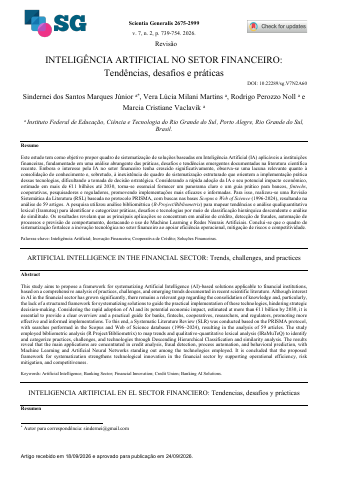
A Systematic Literature Review (SLR) based on the PRISMA protocol analyzed 59 articles published between 1996 and 2024 to map AI applications in the financial sector [p.1].
A quantitative questionnaire survey conducted in autumn 2025 gathered responses from 1,109 participants to explore financial digitalization risk perceptions.
Celent surveyed 2,515 global consumer banking customers across five global regions to assess satisfaction, switching attitudes, and technology expectations.
The share of internet users among the population of Uzbekistan reached 94,2 % in January–August 2025, compared to 93,3 % in 2024.
The research paper was submitted on 27 April 2026 and accepted on 09 June 2026 for publication in volume 53 issue 3.
The Indian MSME sector contributes approximately 30% of India's Gross Domestic Product (GDP), 45% of manufacturing output, and over 40% of total exports.
The quantitative field study surveyed 400 stratified random-sampled bank employees in Zimbabwe using a Likert-scale questionnaire to measure the impact of digital process technologies.
The study conducted qualitative in-depth interviews with 26 FinTech users across Kano (14) and Abuja (12) to examine digital payment experiences.
The research paper published in Volume 15, Number 1 examines the core digital technologies revolutionising global investment management.