Data-Driven Cybersecurity Risk Assessment in FinTech: A Mixed-Methods Analysis of Breach Patterns, Vulnerability Factors and Financial Impact, 2008-2025 (International Journal of Science and Research (IJSR))
Summary
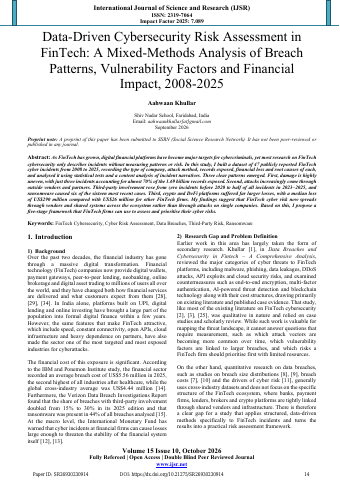
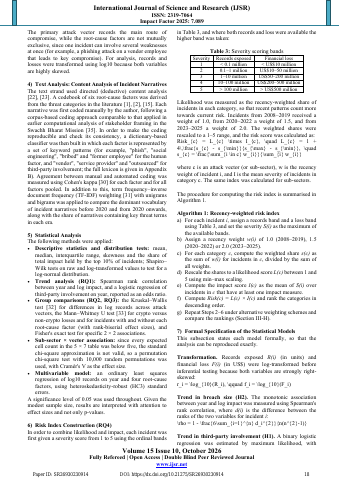
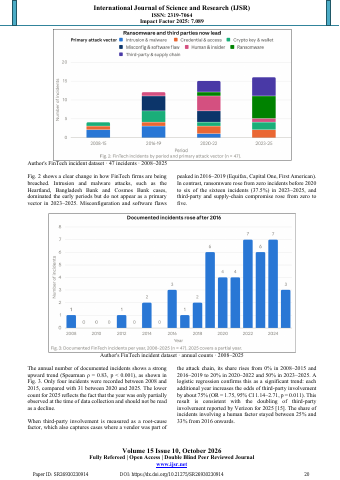
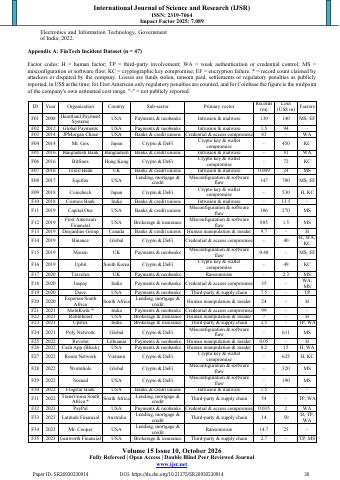
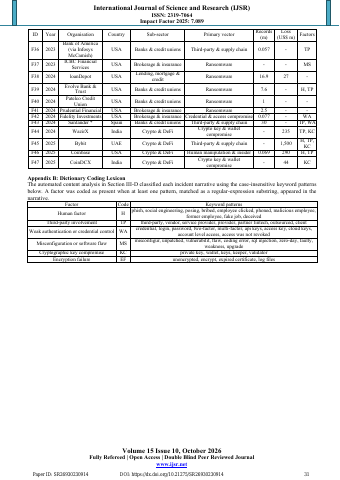
- The study analyzes a dataset of 47 publicly reported FinTech cyber incidents occurring between 2008 and 2025.p.1
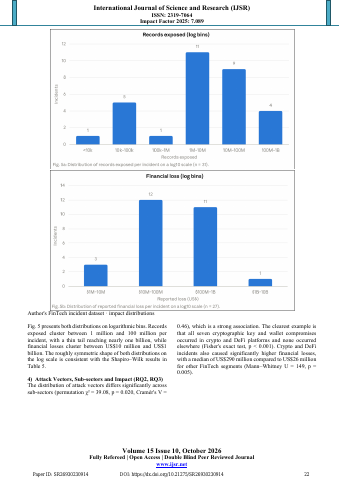
- Data damage is concentrated, with just three incidents accounting for almost 70% of the 1.69 billion records exposed.p.1
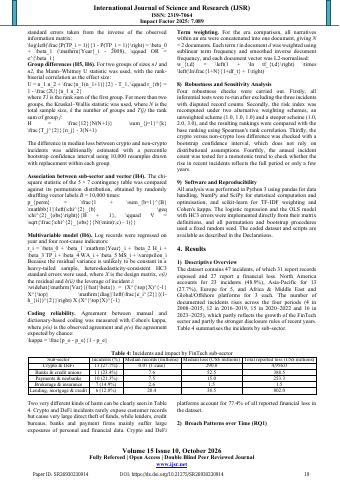
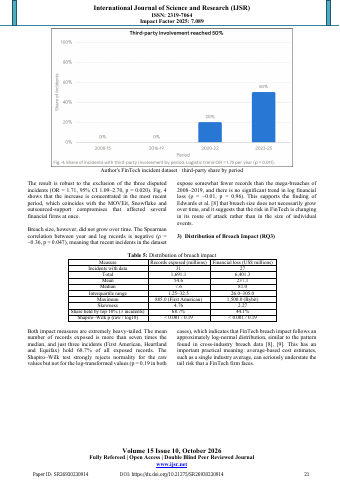
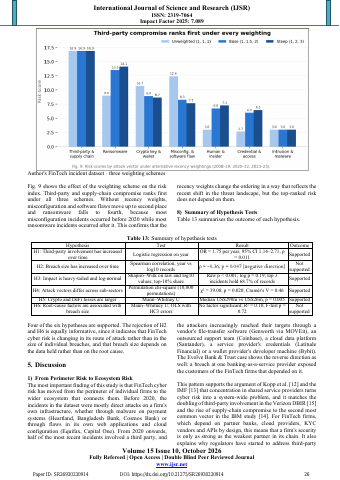
- Third-party involvement in breaches increased from zero incidents before 2020 to half of all incidents in 2023–2025.p.1
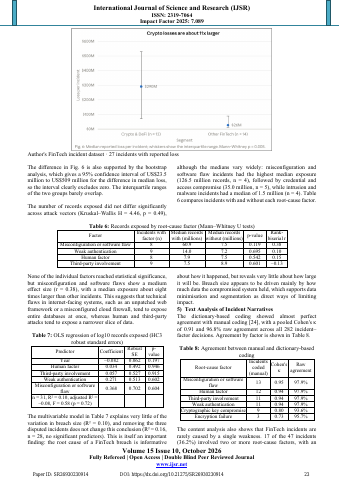
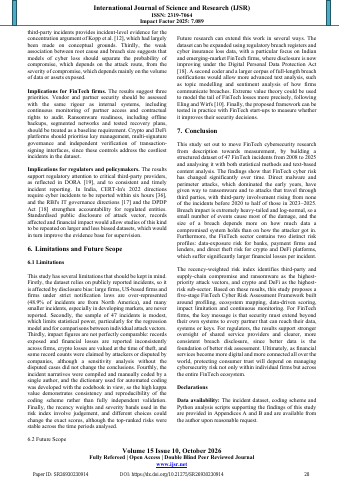
- Crypto and DeFi platforms experienced a median loss of US$290 million compared with US$26 million for non-crypto FinTech firms.p.1
- Ransomware accounted for six of the sixteen most recent documented cases in the 2023–2025 period.p.1
Key insights
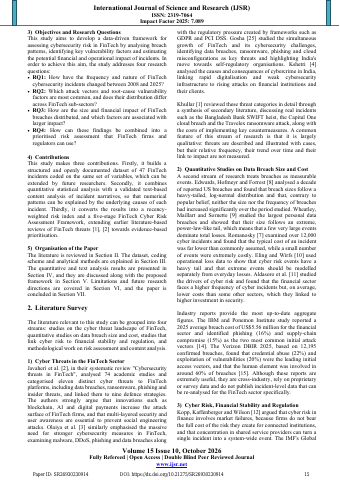
- FinTech cyber risk has shifted from direct perimeter attacks on single firms to ecosystem-wide supply chain and vendor compromises.p.1
- FinTech breach impact follows an approximately log-normal distribution where mean-based metrics understate actual tail risk.p.8
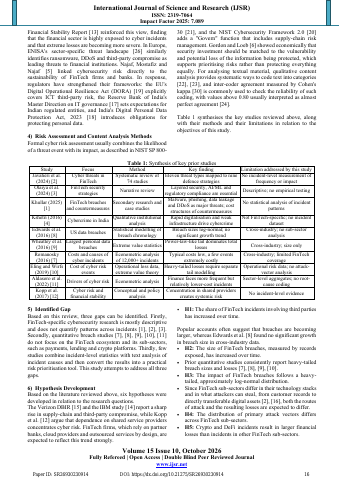
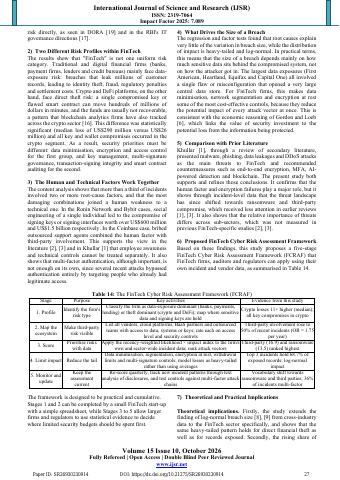
- Each additional year increases the odds of third-party involvement in a FinTech breach by approximately 75% (OR = 1.75, 95% CI 1.14–2.71, p = 0.011).p.7
- Root-cause vulnerability factors explain very little of the variation in breach record size (R² = 0.10), indicating that breach scale is primarily determined by data volume in the targeted system.p.10
- All seven cryptographic key and wallet compromises in the dataset occurred exclusively within crypto and DeFi platforms.p.9
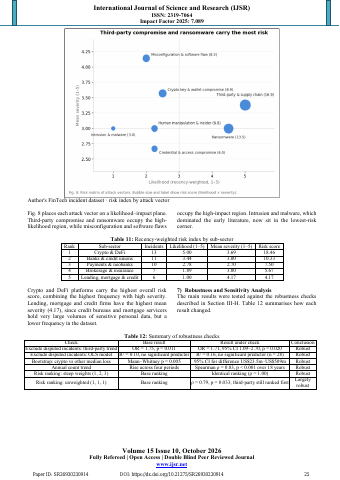
- Misconfiguration and software flaws had the highest average severity score of 4.14 among all attack vectors.p.11
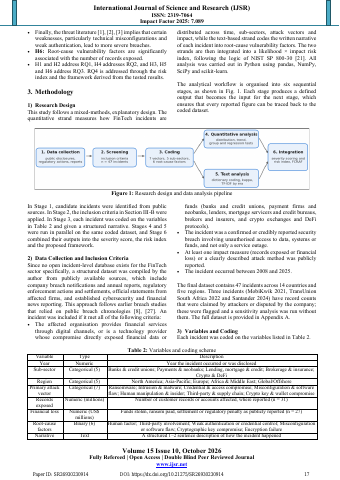
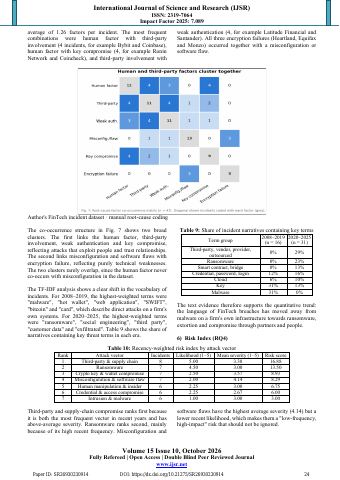
- More than a third of analyzed incidents (36.2%) involved two or more root-cause factors working in combination.p.10
Pages
 p.1
 p.2
 p.3
 p.4
 p.5
 p.6
 p.7
 p.8
 p.9
 p.10
 p.11
 p.12
 p.13
 p.14
 p.15
 p.16
 p.17
 p.18
Topics and entities
Summary and figures generated from the document and checked automatically: every number shown appears on the cited page. Publishers can request removal.