Fintech Adoption in Malaysia's Aquafarming Industry: Challenges, Strategic Pathways, and Future Opportunities for Sustainable Development
Aquafarming contributes approximately 30% to total fish production in Malaysia.
82 documents
Aquafarming contributes approximately 30% to total fish production in Malaysia.
The study analyzes survey data from 331 university students in Valencia, Spain, to examine funding source preferences at the pre-early stage of entrepreneurship.
In India, lenders' aggregate exposure across all NBFC-P2P lending platforms is capped at INR 5 million.
In 2025, the total volume of factoring services in Uzbekistan reached 9.5 trillion soums.
The study conducts a qualitative literature review of academic sources published between 2014 and 2025 on Brazilian startup financing.
World Bank data shows that 1.4 billion adults worldwide lack bank accounts, while approximately 1.1 billion of them own mobile phones.
The research paper published in Volume 15, Number 1 examines the core digital technologies revolutionising global investment management.
A systematic bibliometric review analyzed 166 Scopus indexed publications from 1991 to 2025 using Biblioshiny and VOSviewer.
The paper was published in Vol. 7 of the International Journal of Advance and Applied Research.
Applying three inclusion criteria narrowed the primary analytical corpus down to 5 officially published rulings issued between 2017 and 2021.
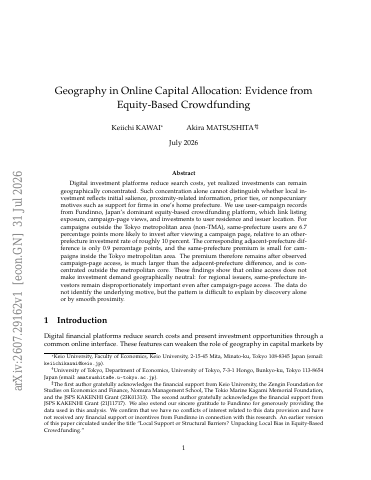
Regulatory constraints capped ordinary retail investor contributions at ¥500,000 per issuer, while firm fundraising through equity crowdfunding was limited to below ¥100 million per year.
The global crowdfunding market is estimated at over $2 billion, functioning as a financial infrastructure that stimulates innovation and employment.
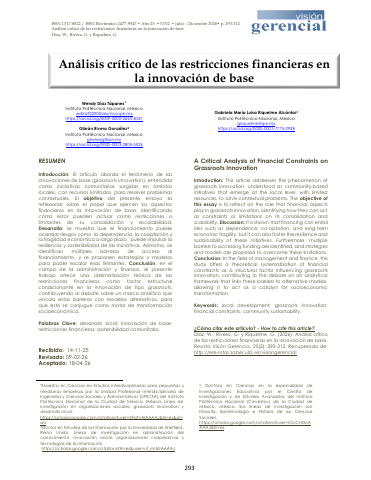
Grassroots innovations are community-led local initiatives operating with limited resources to solve context-specific problems across journal pages 293 to 312.
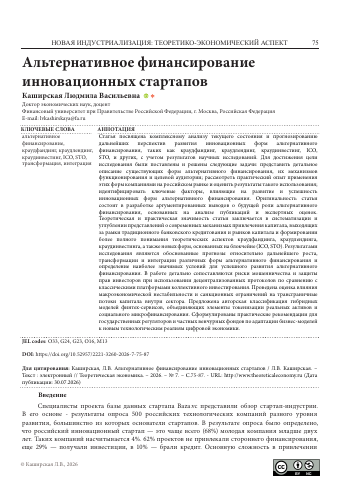
A survey of 500 Russian technology companies by Baza.vc showed that 62% had not raised external financing, 29% received investments, and 10% obtained loans.
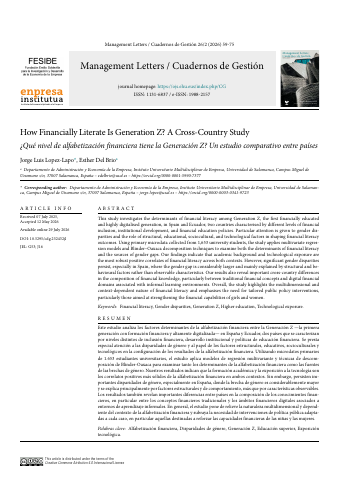
Primary microdata was collected from 1,653 university students to evaluate the determinants of Generation Z financial literacy across Spain and Ecuador.
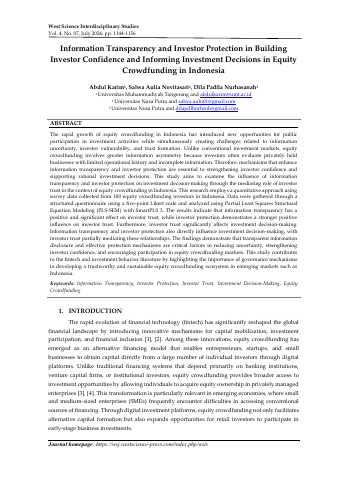
The study collected survey data from 100 equity crowdfunding investors in Indonesia using a five-point Likert scale.
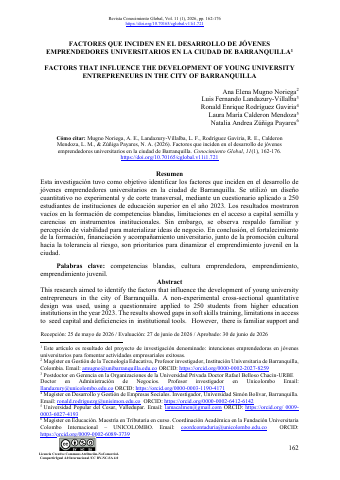
The early entrepreneurial activity rate (TEA) among Colombian youth aged 18 to 24 reaches 22%, surpassing the regional average of 15.7%.
The study analyzed a public historical Kickstarter dataset comprising more than 300,000 projects to develop ex ante predictive models for crowdfunding success.
Crowdinvesting was legally established in Russia in 2020 as a digital mechanism for early-stage companies to raise equity financing from external investors.
Italian SMEs face structural undercapitalization, maintaining average equity ratios below 30%, whereas Northern European economies exceed 40-45%.
The study analyzes financial data from 163 Polish companies that conducted a total of 188 equity crowdfunding (ECF) campaigns between 2014 and 2023.
Small and medium-sized enterprises provide up to 78% of non-agricultural employment in emerging economies, though more than 30% fail within their first three years.
In 2024, approximately 37 million adults in Colombia, accounting for 96 % of the adult population, held at least one financial product, while active usage reached 79 %.
Indonesia's digital economy recorded a Gross Merchandise Value of $82 billion in 2024, supported by more than 2,400 active startups across various sectors.
Startups face a structural financing gap that traditional intermediaries are poorly equipped to address, which crowdfunding helps alleviate across 4 primary models.
Alternative online lenders can offer fast business financing but charge high interest rates ranging from 18–40% per year.
The global crowdfunding market reached $20.46 billion in 2025, with overall platform success rates ranging between 22-24%.
The systematic review initially retrieved 121 scientific articles from academic databases including Google Scholar, Scielo, Springer, Elsevier, and MDPI.
Excluding China, the global alternative finance market grew continuously from $44 billion in 2015 to $113 billion in 2020.
In 2025, the global volume of crowdfunding exceeded $20 billion, driven by donation, reward, equity, and lending platforms.