From Cognitive Bias to Technological Intervention: A Systematic and Bibliometric Review of Technology's Role in Investor Behavioral Biases (International Journal of Business and Management (IJBM))
Summary
- A systematic bibliometric review analyzed 166 Scopus indexed publications from 1991 to 2025 using Biblioshiny and VOSviewer.p.1
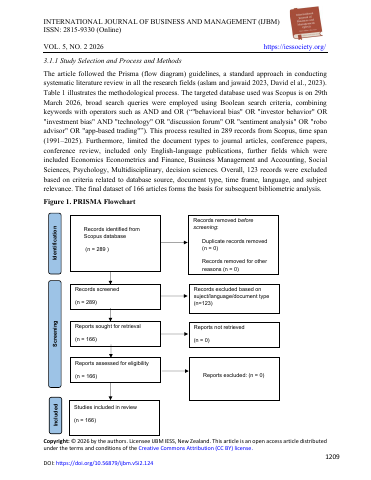
- The initial literature search identified 289 records from Scopus, after which 123 records were excluded based on eligibility criteria.p.5
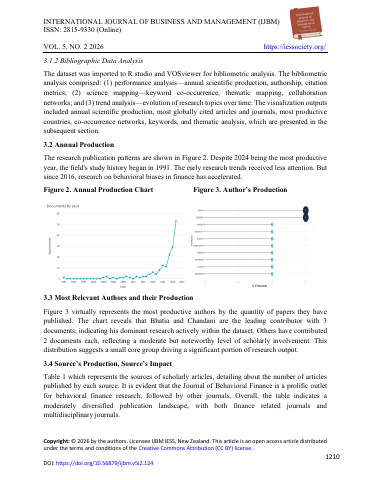
- Author analysis reveals that Bhatia and Chandani are leading contributors, each publishing 3 documents in the reviewed dataset.p.6
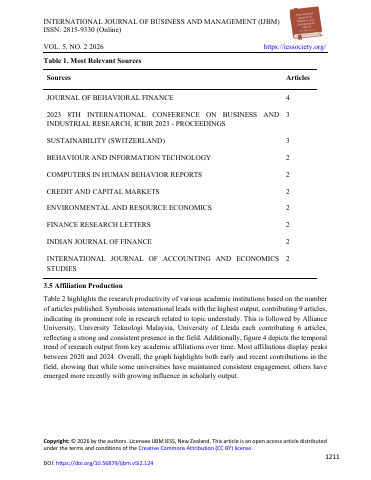
- The Journal of Behavioral Finance stands out as the most productive publication outlet with 4 articles.p.7
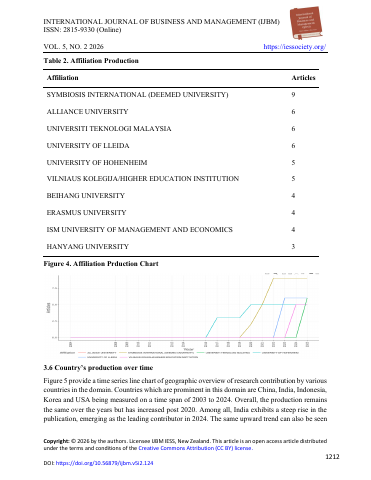
- Symbiosis International (Deemed University) ranks as the top academic institution by publication output, contributing 9 articles.p.7
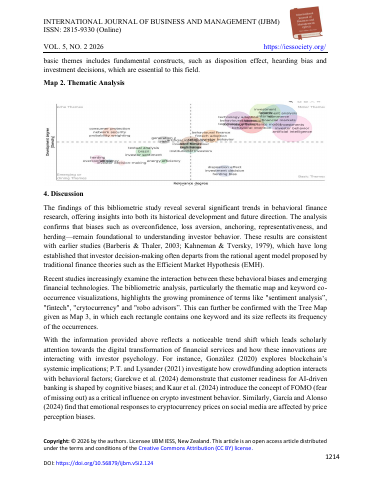
- In keyword co-occurrence analysis, investment is the most frequent keyword with 33 occurrences, followed by sentiment analysis with 21 occurrences.p.9
Key insights
- Research on technology-driven behavioral finance accelerated markedly after 2017, driven by AI sentiment modeling and cryptocurrency market analytics.p.1
- Prospect theory establishes that investors perceive gains and losses asymmetrical, exhibiting risk-seeking behavior toward losses and risk-aversion toward gains.p.2
- Financial technology does not significantly alter bias-driven decisions among millennial investors, whereas financial literacy acts as a moderating factor.p.3
- Overconfidence bias persisted in the Indian equity ETF market during both the pre-COVID and COVID periods, with past returns driving current trading volumes.p.3
- Tax aversion bias in financial markets diminishes when investors gain experience and receive direct feedback.p.4
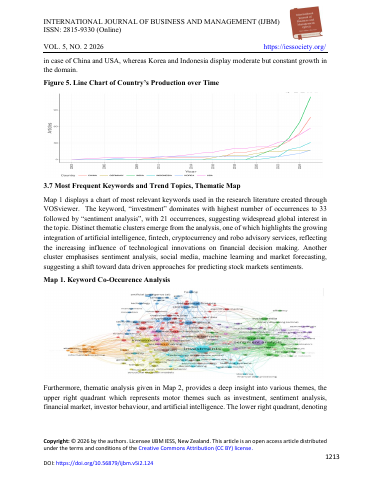
- Academic research contributions in behavioral finance from India experienced a steep increase, making it a leading country contributor by 2024.p.8
- Existing literature in this domain relies primarily on cross-sectional data from Scopus, leaving Web of Science, PubMed, and IEEE Xplore unexplored.p.11
Pages
 p.1
 p.2
 p.3
 p.4
 p.5
 p.6
 p.7
 p.8
 p.9
 p.10
 p.11
 p.12
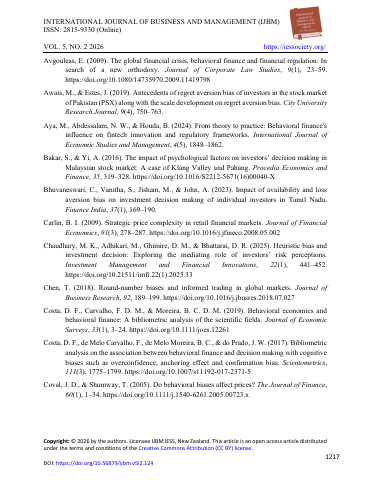 p.13
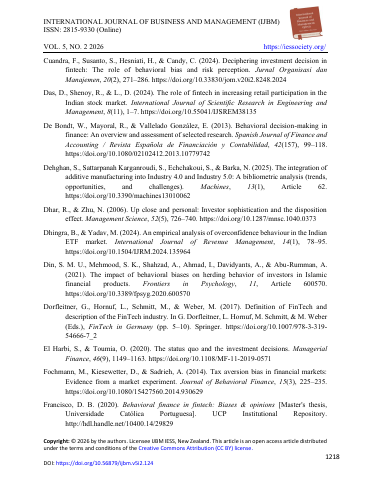 p.14
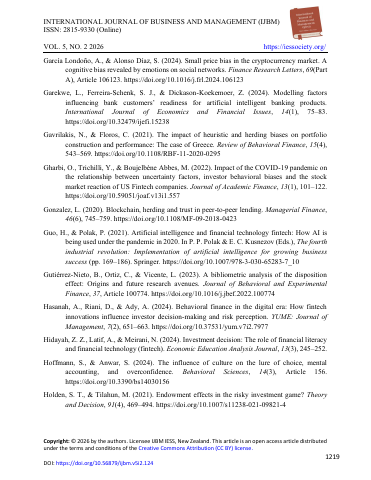 p.15
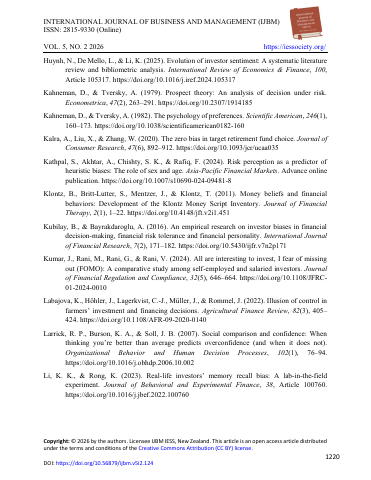 p.16
 p.17
 p.18
 p.19
 p.20
 p.21
Topics and entities
Summary and figures generated from the document and checked automatically: every number shown appears on the cited page. Publishers can request removal.