Contesting FinTech Fatwa Compliance Through Maqasid al-Shariah in Indonesia and Malaysia (JHIES Jurnal Hukum Islam dan Ekonomi Syariah)
Summary
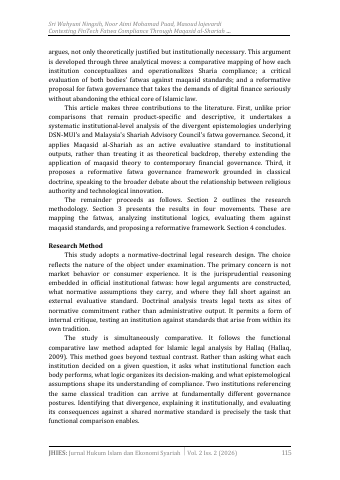
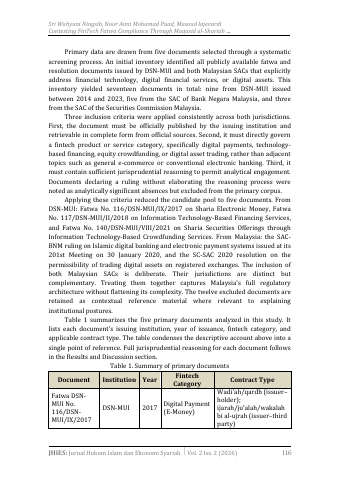
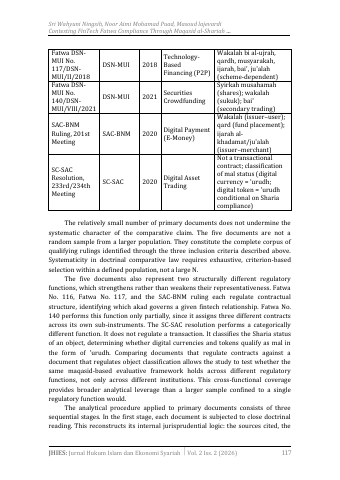
- Applying three inclusion criteria narrowed the primary analytical corpus down to 5 officially published rulings issued between 2017 and 2021.p.6
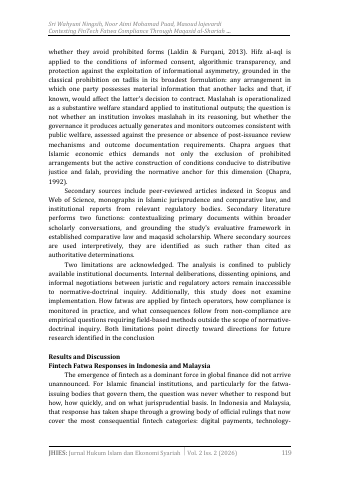
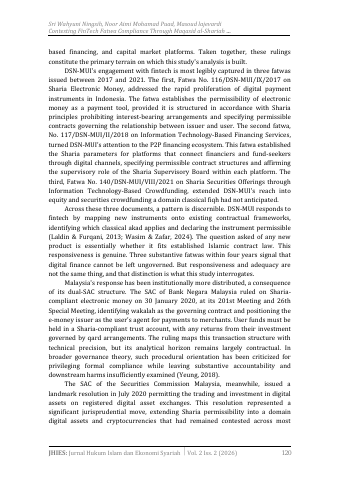
- The primary corpus includes 3 fatwas from Indonesia's DSN-MUI governing digital payments, P2P financing, and securities crowdfunding.p.6
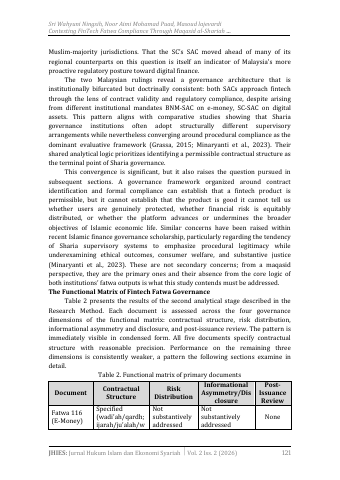
- The Malaysian corpus comprises 2 rulings from the Shariah Advisory Councils of Bank Negara Malaysia and the Securities Commission Malaysia on e-money and digital assets.p.6
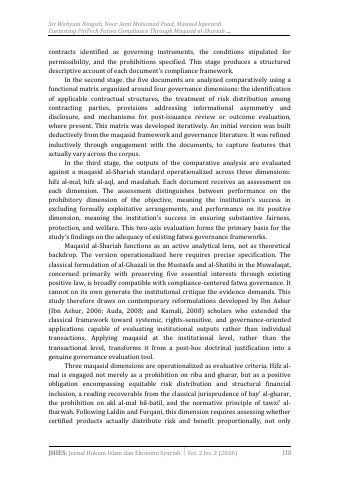
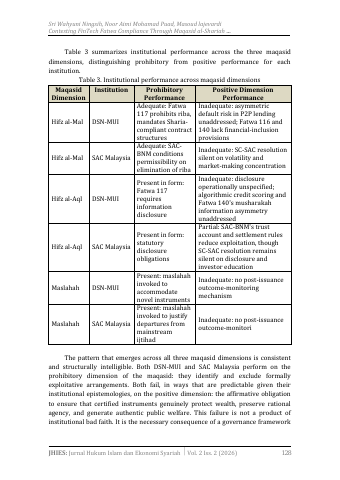
- Evaluation across three maqasid dimensions (hifz al-mal, hifz al-aql, and maslahah) reveals that both bodies perform adequately on prohibitory rules but fail on positive welfare outcomes.p.1
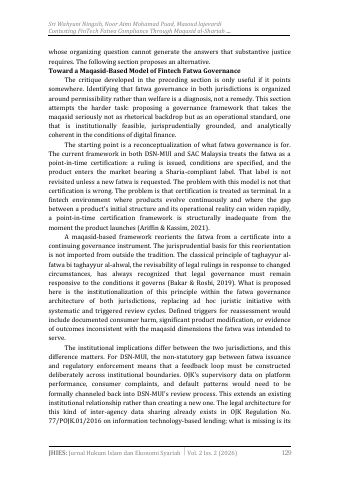
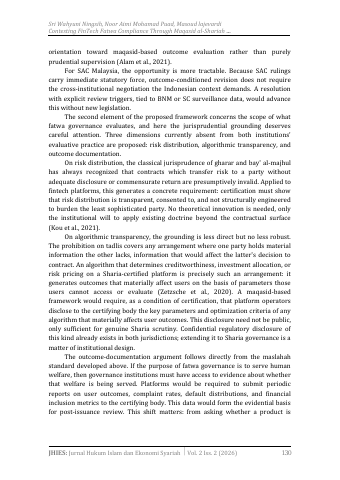
- The article proposes a reformative framework featuring post-issuance review cycles, algorithmic transparency requirements, and pooled industry levy funding for Sharia Supervisory Boards.p.1
Key insights
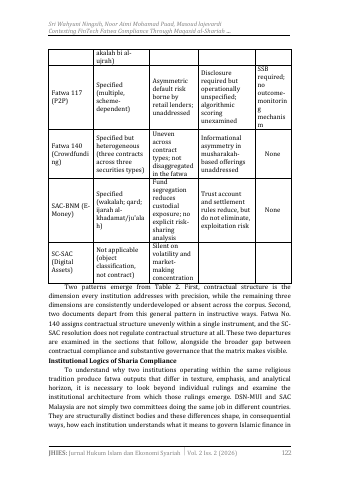
- Both DSN-MUI and SAC Malaysia focus predominantly on formal contractual validity, creating a systematic blind spot regarding risk distribution and consumer welfare.p.1
- DSN-MUI functions as a non-governmental standard-setter requiring state translation, whereas SAC Malaysia operates as a statutory body whose rulings carry direct legal force.p.13
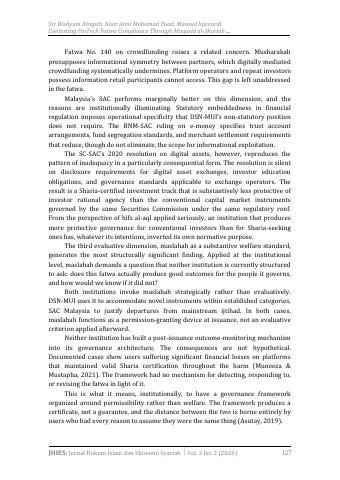
- Existing P2P financing rulings such as Fatwa No. 117 fail to address asymmetric default risks borne disproportionately by retail lenders.p.16
- The SC-SAC 2020 digital asset resolution establishes permissibility without imposing volatility protections or disclosure requirements for retail investors.p.16
- Current governance architectures treat Sharia compliance certification as terminal rather than implementing continuous post-issuance outcome monitoring.p.17
- Proprietary algorithmic credit scoring engines remain unexamined by certifying bodies, leaving users vulnerable to informational asymmetry under hifz al-aql.p.16
- Reforming Sharia Supervisory Board governance requires independent appointment by fatwa authorities and remuneration funded through pooled industry levies.p.21
Pages
 p.1
 p.2
 p.3
 p.4
 p.5
 p.6
 p.7
 p.8
 p.9
 p.10
 p.11
 p.12
 p.13
 p.14
 p.15
 p.16
 p.17
 p.18
 p.19
 p.20
 p.21
 p.22
 p.23
 p.24
 p.25
 p.26
Topics and entities
Summary and figures generated from the document and checked automatically: every number shown appears on the cited page. Publishers can request removal.