Machine Learning for Money Laundering Analysis (International Journal of Network Dynamics and Intelligence)
SaveSummary
- Six supervised models on the Elliptic Bitcoin dataset were compared; Random Forest achieved 98.87% accuracy on the holdout set.p.1
- The IMF estimates money laundering at 2% to 5% of global GDP, or $590 billion to $1.5 trillion annually.p.2
- Weber et al. used over 200,000 Bitcoin transactions, of which illicit ones were only 2%.p.5
- Each transaction has 166 features covering transaction flow, privacy and neighborhood information.p.10
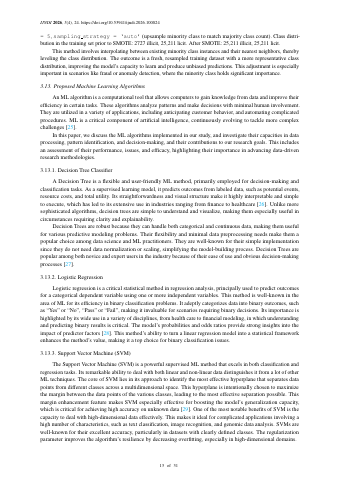
- Before SMOTE the training set held 2727 illicit and 25,211 licit transactions; after SMOTE both classes held 25,211.p.13
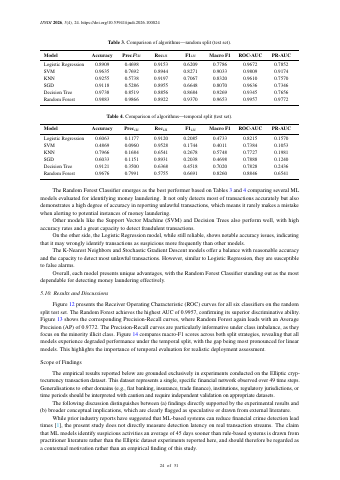
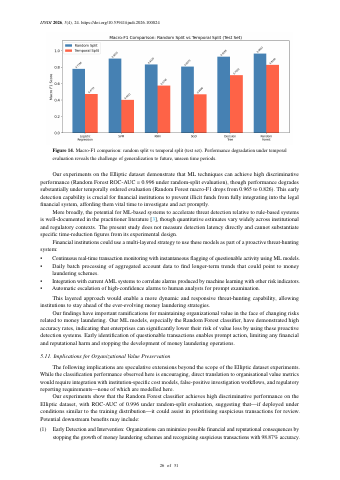
- Under temporally ordered evaluation, Random Forest macro-F1 drops from 0.965 to 0.826.p.26
Key insights
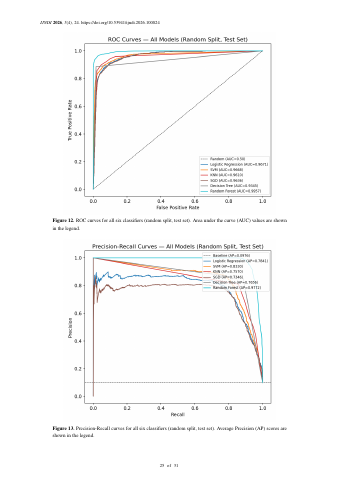
- Logistic regression detects 92% of illicit transactions but its precision is only 49% on the test set and 46% on the holdout set.p.18
- The SVM reaches accuracy of 96.18% on the test set and 96.72% on the holdout set.p.19
- K-Nearest Neighbors reaches accuracy of 92.56% on the test set and 92.79% on the holdout set.p.19
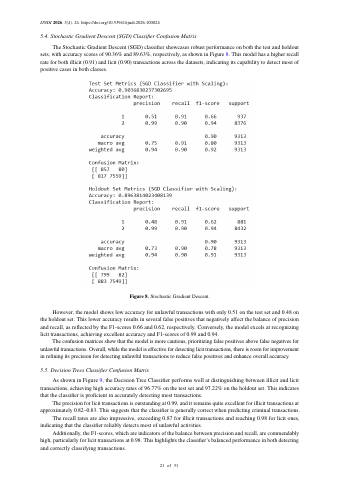
- The SGD classifier reaches accuracy of 90.36% on the test set and 89.63% on the holdout set.p.21
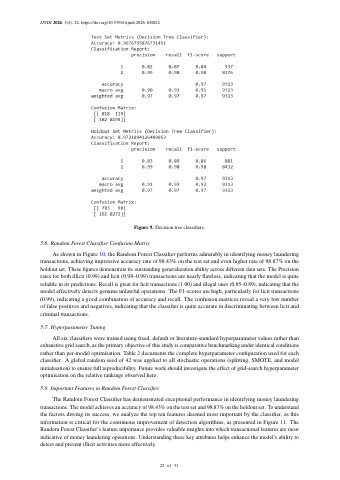
- The Decision Tree reaches accuracy of 96.77% on the test set and 97.22% on the holdout set.p.21
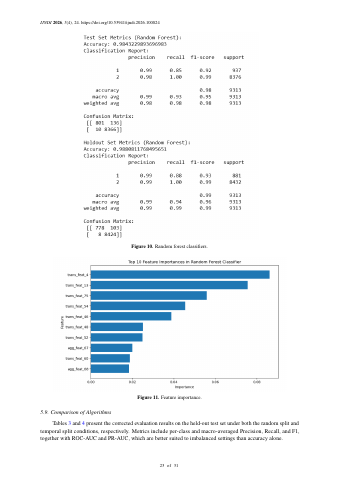
- Random Forest reaches accuracy of 98.43% on the test set and 98.87% on the holdout set.p.22
- Random Forest ROC-AUC is 0.996 under random-split evaluation, but performance degrades substantially under temporal evaluation.p.26
Pages
 p.1
 p.2
 p.3
 p.4
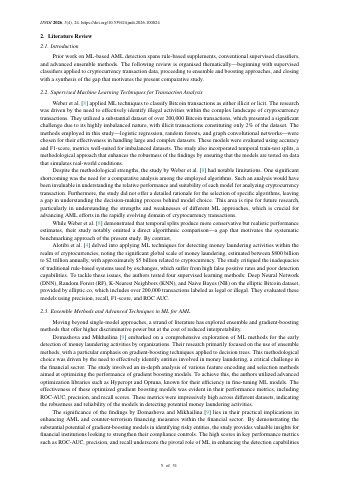 p.5
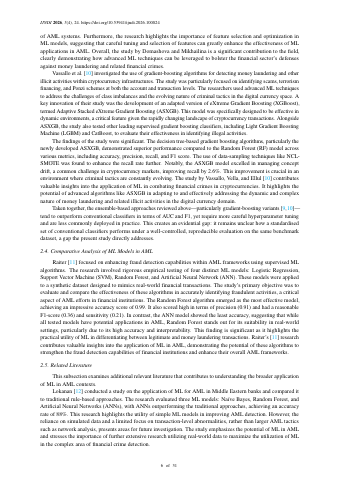 p.6
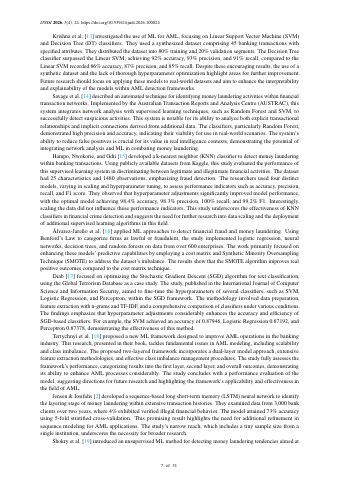 p.7
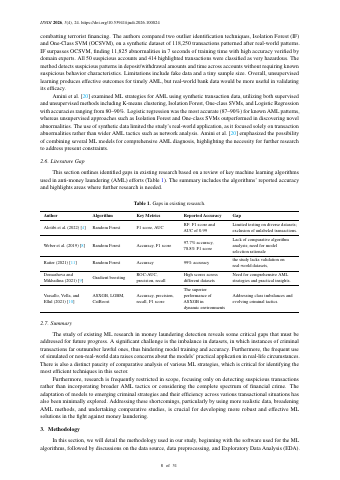 p.8
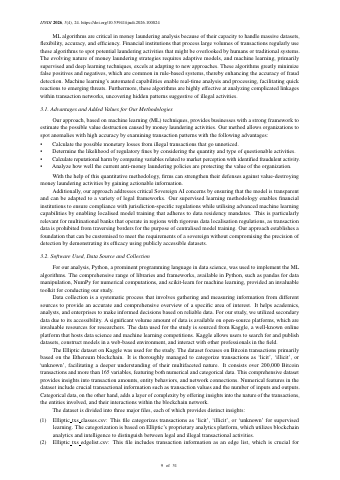 p.9
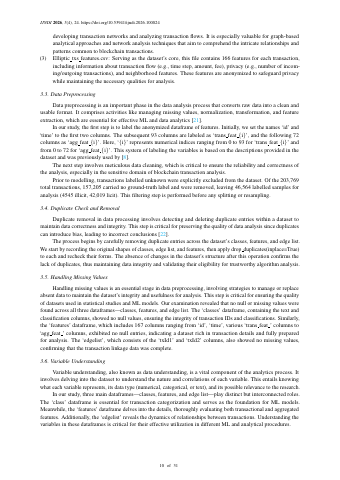 p.10
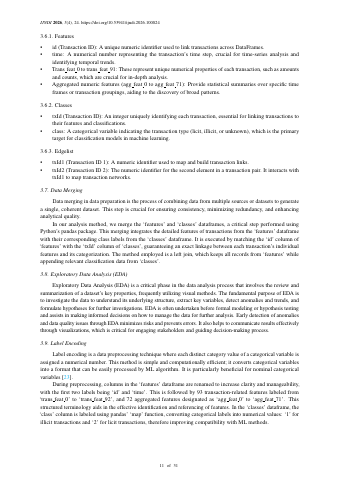 p.11
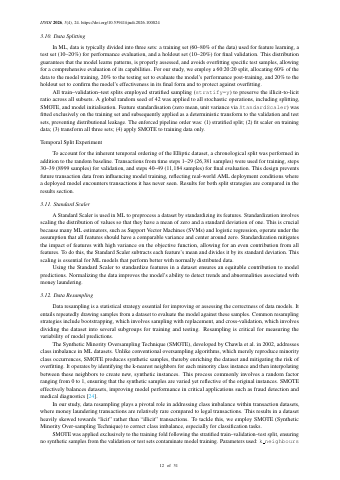 p.12
 p.13
 p.14
 p.15
 p.16
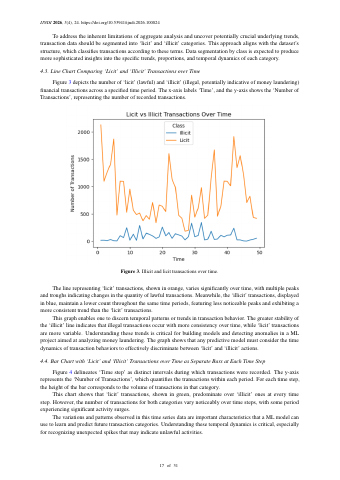 p.17
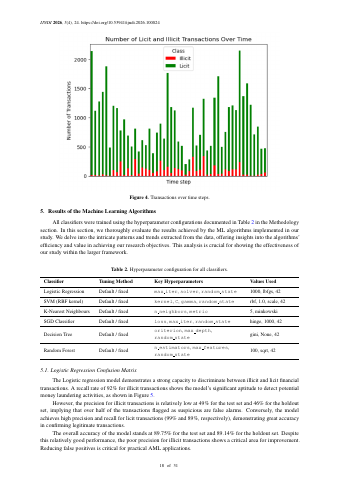 p.18
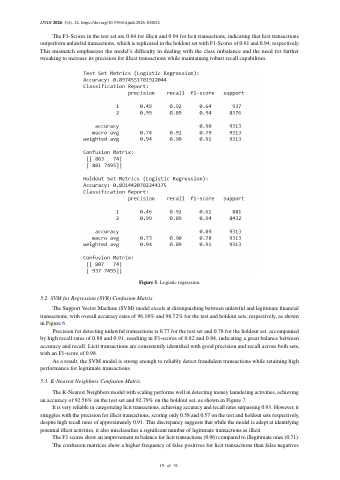 p.19
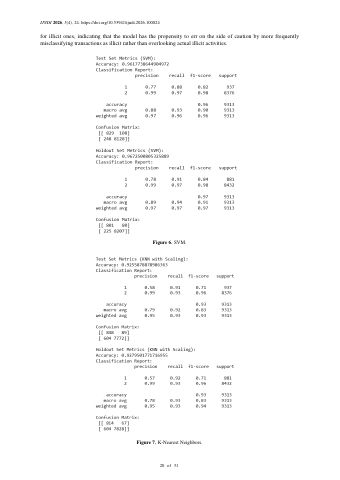 p.20
 p.21
 p.22
 p.23
 p.24
 p.25
 p.26
 p.27
 p.28
 p.29
 p.30
 p.31
Funders mentioned
Topics and entities
Summary and figures generated from the document and checked automatically: every number shown appears on the cited page. Publishers can request removal.