Application of Hierarchical Agglomerative Clustering for the Segmentation of Startups in Latin America
The study gathered data on 1,274 active Latin American startups after excluding 533 inactive companies.
307 documents
The study gathered data on 1,274 active Latin American startups after excluding 533 inactive companies.
Startups in Algeria face high operational risks and financial constraints, with a failure rate between 60 % and 90 %, and around 10 % failing during their first year of existence.
An estimated 49.4% of new businesses close within their first five years, with financial strain and capital shortages accounting for 38% of venture failures.
Africa attracts less than 1 percent of global venture capital, with more than 80 percent concentrated in just four countries.
The study analyzed survey responses from 200 managers at Taiwanese enterprises using the C2FO platform to evaluate continued supply chain finance adoption.
Sri Lanka recorded record foreign direct investment inflows reaching $1.04–1.06 billion in 2025, up from $759 million in 2024, alongside stock market record highs.
In India, lenders' aggregate exposure across all NBFC-P2P lending platforms is capped at INR 5 million.
The study conducts a qualitative literature review of academic sources published between 2014 and 2025 on Brazilian startup financing.
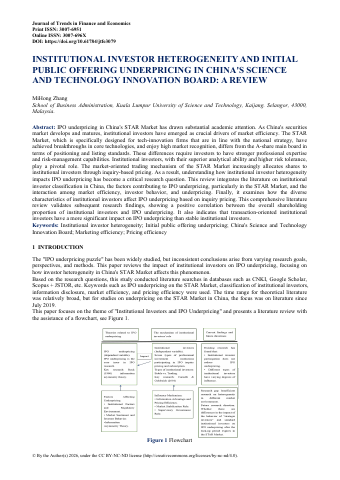
Bushee established a systematic classification of institutional investors using 3 types of indicators and 9 constructed variables.
European Crypto ETPs captured $104 .5M in aggregate net inflows in September 2026, bringing YTD totals to $1.6B.
Mario Draghi estimated that the EU requires €1.2 trillion of annual investment to compete globally in an integrated market of 450 million people.
Pitchbook issued its latest global VC ranking, placing Accel, Index Ventures, Sequoia, Benchmark, and Andreessen Horowitz in its top five.
The European Investment Fund covers about 60% of public intervention in the European venture capital market.
The study analyzes Market Sophistication indicators based on data from the Global Innovation Index 2025 across CEE economies.
The proportion of US technology firms adopting dual-class share structures at the IPO stage grew from 15% in 2012 to 50% in 2022.
The paper was published in Vol. 7 of the International Journal of Advance and Applied Research.
The research is grounded in 37 qualitative interviews with founders of early-stage tech startups supported by accelerators, collected across two waves between May 2021 and August 2022, and during 2025.
Global AI investment was projected to approach USD 200 billion by 2025, accounting for 2.5% to 4% of U.S. GDP.
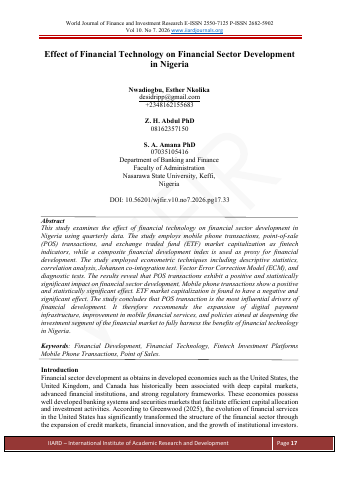
Nigeria attracted more than $1 billion in FinTech-related investments between 2020 and 2023.
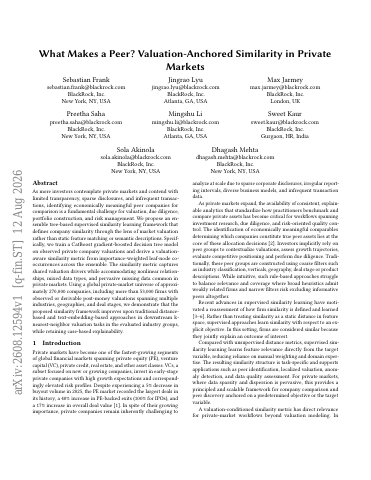
The study analyzes a global private-market universe of approximately 270,000 companies, including more than 53,000 firms with post-money valuations.
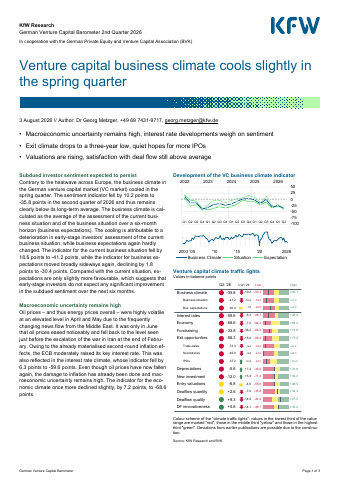
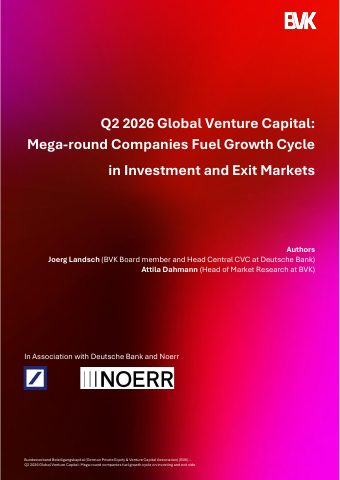
The German venture capital business climate indicator fell by 10.2 points to -35.8 points in the second quarter of 2026.
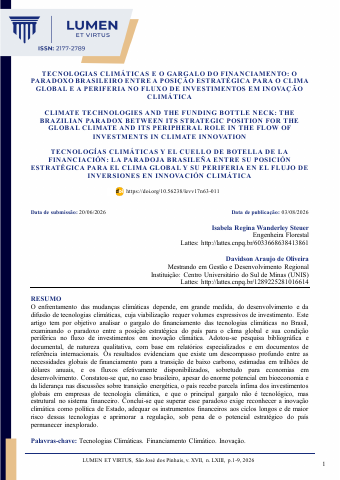
Addressing climate change relies heavily on developing climate technologies, which require significant annual investment volumes (page 2).
Mega-rounds of $100 million or more accounted for 81% of total global venture capital funding in Q2 2026.
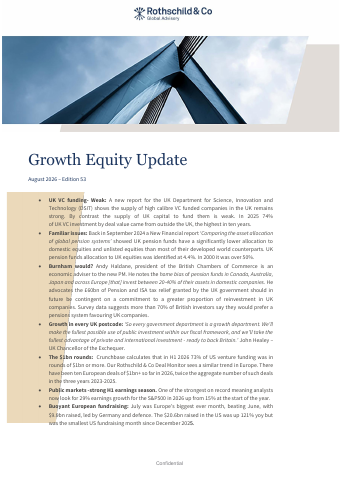
In 2025, 74% of UK VC investment by deal value originated from outside the UK, the highest level in ten years.
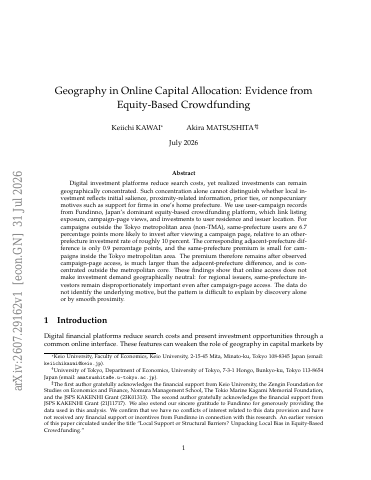
Regulatory constraints capped ordinary retail investor contributions at ¥500,000 per issuer, while firm fundraising through equity crowdfunding was limited to below ¥100 million per year.
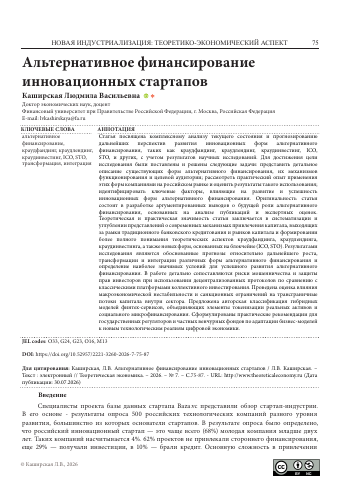
A survey of 500 Russian technology companies by Baza.vc showed that 62% had not raised external financing, 29% received investments, and 10% obtained loans.
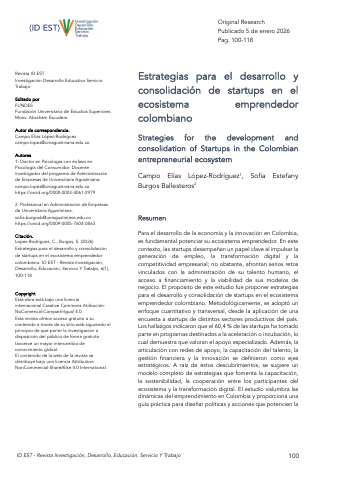
More than 70% of startups in Colombia do not survive beyond five years of existence due to limited financing and administrative constraints.
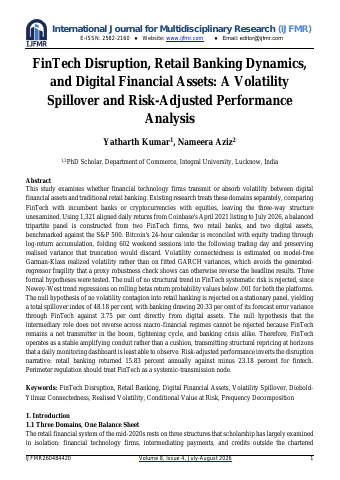
Retail banking delivered an annual return of 15.83 percent compared to minus 23.18 percent for FinTech disruptors.
Overall invested capital declined by 15.5% compared to the first half of 2025.
Around 70% of respondents reported that the escalation of the conflict in the Middle East negatively affected their business during Q2.