Effect of Financial Technology on Financial Sector Development in Nigeria
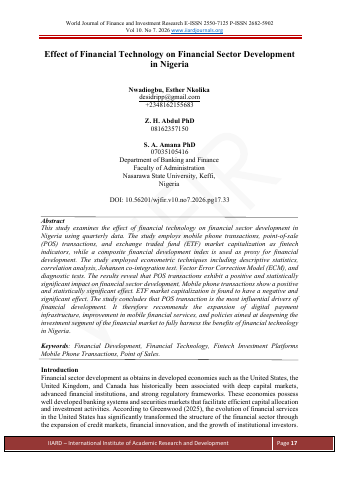
Nigeria attracted more than $1 billion in FinTech-related investments between 2020 and 2023.
581 documents
Nigeria attracted more than $1 billion in FinTech-related investments between 2020 and 2023.
The deployment of AI-powered intelligent customer service systems has reduced the inquiry volume handled by human representatives by 30% to 40% in many commercial banks.
Financial exclusion affects over 22 million unbanked and 47 million underbanked adults in underserved communities in the United States.
The study evaluates the dynamics of remote banking service users and digital transaction volume in Uzbekistan across the 2021–2025 period.
Digital lending platform adoption in India is projected to grow from 6 million users in 2021 to 60 million users by 2027.
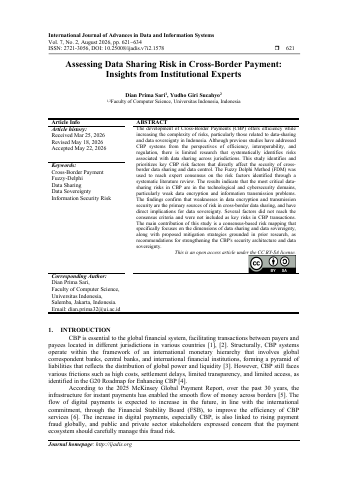
A total of 16 jurisdictions (22%) lack agreements or concrete plans for information sharing regarding cross-border payment risks.
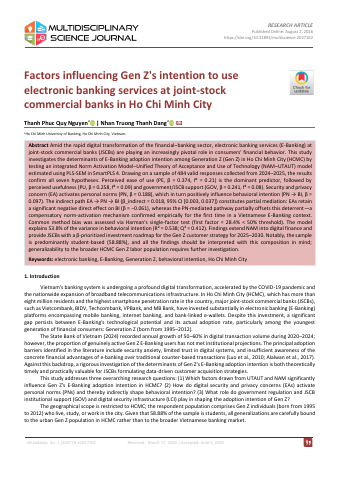
The study investigates electronic banking adoption intention among Generation Z in Ho Chi Minh City based on 484 valid survey responses collected from 2024–2025.
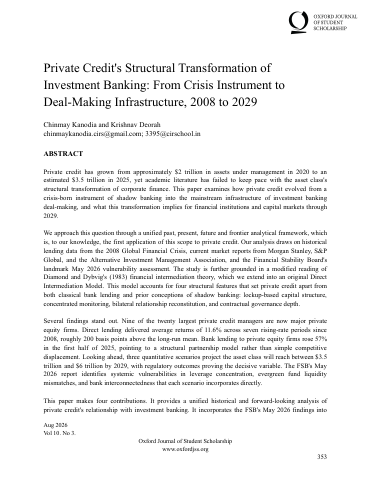
Global private credit assets under management grew from approximately $2 trillion in 2020 to an estimated $3.5 trillion in 2025.
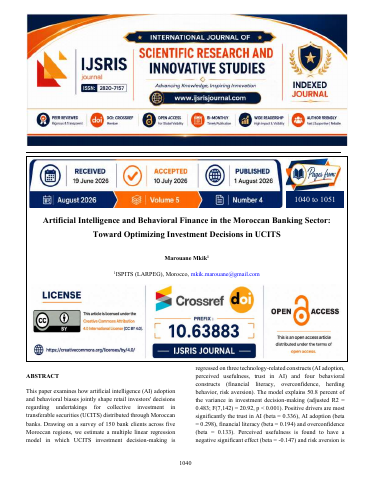
Net assets of collective investment in transferable securities (OPCVM) in Morocco reached MAD 826.73 billion across 627 funds as of late July 2026.
In 2025, real growth of the Swiss economy reached 1.5%, remaining below its multi-year average.
Swiss real GDP growth is projected to reach 1,0 Prozent in 2026 and 1,4 Prozent in 2027.
Directive 2023/2225/UE regulates consumer creditworthiness evaluation under Article 18 and will apply from 20 November 2026.
Mobile banking transaction volume in Indonesia grew by 39,1% in 2024, while QRIS-based transactions surged by 175,2% year-on-year.
Directive (EU) 2023/2225 of 18 October 2023 expands European Union consumer credit regulations to cover loans under €200 which were previously excluded.
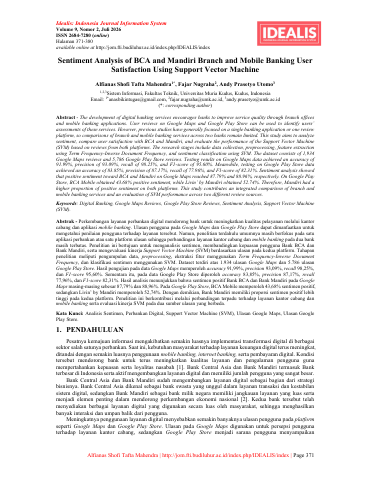
The research collected and evaluated a dataset consisting of 1,934 Google Maps reviews and 5,786 Google Play Store reviews for BCA and Mandiri.
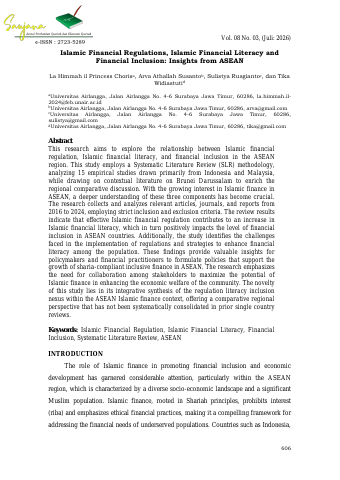
The systematic literature review synthesized 15 empirical studies drawn primarily from Indonesia and Malaysia published between 2016 and 2024.
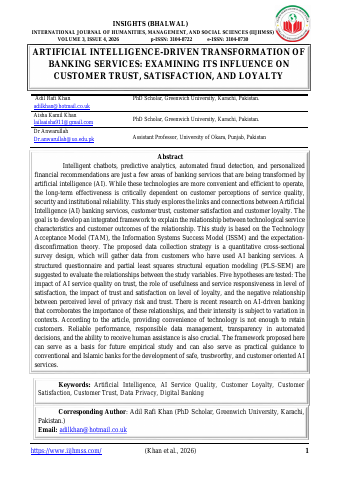
The conceptual framework formulates 5 hypotheses to examine how AI banking service quality, usefulness, and privacy risk influence trust, satisfaction, and loyalty.
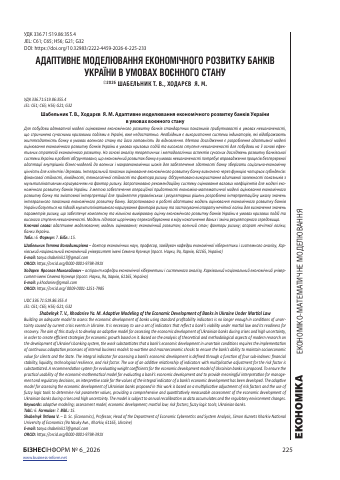
Ukrainian banks' net profit grew from 41,3 млрд грн in 2020 to ~150–160 млрд грн in 2024, driven by income from deposit certificates and domestic state loan bonds.
In Latin America, 73% of female-led businesses lack growth resources, contributing to a credit gap of $93 billion for female SMEs.
BPR overall market share across credit segmentations declined from 1.98% in 2021 to 1.86% in 2024.
Primary microdata was collected from 1,653 university students to evaluate the determinants of Generation Z financial literacy across Spain and Ecuador.
The target study population comprised 296.029 residents aged 18 to 65 years in the Cotopaxi province of Ecuador.
Decentralized autonomous governments (GADs) in Ecuador are subject to debt limits where total public debt balance cannot exceed 200% of annual total revenues.
Superbank Indonesia recorded third-party funds (DPK) growth of 214,43 % (yoy) reaching Rp. 10.390 milyar as of August 2025.
Retail banking delivered an annual return of 15.83 percent compared to minus 23.18 percent for FinTech disruptors.
The study evaluated secondary data collected from 39 banking companies listed on the Indonesia Stock Exchange, comprising 195 observation data points for the 2020–2024 period.
Real gross domestic product expanded at a moderate annual rate of 2.1 percent in the first quarter of 2026.
Sales or revenue optimism among Canadian SMEs rose to 44% in July 2026.
Over 99 percent of all U.S. banking organizations were well capitalized as of the fourth quarter of 2025.
In Full Year 2025, the Open Banking fraud rate by volume was 0.017% compared to 0.043% for the wider industry.