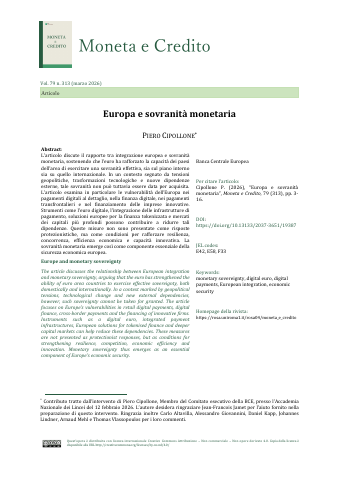
Europe and Monetary Sovereignty
Between 1950 and the present, aggregate per capita national wealth in France, Germany, Italy, and Spain multiplied by 18 times, rising from 37% to 83% of US per capita national wealth.
581 documents
Between 1950 and the present, aggregate per capita national wealth in France, Germany, Italy, and Spain multiplied by 18 times, rising from 37% to 83% of US per capita national wealth.
In 2024, approximately 37 million adults in Colombia, accounting for 96 % of the adult population, held at least one financial product, while active usage reached 79 %.
Introduced in December 2024 by Rob Murray, the Defence, Security and Resilience Bank (DSR Bank) is designed as a multilateral development bank with an initial capital of around €117 billion.
Workplace technology adoption expanded, with one-in-four workers having used generative AI at work in the prior month.
Fair value losses on banks' available-for-sale and held-to-maturity securities portfolios totaled $300 billion combined at the end of 2025.
Total assets on the Federal Reserve balance sheet increased by $49 billion from September 24, 2025, reaching $6.7 trillion as of March 25, 2026.
Sveriges Riksbank started publishing values for SWESTR on 2 September 2021 based on transaction data from 9 banks.
Alternative online lenders can offer fast business financing but charge high interest rates ranging from 18–40% per year.
The systematic review initially retrieved 121 scientific articles from academic databases including Google Scholar, Scielo, Springer, Elsevier, and MDPI.
In the Riksbank's survey, 91 per cent of respondents used Swish in the past month, making mobile payments increasingly widespread.
Digital payment transactions in the European Union increased from 4.8% of total transactions in 2007 to 73.3% in 2014.
A stratified sample of 151 key actors from Ecuador's financial system was analyzed to evaluate five dimensions of financial inclusion.
A net 12% of euro area firms reported an increase in bank loan interest rates, up from 2% in the previous quarter.
More than 87% of adults in Colombia held at least one formal financial product according to national financial inclusion reporting.
Europe requires an estimated additional annual investment of approximately €1.4 trillion, equivalent to around 7% of GDP, to finance its growth, digital, energy, defence, and transition goals.
In the United States, individual private credit loans typically range between $10 and $500 million, with total volume surpassing $1.2 trillion.
The IEA and COP31 Presidency proposed a global ambition to raise electrification to 35% of final energy demand by 2035.
Deloitte interviewed 35 decision makers, including COOs, CTOs, and heads of transformation at wealth management firms globally.
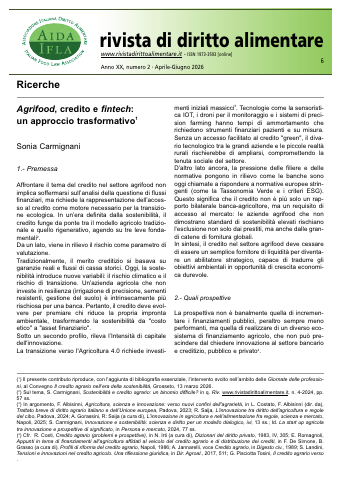
Access to agricultural credit must serve as a driver for the ecological transition to Agriculture 4.0, which requires substantial upfront capital.
Bitcoin's rolling three-month volatility averaged around 38% after US spot ETFs launched in January 2024, compared to close to 60% before 2024.
85% of online banking users conduct their banking exclusively or predominantly online, whereas only 12% mainly use a bank branch.
The report presents findings from 307 family offices across more than 30 markets worldwide, with an average net worth of USD 2.7 billion.
If digital currencies continue to gain traction, up to $13 trillion in transaction value could shift to alternative payment methods by 2030, putting an estimated $13 billion in payment fees at risk.
Geopolitical risk acts as a key driver of traditional and emerging risks, featuring in over 50% of the topics discussed in the report.
72% of respondents are optimistic about the Australian economy over the next 12 months, up from 67% in the previous survey.
A total of 83% of SMEs plan to invest about the same amount or more in the next 12 months.
As of September 30, 2025, the federal banking agencies identified no material differences among accounting standards applicable to insured depository institutions.
The Financial Conduct Authority spent £14m on its InvestSmart campaign to promote positive investing principles.
In 2024, the Swiss financial sector directly generated a gross value added of CHF 73.2 Mrd. and supported 245’800 jobs (FTE).
Investment firms with total consolidated assets of €30 billion or more are categorized as credit institutions under Article 4 of Regulation (EU) No 575/2013.