Credit Risk Management in Factoring and Supply Chain Finance: A Bibliometric Analysis of Scientific Publications (Zenodo)
SaveSummary
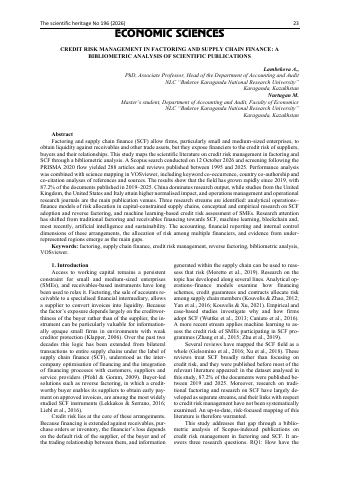
- A bibliometric analysis of scientific literature on credit risk management in factoring and supply chain finance (SCF) identified 288 articles and reviews published between 1995 and 2025.p.1
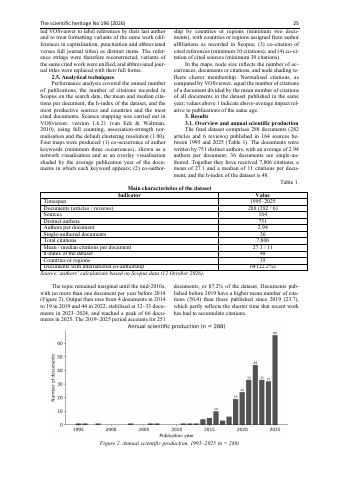
- Research output in the field expanded rapidly in recent years, with 87.2% of all analyzed documents published during the 2019–2025 period.p.1
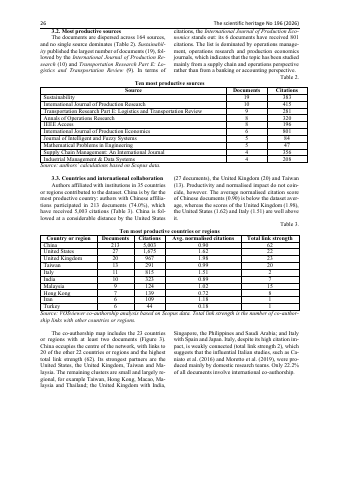
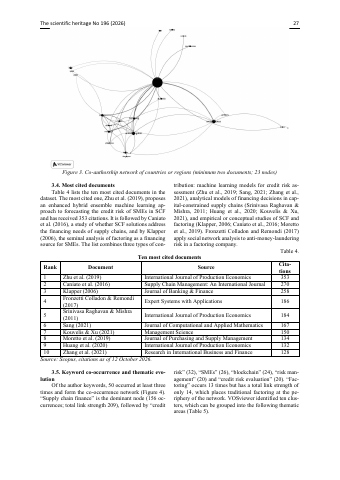
- China is the most productive country with 213 documents, though studies from the United Kingdom (1.98), the United States (1.62), and Italy (1.51) attained higher average normalized citation scores.p.4
- The final dataset comprised 288 documents across 164 sources written by 751 distinct authors, accumulating 7,806 total citations and an h-index of 48.p.3
- Sustainability emerged as the most productive publication venue with 19 documents, followed by the International Journal of Production Research with 10 documents.p.4
- International co-authorship remains relatively limited in this domain, accounting for 64 documents or 22.2% of the dataset.p.3
Key insights
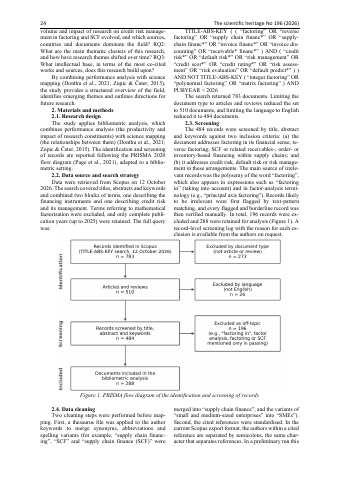
- The initial search on Scopus yielded 783 records, which was narrowed to 288 relevant records after filtering for language, document type, and manual screening.p.2
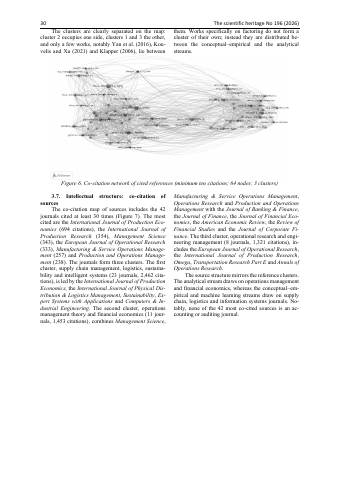
- The research literature is divided into three key streams: analytical operations–finance models, conceptual/empirical SCF adoption studies, and machine learning credit scoring for SMEs.p.1
- The paper by Zhu et al. (2019) on machine learning models for forecasting SME credit risk in SCF is the most cited document in the dataset with 353 citations.p.5
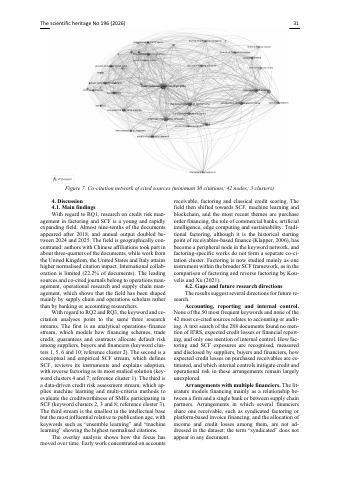
- Research attention has systematically shifted from traditional factoring and receivables financing toward blockchain, machine learning, artificial intelligence, and sustainability.p.1
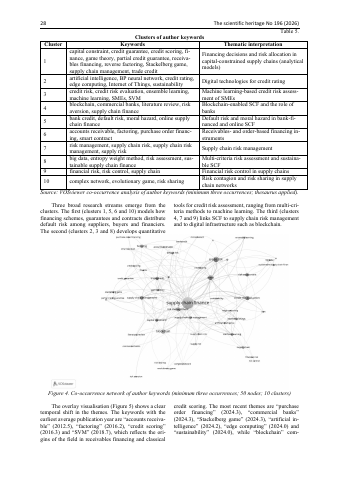
- Traditional factoring has become peripheral in the keyword network, showing only 13 occurrences and a total link strength of 14.p.5
- The dataset is heavily published in operations management, supply chain, and operational research journals rather than core accounting or banking journals.p.4
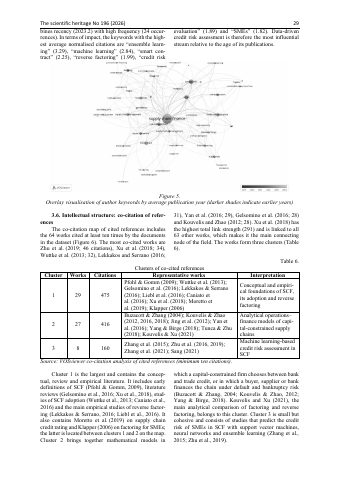
- Data-driven credit assessment keywords exhibit the highest normalized impact relative to their age, including ensemble learning (3.29) and machine learning (2.84).p.7
- Significant literature gaps exist regarding accounting standards like IFRS, financial reporting disclosures, expected credit losses, and internal controls for SCF arrangements.p.9
Pages
 p.1
 p.2
 p.3
 p.4
 p.5
 p.6
 p.7
 p.8
 p.9
 p.10
 p.11
Funders mentioned
Topics and entities
Summary and figures generated from the document and checked automatically: every number shown appears on the cited page. Publishers can request removal.