Artificial Intelligence and Cyber Fraud Prevention in Digital Banking: A Comparative Legal Analysis of India, the United Kingdom and the United States (Zenodo (CERN European Organization for Nuclear Research))
Summary
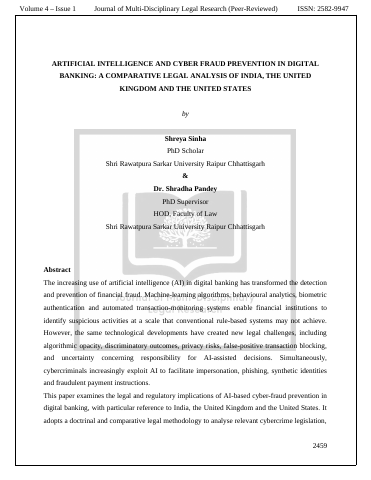
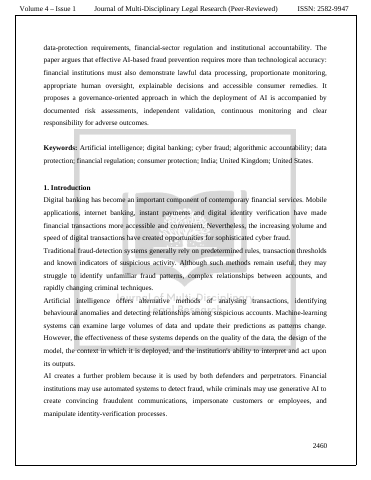
- Machine-learning algorithms and behavioural analytics enable financial institutions to detect digital banking fraud at scale beyond conventional rule-based systems.p.1
- The Digital Personal Data Protection Act 2023 governs personal data processing in India, with phased implementation noted on 13 November 2025.p.7
- In the UK, financial institutions must align AI monitoring with obligations under the Financial Services and Markets Act 2000, UK GDPR, and Data Protection Act 2018.p.8
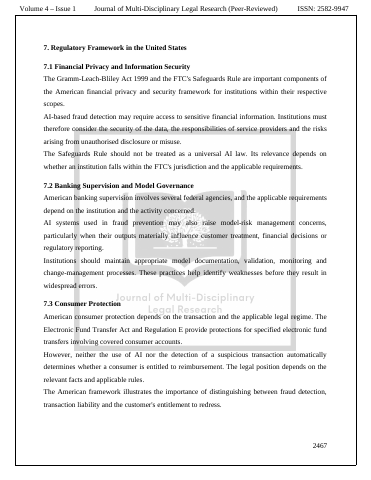
- US financial privacy and oversight rely on the Gramm-Leach-Bliley Act 1999, the FTC Safeguards Rule, and Regulation E under the Electronic Fund Transfer Act.p.9
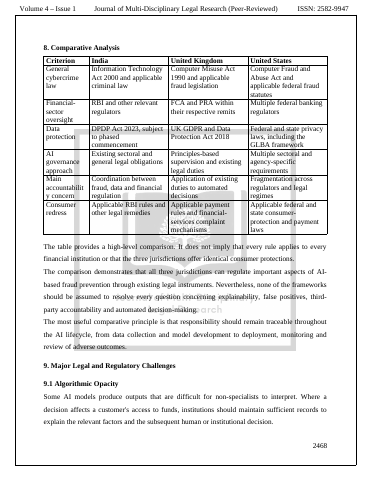
- Comparative analysis shows that India, the UK, and the US rely on existing legal frameworks rather than single, unified AI legislation to address cyber fraud.p.10
Key insights
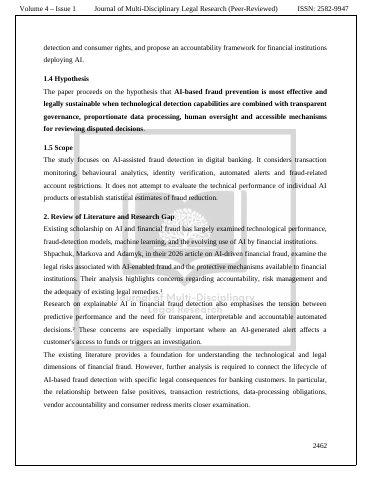
- AI detection capabilities are legally sustainable only when combined with transparent governance, proportionate data processing, and human oversight.p.4
- Cybercriminals increasingly exploit generative AI to create synthetic identities, execute phishing attacks, and manipulate identity verification.p.2
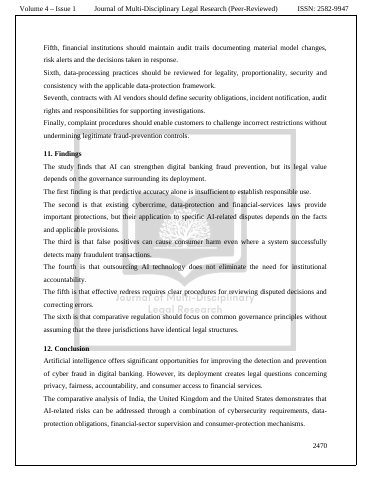
- Predictive accuracy alone is insufficient to establish legally compliant and responsible use of AI in banking.p.12
- Statistical imbalances between legitimate and fraudulent transactions mean highly accurate AI systems still generate substantial numbers of false positives.p.6
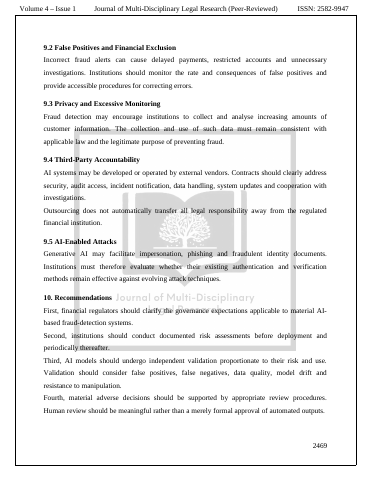
- Outsourcing AI technology to third-party vendors does not transfer or remove a regulated financial institution's legal obligations to customers.p.8
- Human review of AI fraud alerts must be meaningful rather than a formal, automated approval of model outputs.p.11
- Financial institutions must maintain clear audit trails documenting material model updates, fraud alerts, and responsive actions taken.p.12
Pages
 p.1
 p.2
 p.3
 p.4
 p.5
 p.6
 p.7
 p.8
 p.9
 p.10
 p.11
 p.12
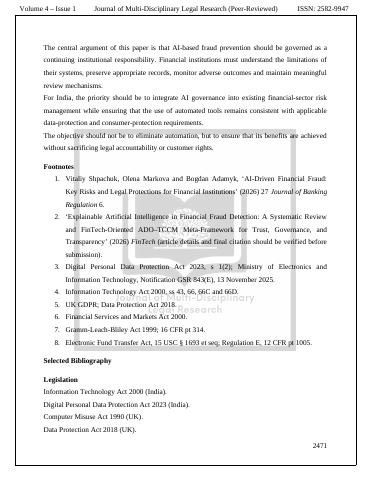 p.13
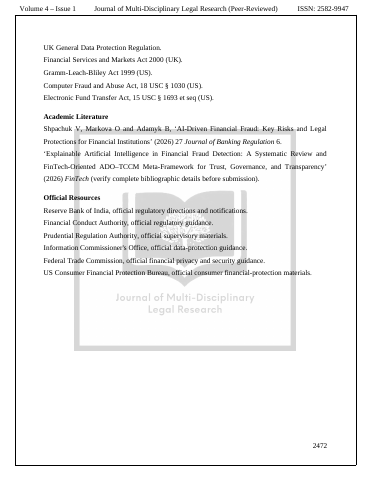 p.14
Topics and entities
Summary and figures generated from the document and checked automatically: every number shown appears on the cited page. Publishers can request removal.