Relationship Between Risk Perception, Trust, and Adoption of Cryptocurrency-Based Payment Systems in Africa (Journal of Managerial Sciences)
Summary
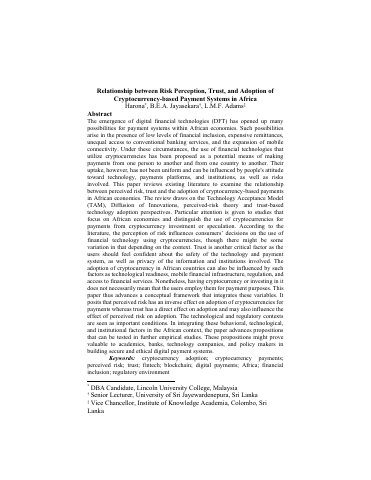
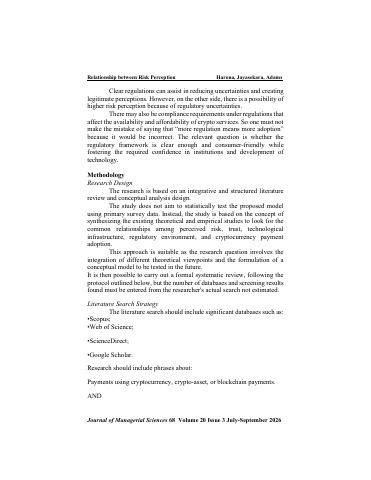
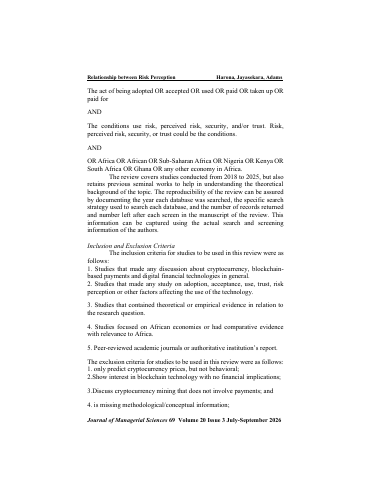
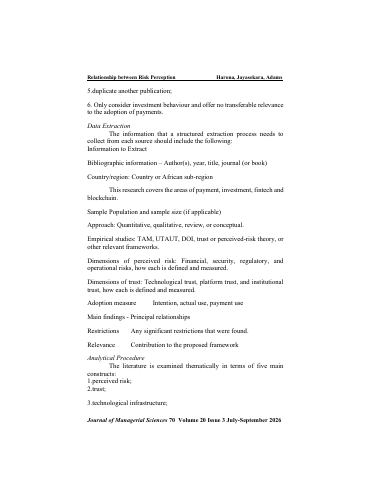
- The study conducts a structured review of literature spanning from 2018 to 2025 to synthesize how behavioral and contextual factors influence cryptocurrency payment adoption in African economies.p.12
- Sub-Saharan Africa accounts for a relatively low overall volume of global cryptocurrency transactions, yet Nigeria was ranked second in the world for daily coin and token transactions in 2024.p.4
- Chainalysis ranked Ethiopia, Kenya, and South Africa among the top 30 countries globally for general cryptocurrency activity.p.4
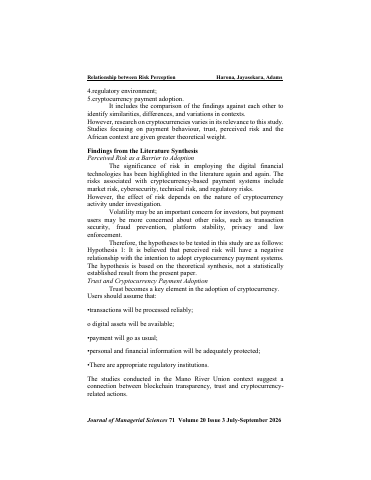
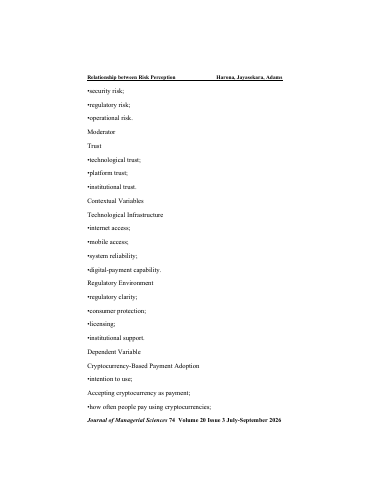
- The paper identifies four main dimensions of perceived risk in crypto payments: financial risk, security risk, regulatory risk, and operational risk.p.7
- The framework categorizes trust into three distinct dimensions: technological trust, platform trust, and institutional trust.p.8
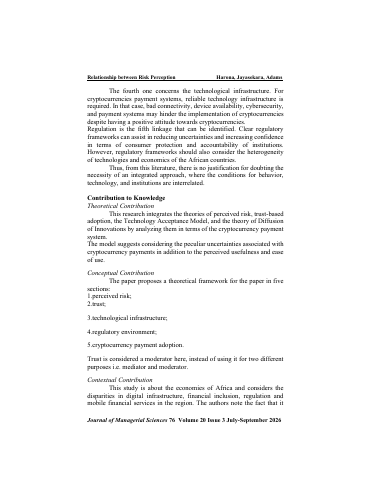
- The authors propose 5 core theoretical propositions linking perceived risk, trust, technological infrastructure, and regulatory frameworks to payment adoption.p.14
Key insights
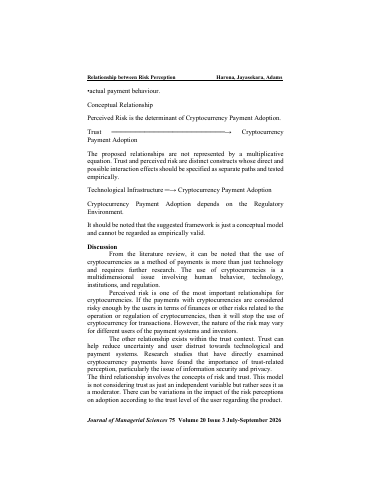
- Perceived risk is hypothesized to have a direct negative relationship with the intention to adopt cryptocurrency-based payment systems.p.14
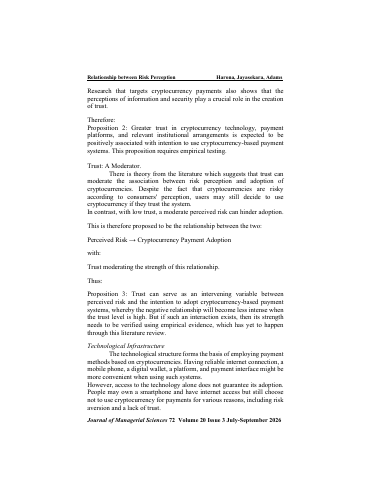
- Greater trust across technology, platforms, and institutions is expected to positively influence cryptocurrency payment adoption.p.15
- Trust is conceptualized as a moderator that can weaken the negative impact of perceived risk on adoption when trust levels are high.p.15
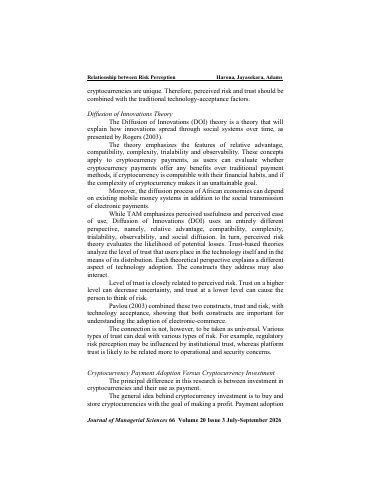
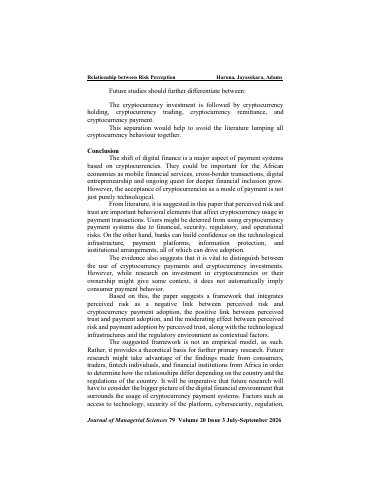
- Cryptocurrency ownership or investment behavior does not automatically indicate that individuals use digital assets for making payments.p.2
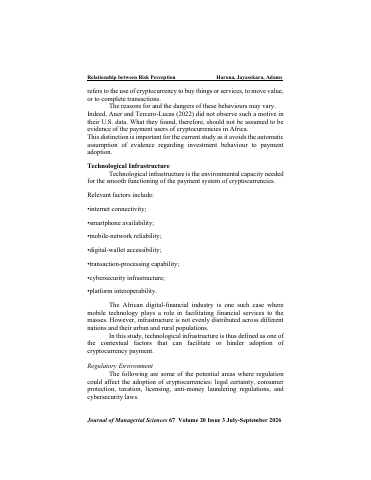
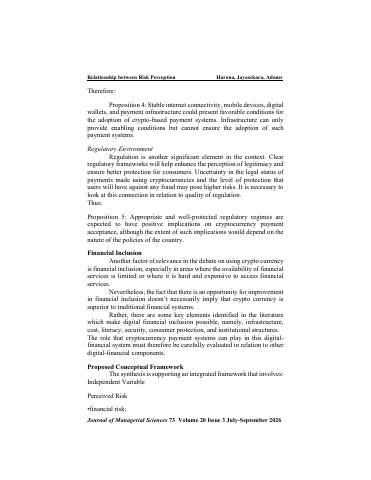
- Available technological infrastructure provides necessary enabling conditions but is insufficient on its own to ensure payment adoption.p.16
- Clear and supportive regulatory regimes enhance legal certainty and consumer protection, promoting cryptocurrency payment acceptance.p.16
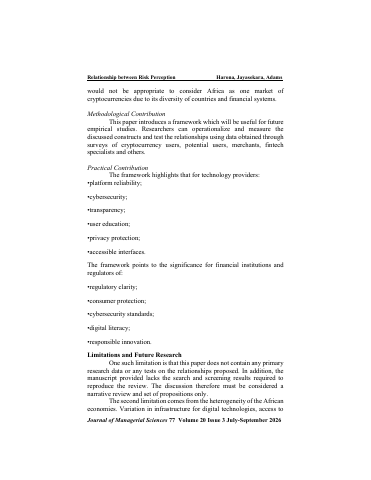
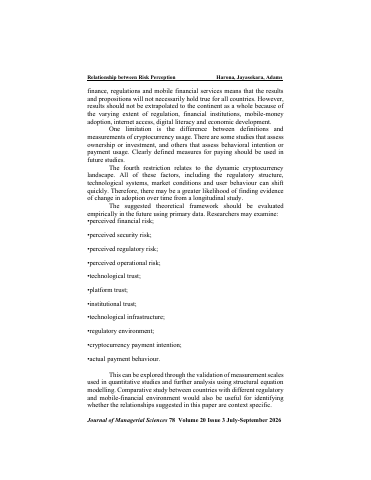
- Varying levels of digital literacy, regulation, and mobile money maturity mean findings cannot be uniformly generalized across all African economies.p.4
Pages
 p.1
 p.2
 p.3
 p.4
 p.5
 p.6
 p.7
 p.8
 p.9
 p.10
 p.11
 p.12
 p.13
 p.14
 p.15
 p.16
 p.17
 p.18
 p.19
 p.20
 p.21
 p.22
 p.23
 p.24
Topics and entities
Summary and figures generated from the document and checked automatically: every number shown appears on the cited page. Publishers can request removal.