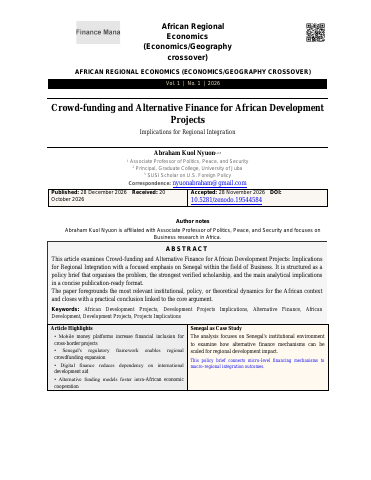
Crowd-funding and Alternative Finance for African Development Projects: Implications for Regional Integration
Mobile money platforms increase financial inclusion for cross-border development projects in Africa.
248 documents
Mobile money platforms increase financial inclusion for cross-border development projects in Africa.
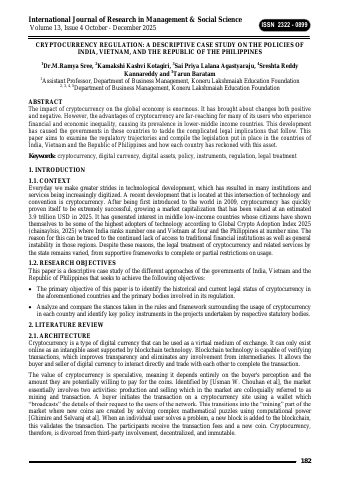
Cryptocurrency reached an estimated market capitalization of 3.9 trillion USD in 2025, driving high adoption in lower-middle income countries.
In 2025, 86.5 per cent of Bulgarians aged 16 to 74 used the internet regularly, while internet banking usage remained significantly lower at 31.1 per cent.
Amazon executed a $200M acquisition of BNPL lender Axio in early 2025 to expand into Indian digital lending.
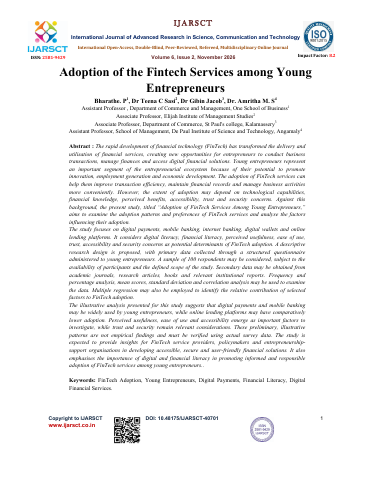
Digital wallets are used by 54% of respondents, and online lending platforms show an adoption rate of 28%.
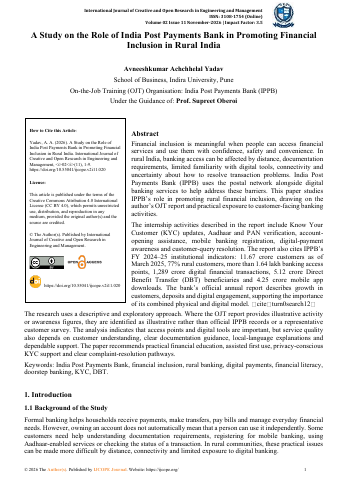
During FY 2024–25, IPPB operated more than 1.64 lakh banking access points and 649 banking outlets across the country.
In 2025, global digital payments value reached $2.0 quadrillion across 3.6 trillion transactions, of which $1 trillion were fraudulent.
The Management Board of the Central Bank of the Republic of Azerbaijan approved the Strong Customer Authentication (SCA) Rule on 13 March 2024 under Decision No. 12/2, applying to payment transactions from January 2026.
In June 2020, UPI recorded more than 1.34 billion transactions amounting to almost US$35 billion.
Average monthly mobile banking transactions of the ten studied banks grew from 106 million in FY2017-18 to 10,985 million in FY2024-25.
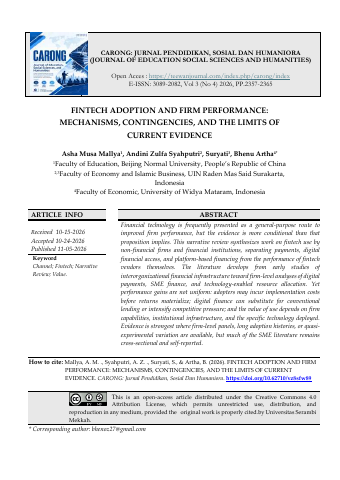
FinTech usage has grown by over 240% globally in the past decade.
The study analyzes a balanced panel of 53 ordinary equity securities continuously listed and traded on the Nairobi Securities Exchange over the 2021-2025 period.
High costs of credit, lack of collateral, and elevated agricultural risks restrict small and medium producers from accessing capital for modernization.
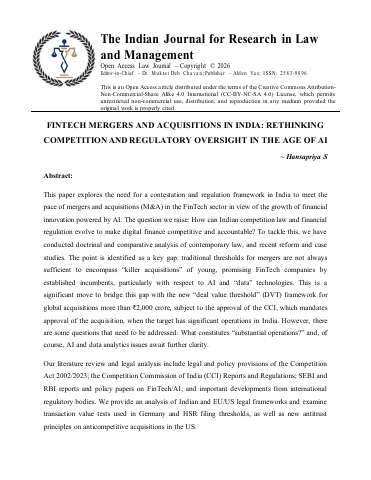
Artificial intelligence adoption in fintech enhances operational speed in credit scoring, insurance risk assessment, and fraud detection, but creates algorithmic opacity known as the black box dilemma.
The study analyzed data from an online survey of 355 university students aged 15–25 with prior digital banking experience in Malaysia.
Initial ATM adoption in Ethiopia began in the early 2000s, followed by mobile and internet banking growth after 2011.
The study gathers primary data using a structured questionnaire administered to a sample size of 100 respondents from MSMEs.
The World Bank Firm Adoption of Technology Survey analytical dataset for India comprises 1,519 establishments and 987 variables.
LLM repair in a re-implemented VA-NSF loop produced intent-mismatched commits for 32.1% of requests across 296 evaluation instances.
According to international surveys by the Bank for International Settlements, about 70% of financial sector companies use AI for cash flow forecasting and risk assessment.
Primary data was gathered from 2,168 investors, fintech users, and financial professionals across seven Arab countries to evaluate regional digital transformation.
On a 30,000-event synthetic stream with a 2.40% overall fraud rate, the proposed dual-horizon FPAA model achieves an average precision of 0.427 ± 0.038 across three training seeds.
The study develops a scalable MLOps framework evaluated on 100,000 transactions sampled from the Credit Card Transactions Fraud Detection Dataset.
The study investigates the impact of financial technology on financial inclusion across 8 East African Community countries over the period 2014–2023 using a panel of 80 country-year observations.
Data were collected from 200 micro culinary enterprises in Indonesia that actively use QRIS in daily transactions.
A block header without any transactions requires approximately 80 bytes of storage.
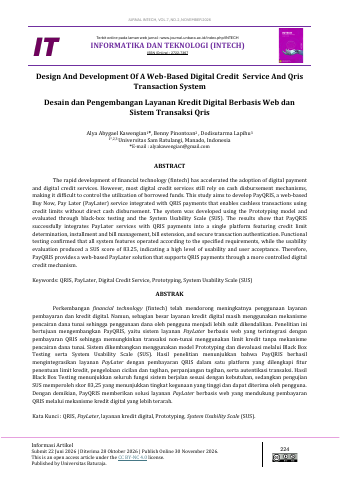
The PayQRIS system achieved a System Usability Scale (SUS) score of 83.25, indicating high usability.
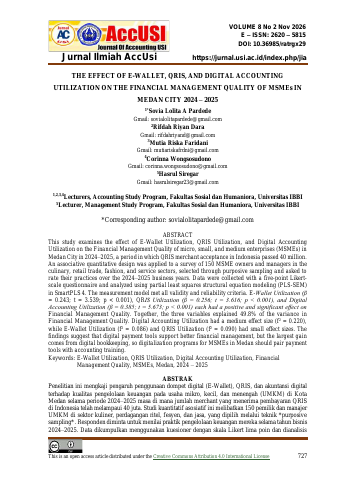
A survey of 150 MSME owners and managers in Medan City evaluated the adoption of digital financial tools and their effect on financial management quality across 2024–2025.
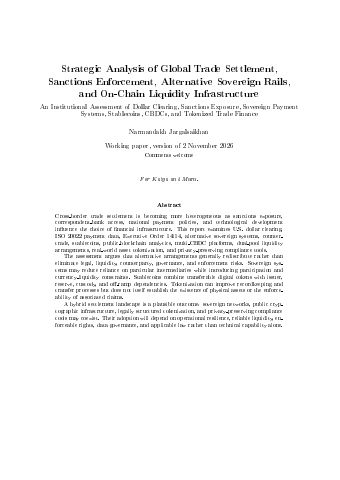
Cross-Border Interbank Payment System (CIPS) daily usage was reported at about $60 billion compared to about $1,800 billion a day for CHIPS, with about 80 percent of CIPS payments still using Swift messaging.
SWIFT diffusion among nearly 7,000 banks demonstrated that profitability benefits materialized only after several years of adoption.