Mobile-Money-Native Unified Commerce: Why the Till and the Online Store Are Converging, and What Africa's Payment Infrastructure Already Proves (Zenodo)
SaveSummary
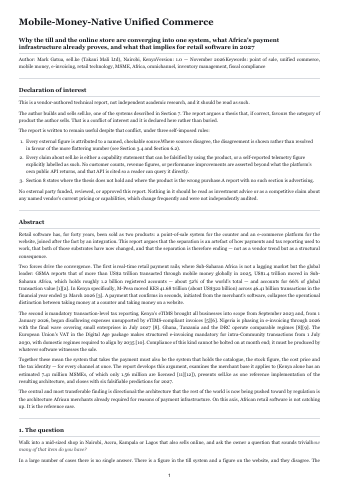
- Sub-Saharan Africa handled $1.4 trillion of the over $2 trillion in global mobile money transactions in 2025, holding roughly 1.2 billion registered accounts.p.1
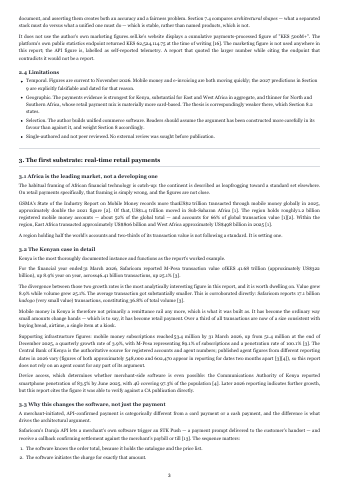
- In the financial year ended 31 March 2026, M-Pesa recorded transaction value of KES 41.68 trillion ($322 billion) across 46.41 billion transactions.p.3
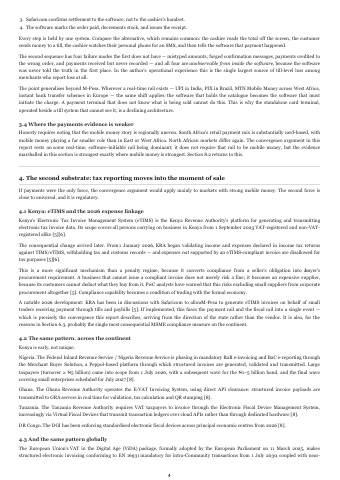
- Kenya required eTIMS electronic tax invoicing for all businesses in 2023, disallowing non-compliant income tax expense declarations from 1 January 2026.p.4
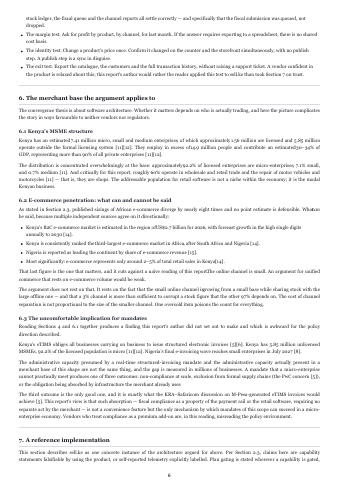
- Kenya's MSME sector includes 7.41 million enterprises (1.56 million licensed, 5.85 million unlicensed), employing over 14.9 million people.p.6
- Micro-enterprises represent 92.2% of licensed businesses in Kenya, with roughly 60% operating in retail/wholesale trade and vehicle repair.p.6
- B2C e-commerce in Kenya is estimated at $2.7 billion for 2026, accounting for 2–5% of total retail sales.p.6
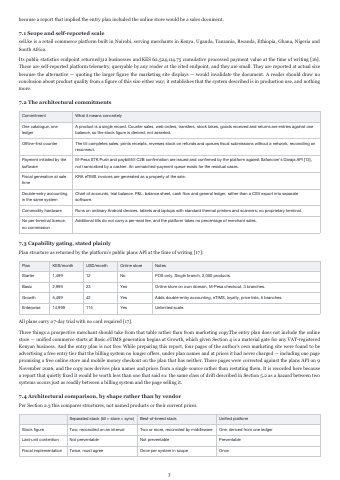
- The sell.ke platform's public API reported 312 businesses and KES 62,524,114.75 in processed payments at the time of writing.p.7
Key insights
- Sub-Saharan Africa accounts for 52% of global mobile money accounts and 66% of global transaction value, making it a market setter rather than a follower.p.1
- Manual cashier verification of mobile payments introduces severe unobservable losses, whereas integrated software-initiated payment rails automate confirmation directly.p.4
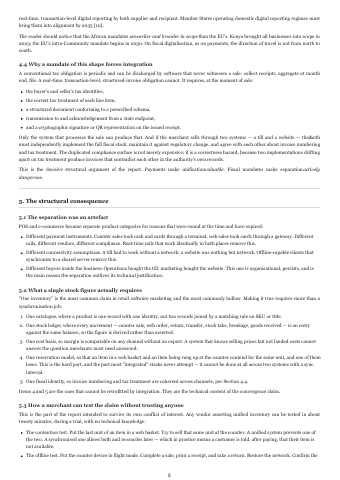
- Mandatory real-time, transaction-level e-invoicing forces the selling software to handle immediate tax compliance and transmission at the point of sale.p.5
- Dividing retail channels into separate POS and e-commerce systems creates redundant compliance surfaces that risk issuing conflicting fiscal invoices.p.5
- Even a minor online channel representing 2–5% of sales is sufficient to desynchronize inventory stock levels across disconnected retail systems.p.6
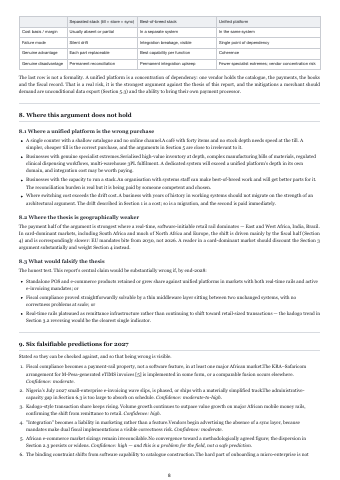
- Consolidating software operations into a single unified platform introduces vendor concentration risk, requiring merchants to secure data export rights.p.8
- Card-dominant markets in Europe and North Africa rely primarily on regulatory fiscal mandates rather than payment rails to push retail software convergence.p.8
- African retail technology has already implemented unified commerce architectures that Europe will require under legislative mandates taking effect in 2030.p.9
Pages
 p.1
 p.2
 p.3
 p.4
 p.5
 p.6
 p.7
 p.8
 p.9
 p.10
Funders mentioned
Topics and entities
Summary and figures generated from the document and checked automatically: every number shown appears on the cited page. Publishers can request removal.