Fintech Investment and Innovation in African Financial Services: Trends and Drivers
The article was submitted on 29 July 2026, accepted on 15 November 2026, and published on 25 December 2026.
174 documents
The article was submitted on 29 July 2026, accepted on 15 November 2026, and published on 25 December 2026.
Morocco's National Entrepreneurship Context Index (NECI) score declined from 4.3 to 3.9 during the 2024–2025 period.
The study analyzes 10 voluntary open-ended qualitative questionnaire responses from stakeholders across 7 universities in Khyber Pakhtunkhwa, Pakistan.
SVEP implementation blocks receive an average financial allocation of Rs. 5-6 crore per block, with around Rs. 2.5 crore earmarked as Community Enterprise Funds (CEF).
Canada's business entry rates fell from 24.5% in the 1980s to roughly 13% pre-pandemic, with fewer than 1.5% of small businesses ever scaling into medium or large firms.
At the beginning of 2026, the registry of electronic money systems of the Central Bank of Uzbekistan contained 12 registered systems.
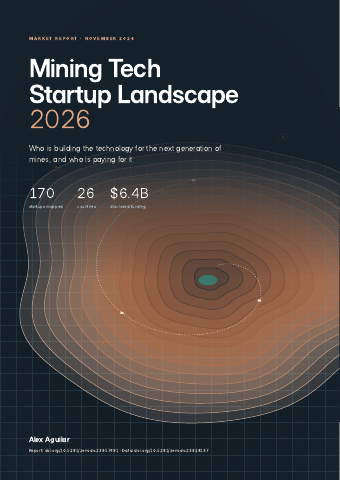
Funding concentration is high, with five startups holding 44% ($2.8B) of total disclosed capital, while US startups hold 71% of the global total.
O’mari Zimbabwe was launched in 2023 by Old Mutual Zimbabwe through Old Mutual Digital Services as an interoperable digital financial platform.
The study analyzed a sample of 70 graduates out of a total population of 445 graduates from the Faculty of Business Sciences at the Technical University of Machala.
A study recorded 3,069 fintechs in Latin America and the Caribbean at the end of 2023, up from 703 in 2017.
The study population comprises 96 fintech companies licensed in Saudi Arabia by the Saudi Arabian Monetary Authority.
The share of innovative products in Ukraine's total output does not exceed 2%, compared to 85% in the US, 75% in Japan, and 55% in Germany.
UK AI venture financing registered a compounding annual growth rate exceeding 25% between 2016 and 2023.
Formal venture capital investment in the Eastern Cape accounts for <5% of South Africa's total venture capital deal flow.
Brazilian Business Outlook declined significantly between 2000 and 2025 at −0.42 points per year (p = 0.005).
The research analyzes intellectual asset protection strategies across 10 selected business operations using a three-criterion decision matrix.
Institutional investors such as pension funds and insurance companies represent around 28% of assets under management in European private impact markets.
The global Islamic financial services industry reached USD 3.88 trillion in total assets according to the IFSB Stability Report 2025.
A sociological survey of 1,094 respondents conducted between December 2025 and June 2026 evaluated the key barriers in the Russian innovation ecosystem.
Indian celebrities are actively transitioning from traditional brand ambassadors to strategic equity investors and co-founders in startups.
Vietnam's Law on Public-Private Partnerships 2020 defines 5 eligible sectors but omits specialized financial, digital data, and legal sandbox infrastructure.
Africa's financial landscape is defined by fragmented regulation across 54 sovereign nation-states and an informal economy employing 72% of the working population on average.
FinTech penetration in Uzbekistan reached Level 3 (developed), whereas RegTech and SupTech remain at Level 2 (emerging).
Fintech activity in Indonesia is highly geographically skewed, with approximately 89% concentrated in the Java–Bali region and only 11% distributed across other regions.
India records over 40 billion UPI transactions annually, positioning it as a leader in fintech adoption.
Poland's fintech ecosystem includes over 400 active companies employing over 22,000 people.
The national FinTech ecosystem reached 1,200 companies with daily transactions of USD 890 million or around Rp 14 trillion, growing 62% year-on-year per May 2025.
The study gathered data on 1,274 active Latin American startups after excluding 533 inactive companies.
The dataset covers 3,225 certified innovative SMEs over 2016–2025, observing 2,991 priced capital increases across 1,330 firms.
The study investigates external financing constraints across a population of 478 identified innovative startups in Morocco, analyzing a representative sample of 220 startups.