Kenya National Financial Inclusion Strategy (2025-2028) (International Journal of Advanced Research)
SaveSummary
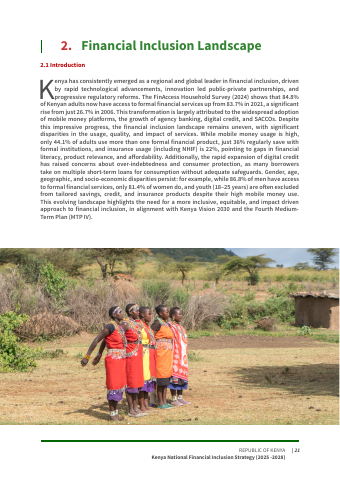
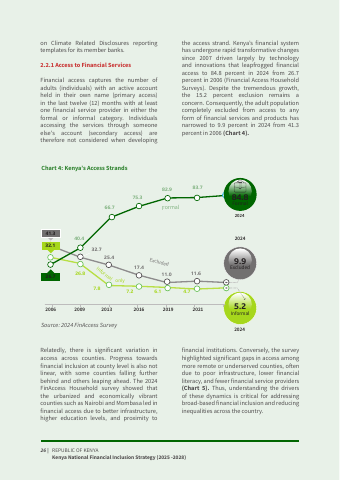
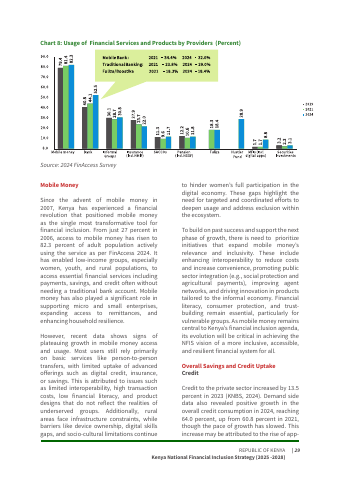
- 84.8% of Kenyan adults have access to formal financial services, up from 83.7% in 2021 and 26.7% in 2006.p.21
- Only 44.1% of adults use more than one formal financial product, just 36% regularly save formally, and insurance usage is 22%.p.21
- 86.8% of men have access to formal financial services versus 81.4% of women.p.21
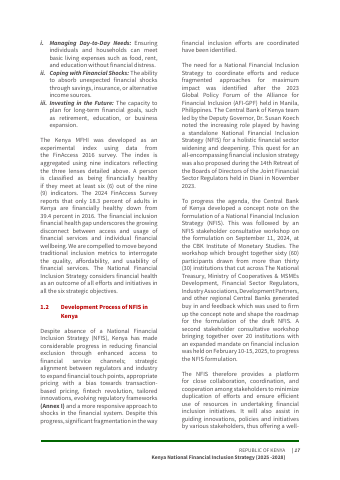
- Only 18.3% of adults are financially healthy, down from 39.4% in 2016.p.17
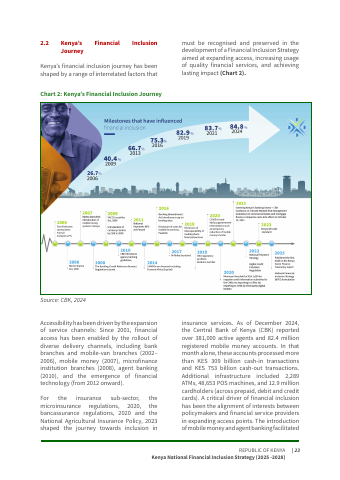
- As of December 2024 Kenya had over 381,000 active agents, 82.4 million registered mobile money accounts, 48,653 POS machines and 12.9 million cardholders.p.23
- The Credit Guarantee Scheme received seed capital of KES 3 billion and had unlocked credit worth KES 6.743 billion for MSMEs by December 2024.p.25
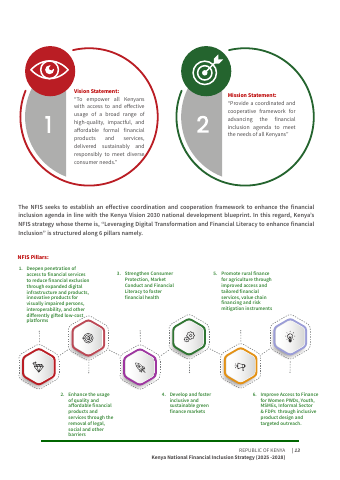
- The strategy is structured along 6 pillars under the theme of leveraging digital transformation and financial literacy.p.13
Key insights
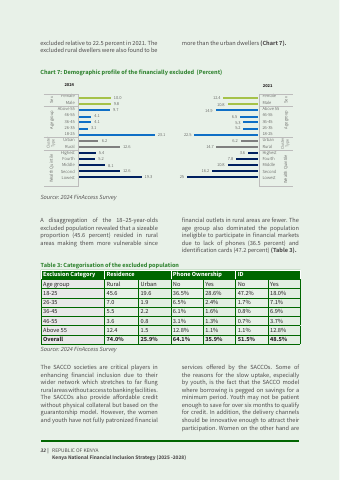
- The adult population completely excluded from financial services narrowed to 9.9% in 2024 from 41.3% in 2006.p.26
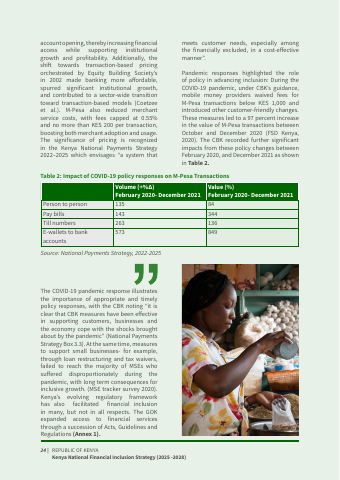
- M-Pesa merchant fees were capped at 0.55% and no more than KES 200 per transaction.p.24
- COVID-19 fee waivers on M-Pesa transactions below KES 1,000 led to a 97 percent increase in the value of M-Pesa transactions between October and December 2020.p.24
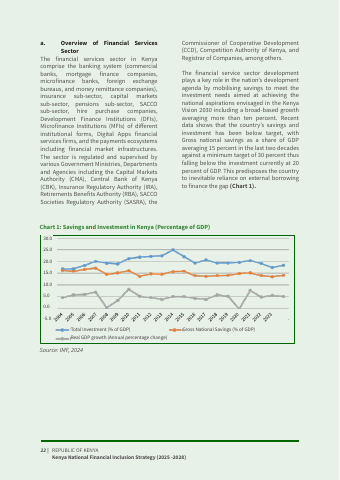
- Gross national savings averaged 15 percent of GDP against a minimum target of 30 percent, with investment at 20 percent of GDP.p.22
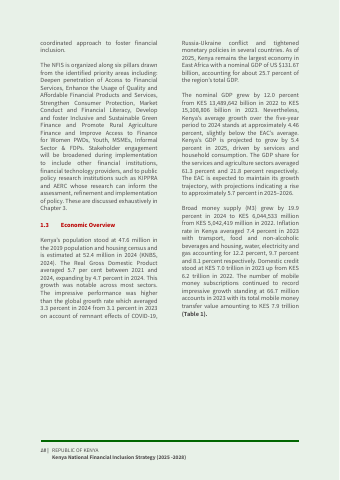
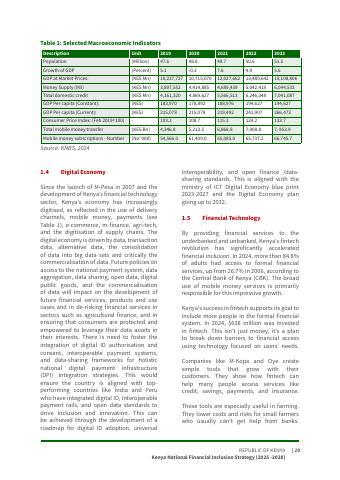
- Kenya's GDP is projected to grow by 5.4 percent in 2025.p.18
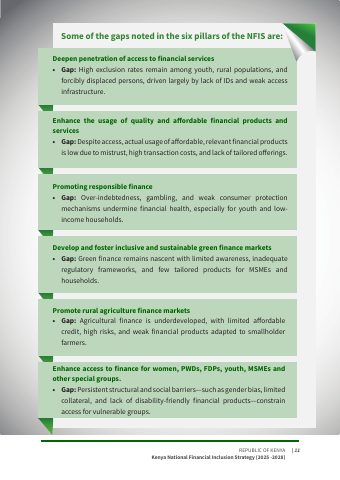
- Agricultural finance is underdeveloped, with limited affordable credit and weak products for smallholder farmers.p.11
- A County Inclusion Scorecard will track access, usage, quality and financial health at county level.p.25
Pages
 p.1
 p.2
 p.3
 p.4
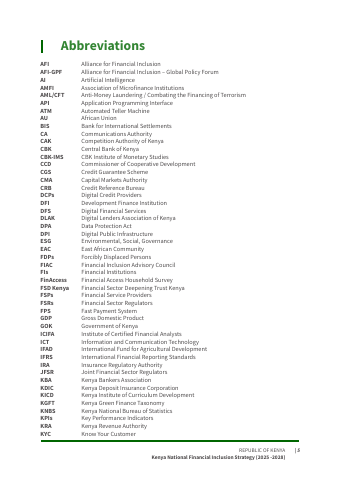 p.5
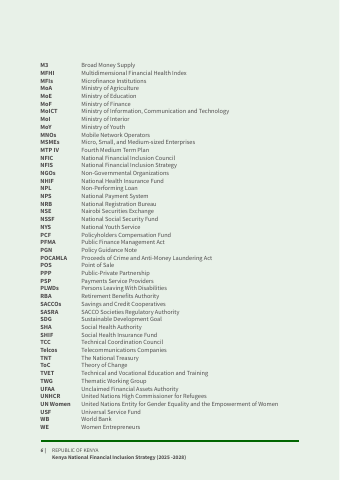 p.6
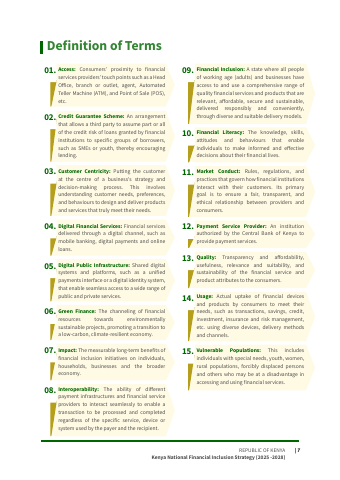 p.7
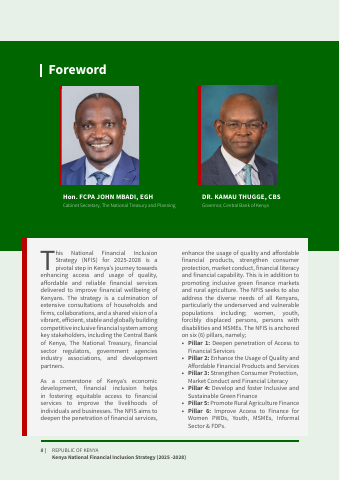 p.8
 p.9
 p.10
 p.11
 p.12
 p.13
 p.14
 p.15
 p.16
 p.17
 p.18
 p.19
 p.20
 p.21
 p.22
 p.23
 p.24
 p.25
 p.26
 p.27
 p.28
 p.29
 p.30
 p.31
 p.32
 p.33
 p.34
 p.35
 p.36
 p.37
 p.38
 p.39
 p.40
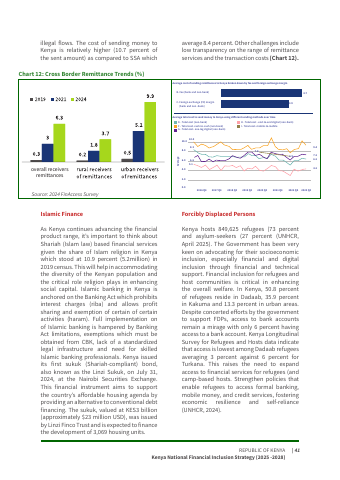 p.41
 p.42
 p.43
 p.44
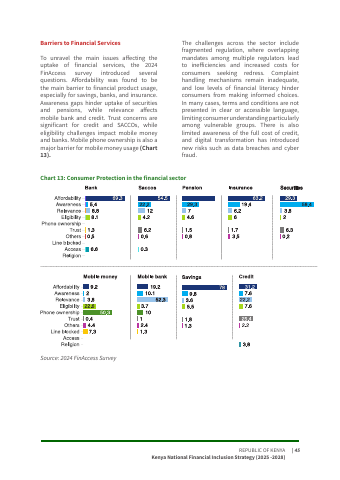 p.45
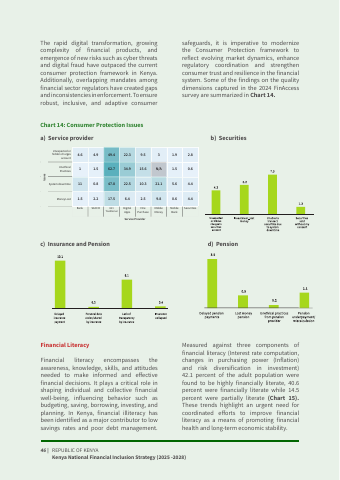 p.46
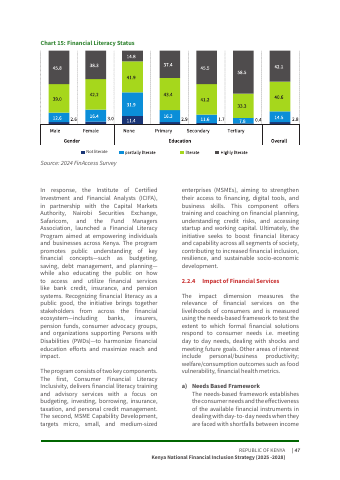 p.47
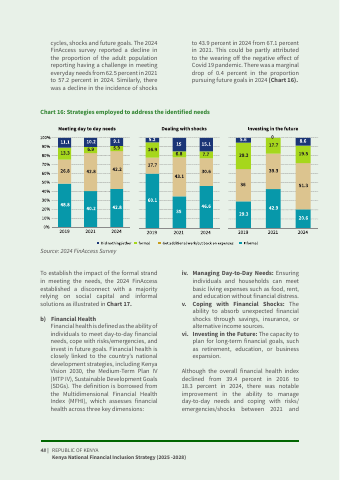 p.48
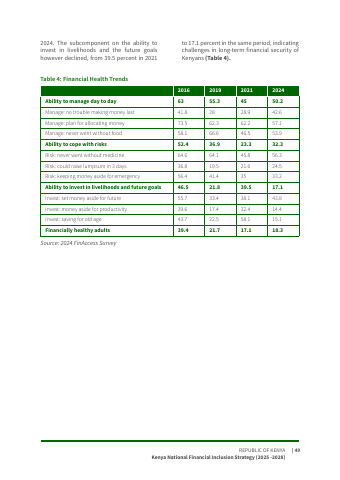 p.49
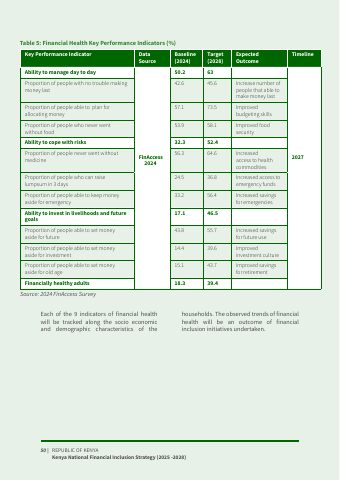 p.50
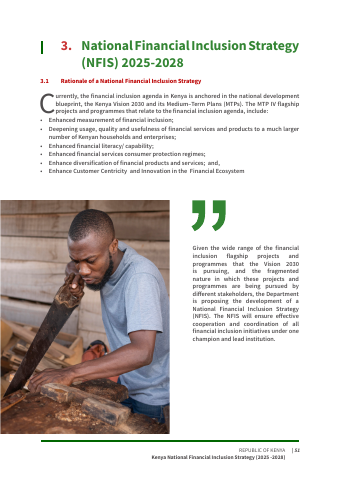 p.51
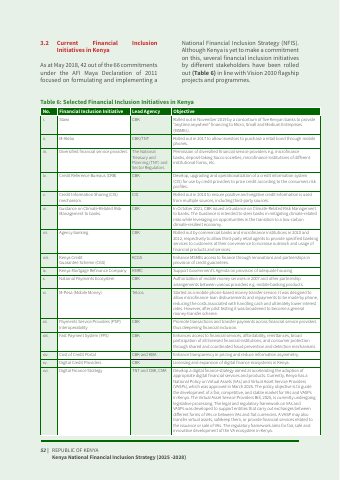 p.52
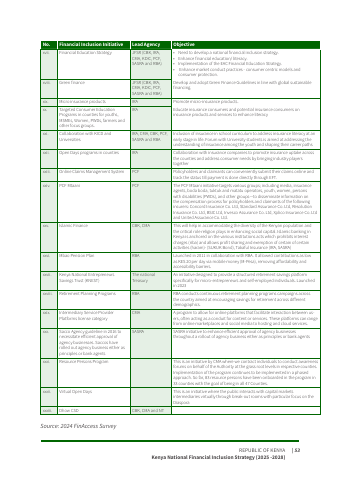 p.53
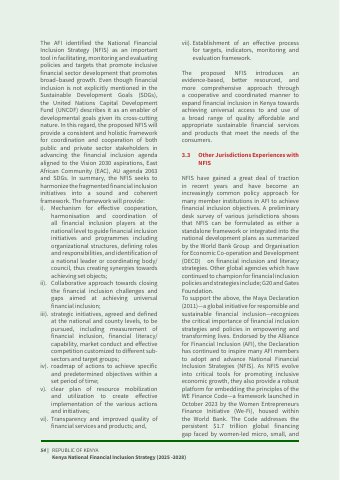 p.54
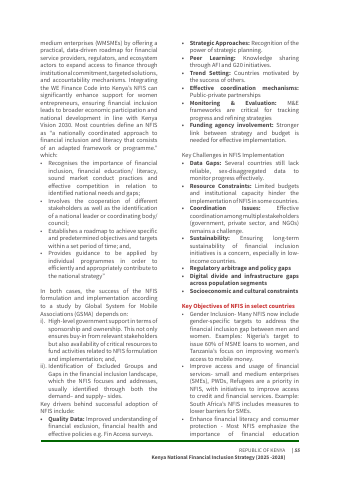 p.55
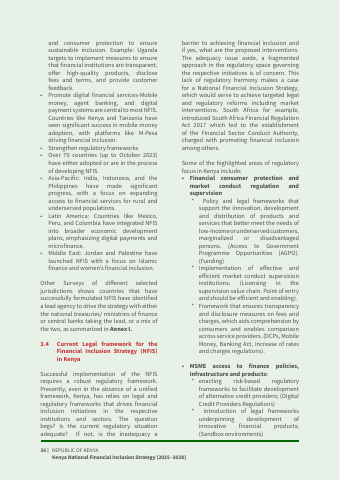 p.56
 p.57
 p.58
 p.59
 p.60
Funders mentioned
Topics and entities
Summary and figures generated from the document and checked automatically: every number shown appears on the cited page. Publishers can request removal.