Impact Investing in der Finanzwirtschaft und wirkungsorientiertes Investieren in Kommunen (Difu Repository (Deutsches Institut für Urbanistik gGmbH))
SaveSummary
- The transformation of private and public sectors in Germany requires estimates of up to €5 trillion.p.2
- Municipalities in Germany require approximately €165 billion for climate investments up to 2045.p.2
- The existing municipal investment backlog in Germany stands at around €231 billion.p.2
- Private households in Germany maintain a savings rate consistently above 10%, backed by over €9 trillion in private financial assets.p.2
- EU regulatory reporting thresholds under Sustainable Finance target companies with over 1,000 employees and net sales exceeding €450 million.p.3
- Doppik accounting is legally mandatory in 10 out of 13 non-city federal states in Germany.p.15
Key insights
- Germany faces a dual challenge of steering existing investment flows into sustainable projects and mobilizing private capital for municipal transformations.p.2
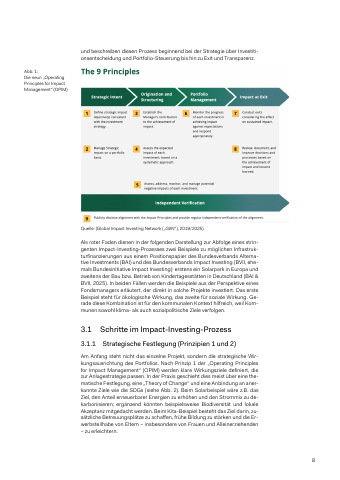
- The Operating Principles for Impact Management (OPIM) provide a nine-principle structured framework spanning strategy, pre-investment assessment, portfolio monitoring, and exit.p.7
- Impact Investing differs from general sustainable investing by requiring intentionality, impact measurement, investor contribution, and target financial return.p.7
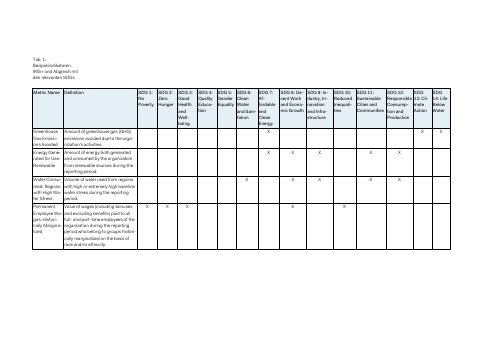
- Municipalities can utilize tools like sustainability budgets and sustainability return models to align budget allocations with the UN Sustainable Development Goals.p.16
- The implementation of municipal sustainability budgets typically proceeds through three key steps: Signaling, Tagging, and Analysing.p.17
- Green bonds and green promissory notes (Schuldscheindarlehen) allow German municipalities to diversify their creditor base and access private capital markets.p.21
- Adopting private sector frameworks like OPIM, IRIS+, and ICMA principles can help municipalities optimize their internal impact management and reduce transaction costs.p.24
Pages
 p.1
 p.2
 p.3
 p.4
 p.5
 p.6
 p.7
 p.8
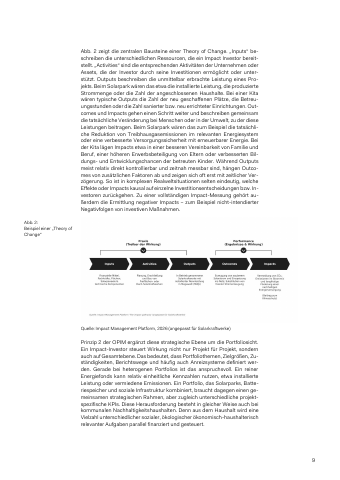 p.9
 p.10
 p.11
 p.12
 p.13
 p.14
 p.15
 p.16
 p.17
 p.18
 p.19
 p.20
 p.21
 p.22
 p.23
 p.24
 p.25
 p.26
 p.27
 p.28
 p.29
 p.30
 p.31
Funders mentioned
Topics and entities
EuropeClimate and impact investmentInfrastructure investmentPrivate debt and venture debtPrivate equityProject financePublic funding and grantsRegulationSME finance and lendingAdvanced Impact ResearchDeutsches Institut für UrbanistikEuropean Investment BankFair Finance InstituteGlobal Impact Investing NetworkInternational Capital Market AssociationKfW
Summary and figures generated from the document and checked automatically: every number shown appears on the cited page. Publishers can request removal.