Fintech and Social Entrepreneurship: Mechanisms for Sustainable Development (Financial and credit activity problems of theory and practice)
SaveSummary
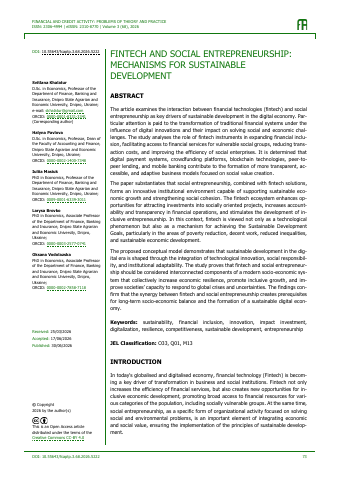
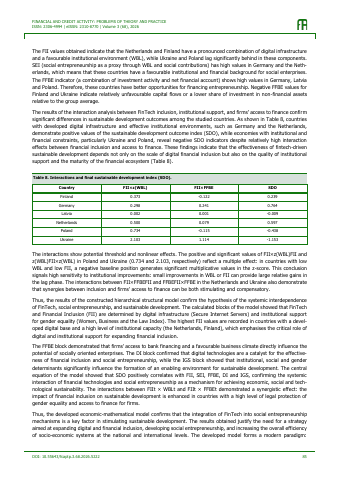
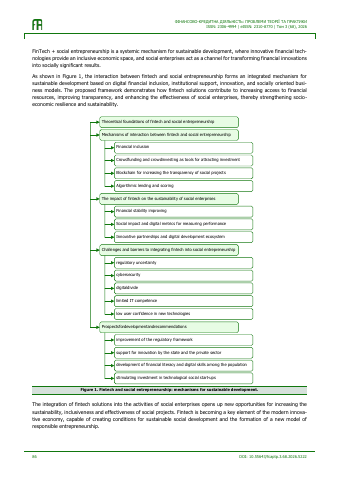
- The study explores the integration between fintech and social entrepreneurship, showing how digital tools facilitate financial inclusion, reduce transaction costs, and enhance the efficiency of social enterprises [p.1].p.1
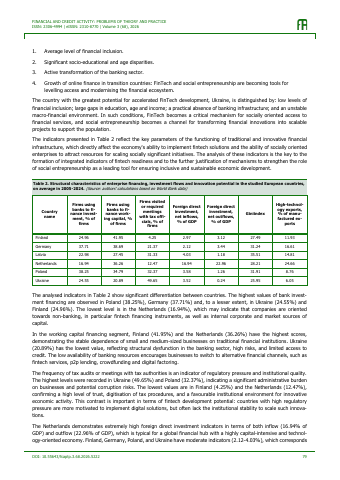
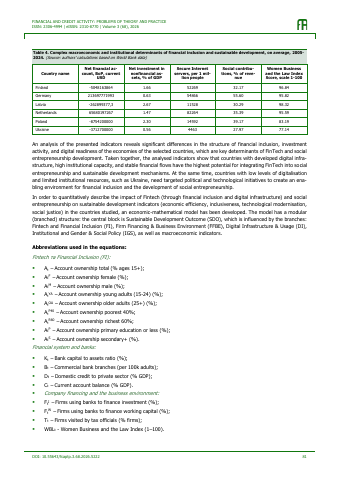
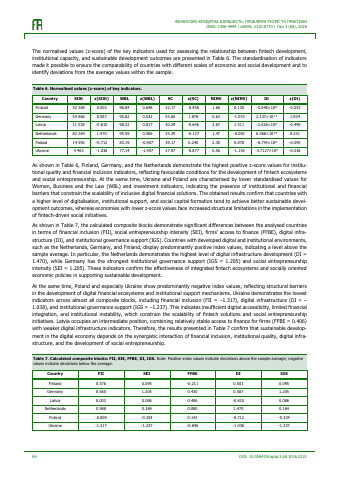
- The share of firms using banks to finance investment averaged 38.25% in Poland and 37.71% in Germany, whereas in the Netherlands it stood at only 16.94% [p.7].p.7
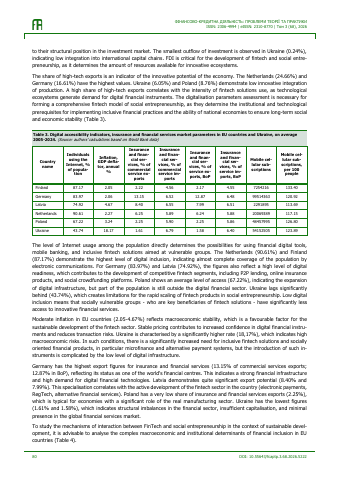
- Internet usage among populations averaged 90.61% in the Netherlands and 87.17% in Finland, while reaching 43.74% in Ukraine [p.8].p.8
Key insights
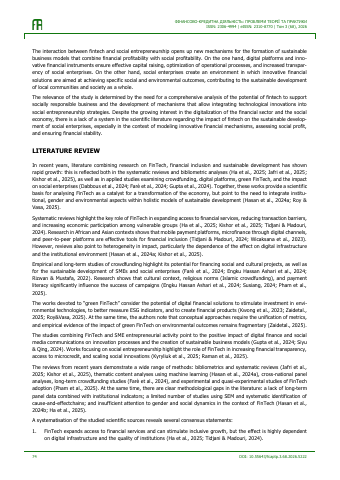
- Fintech provides the financial, social, and technological mechanisms required to scale socially oriented business models and improve financial inclusion [p.1, p.5].p.5
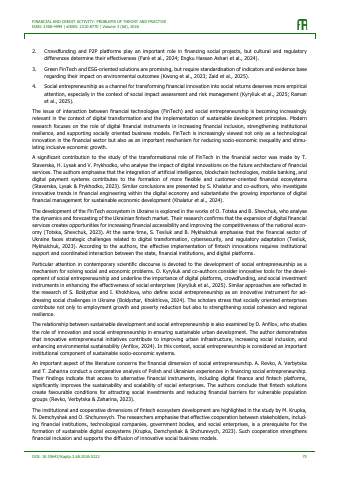
- Crowdfunding platforms and P2P lending play vital roles in funding social projects, though cultural and regulatory differences dictate their overall effectiveness [p.3].p.3
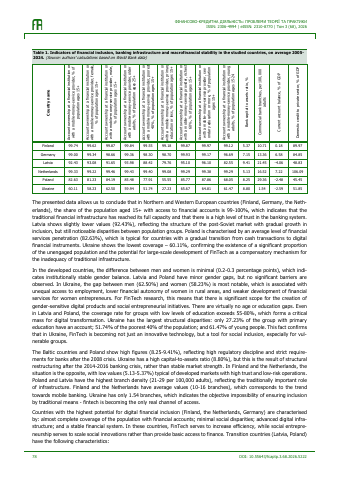
- Traditional banking infrastructure has reached full capacity in Northern and Western European countries, while transition economies like Ukraine face significant infrastructure and coverage gaps [p.6, p.7].p.6
- A lower reliance on bank financing for investments in the Netherlands points to a higher orientation towards non-banking fintech channels and market sources [p.7].p.7
- Digital accessibility correlates with fintech adoption, where high internet usage enables online insurance and P2P crowdfunding solutions [p.8].p.8
Pages
 p.1
 p.2
 p.3
 p.4
 p.5
 p.6
 p.7
 p.8
 p.9
 p.10
 p.11
 p.12
 p.13
 p.14
 p.15
 p.16
 p.17
 p.18
 p.19
Topics and entities
Summary and figures generated from the document and checked automatically: every number shown appears on the cited page. Publishers can request removal.