Cyber Security Challenges in Digital Payment Systems (Zenodo (CERN European Organization for Nuclear Research))
Summary
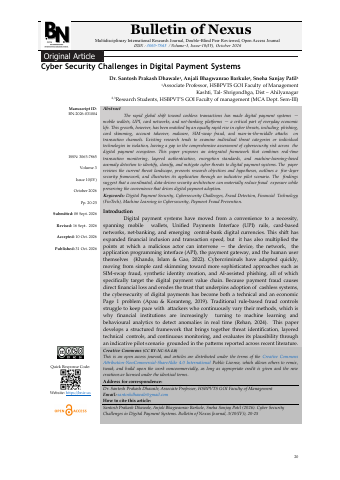
- The paper proposes an integrated five-layer cybersecurity framework combining layered authentication, encryption, real-time transaction monitoring, and machine-learning-based anomaly detection to mitigate cyber threats in digital payment systems.p.1
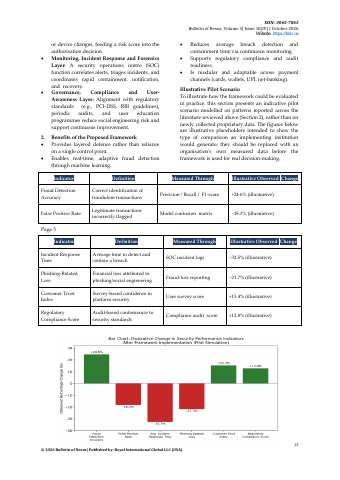
- In an illustrative pilot scenario, the framework demonstrated an observed change of +24.6% in fraud detection accuracy.p.4
- The pilot evaluation showed an illustrative change of -18.3% in the false positive rate for legitimate transactions.p.4
Key insights
- Digital payment expansion has multiplied security vulnerabilities across devices, networks, APIs, payment gateways, and end users.p.1
- Static rule-based fraud controls are increasingly ineffective against rapidly adapting cybercriminals using AI-assisted phishing and SIM-swap techniques.p.1
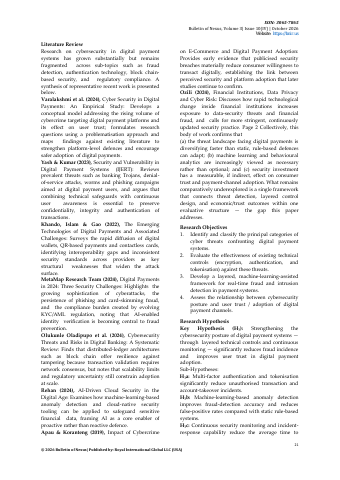
- Publicized security breaches directly reduce consumer willingness to engage in digital payment channels.p.2
- Interoperability gaps and inconsistent security standards across digital payment providers represent major structural weaknesses.p.2
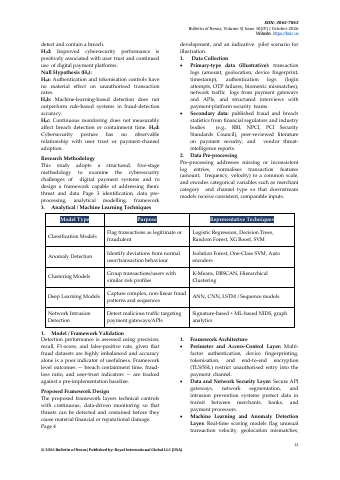
- Combining multi-factor authentication, device fingerprinting, tokenisation, and real-time machine learning improves intrusion detection.p.3
- Continuous security monitoring enables faster breach detection and containment while facilitating regulatory audit readiness.p.4
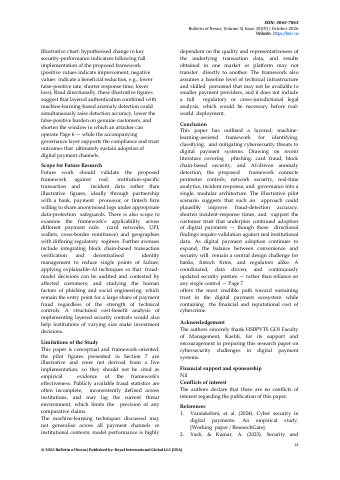
- Machine-learning anomaly detection reduces false positives for genuine customers while maintaining high fraud identification accuracy.p.5
Pages
 p.1
 p.2
 p.3
 p.4
 p.5
 p.6
Topics and entities
Summary and figures generated from the document and checked automatically: every number shown appears on the cited page. Publishers can request removal.