Cryptocurrency Ecosystem: A Comprehensive Review of Market Dynamics, Adoption, Regulatory Framework, Security and Sustainability (Zenodo (CERN European Organization for Nuclear Research))
Summary
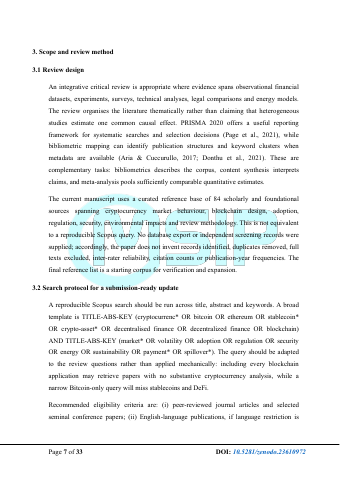
- The paper synthesizes cryptocurrency literature using a curated reference base of 84 scholarly and foundational sources.p.7
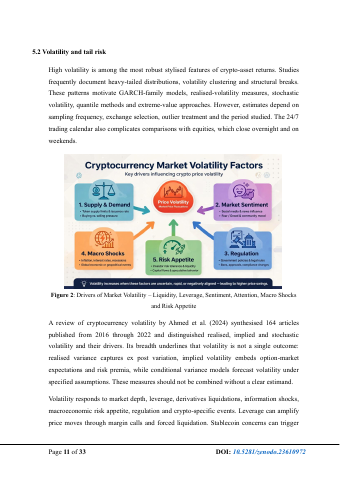
- A review of cryptocurrency volatility synthesised 164 articles published from 2016 through 2022.p.11
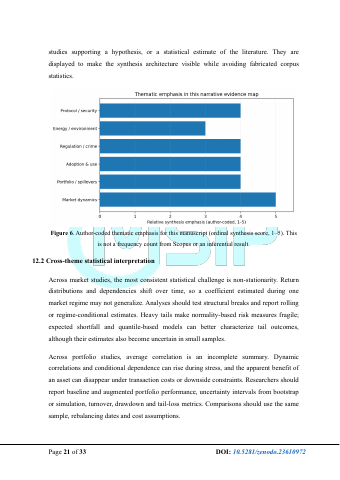
- The study uses an author-coded ordinal synthesis score from 1–5 to display thematic emphasis across review domains.p.20
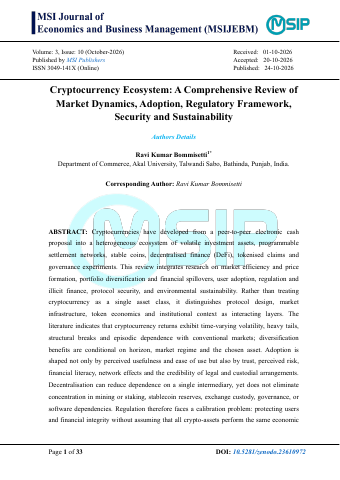
- The manuscript presents an integrative analysis of market dynamics, regulation, security, and sustainability across 33 pages.p.1
- Cryptocurrency market efficiency research highlights heavy tails and time-varying volatility studied across continuous 24/7 trading calendars.p.11
Key insights
- Technical decentralisation does not eliminate concentration in mining, staking, exchange custody, stablecoin reserves, or software dependencies.p.1
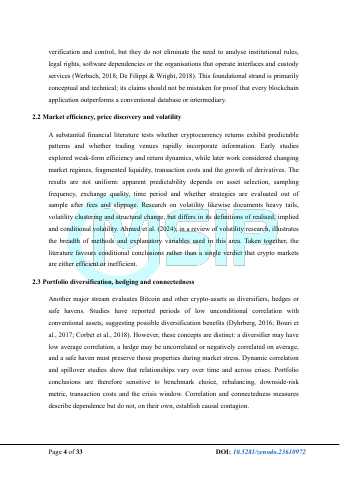
- Portfolio diversification benefits of crypto-assets are conditional on the specific market regime, time horizon, and benchmark asset.p.4
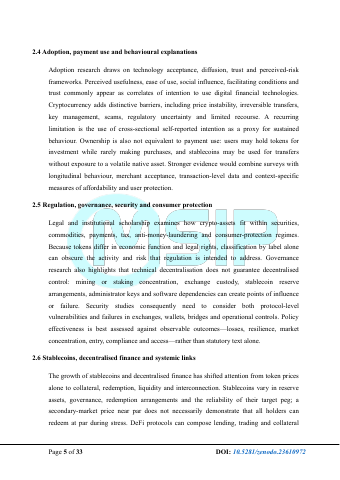
- User adoption is shaped by perceived usefulness, trust, perceived risk, financial literacy, and custodial credibility.p.1
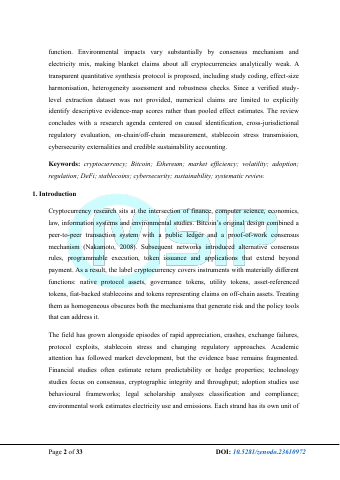
- Environmental impacts of crypto-assets vary significantly by consensus mechanism and electricity mix, rendering blanket claims analytically weak.p.2
- Cross-venue arbitrage is constrained by capital controls, withdrawal delays, custody risk, and blockchain settlement latency.p.10
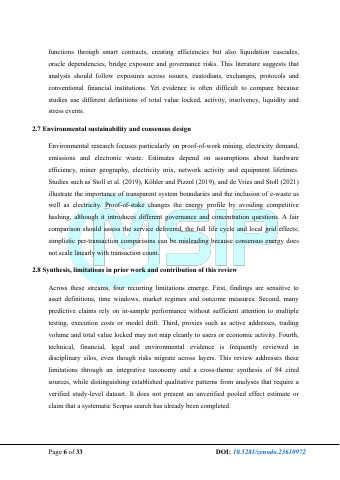
- Smart contract composability in decentralised finance creates efficiency while introducing liquidation cascades and oracle risks.p.6
- Proof-of-stake consensus reduces direct energy demand compared to proof-of-work while creating distinct stake concentration questions.p.6
- Address pseudonymity on public blockchains enables transaction tracking but complicates definitive identity attribution.p.18
Pages
 p.1
 p.2
 p.3
 p.4
 p.5
 p.6
 p.7
 p.8
 p.9
 p.10
 p.11
 p.12
 p.13
 p.14
 p.15
 p.16
 p.17
 p.18
 p.19
 p.20
 p.21
 p.22
 p.23
 p.24
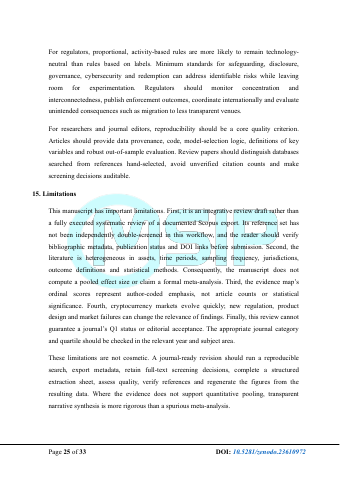 p.25
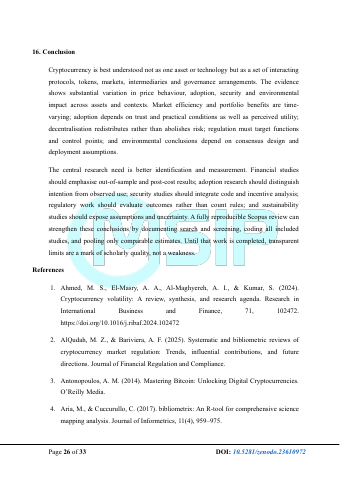 p.26
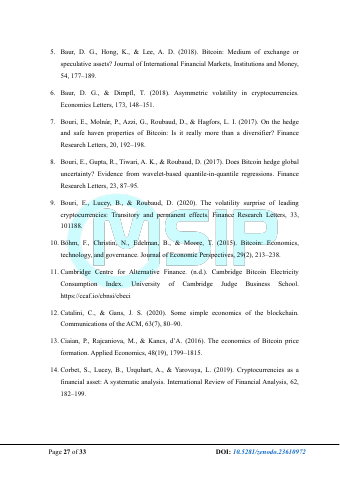 p.27
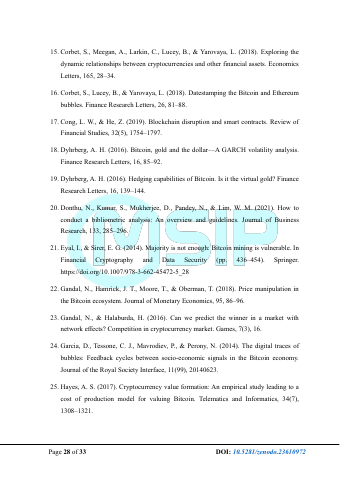 p.28
 p.29
 p.30
 p.31
 p.32
 p.33
Topics and entities
Summary and figures generated from the document and checked automatically: every number shown appears on the cited page. Publishers can request removal.