Financial Market Contagion and Risk Transmission Across Global Economies
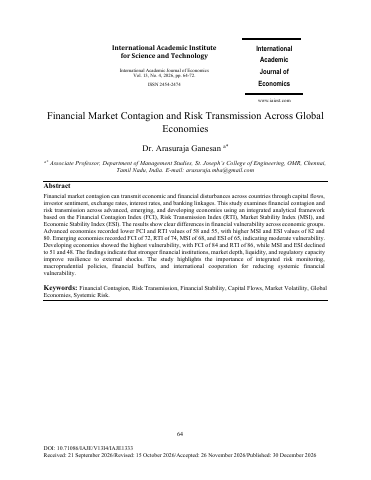
Advanced economies recorded lower vulnerability with a Financial Contagion Index (FCI) of 58 and a Risk Transmission Index (RTI) of 55.
Research index · 689 documents · Website
Advanced economies recorded lower vulnerability with a Financial Contagion Index (FCI) of 58 and a Risk Transmission Index (RTI) of 55.
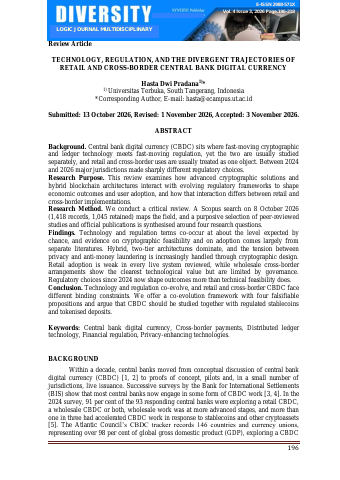
A Scopus bibliometric search conducted on 8 October 2026 retrieved 1,418 records, from which 1,045 were retained for critical analysis.
The paper was published in Vol. 7 of the International Journal of Advance and Applied Research.
The study develops four theoretical hypotheses and corresponding assessment indicators to promote financial innovation while preserving stability.
Between January and November 2024, Indonesia recorded a crypto asset transaction value of Rp556,53 triliun with 22,11 juta registered customers.
Virtual currency crimes in China reached a scale of RMB 430.7 billion in 2023.
Expanding access to Tether's arbitrage mechanism reduced the absolute size of peg deviations by approximately one half.
European Union Regulation (UE) 2023/1114 was enacted on 31 May 2023 to establish the MiCA framework for crypto-asset markets.
The study surveyed 97 Generation Z retail forex traders aged 17–29 years in Surabaya City to examine overtrading behavior.
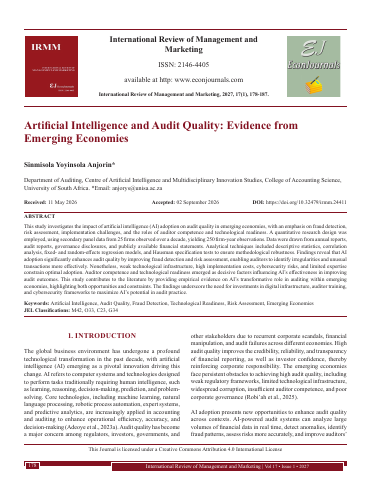
The quantitative research design analyzed secondary panel data from 25 firms observed over a decade, producing 250 firm-year observations.
The UAE economy attracted over 56 млрд долл. США in crypto assets during 2024–2025.
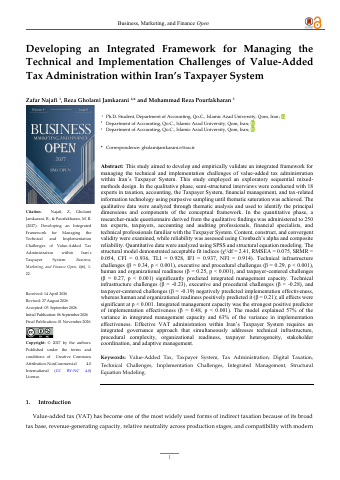
The qualitative phase of the research gathered insights through semi-structured interviews with 18 experts across taxation, accounting, tax administration, and information technology.
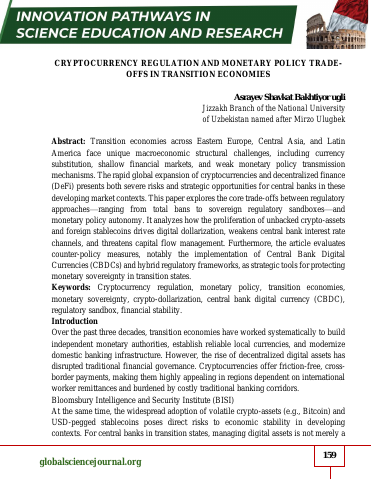
Transition economies across Eastern Europe, Central Asia, and Latin America face unique structural macroeconomic challenges, including currency substitution and weak monetary policy transmission.
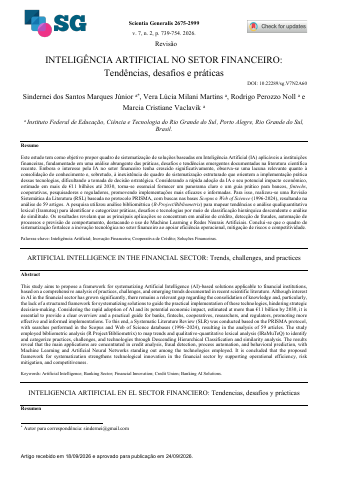
A Systematic Literature Review (SLR) based on the PRISMA protocol analyzed 59 articles published between 1996 and 2024 to map AI applications in the financial sector [p.1].
The systematic review protocol based on Google Scholar searches spanning 2004 to 2025 screened 98 unique references and retained 74 publications.
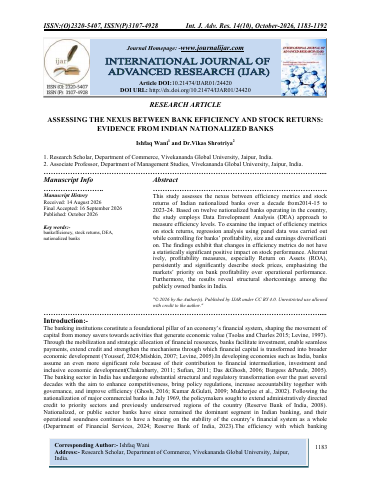
Three banks—Bank of Maharashtra, Punjab and Sind Bank, and State Bank of India—achieved full efficiency across all 10 years under CRSTE, VRSTE, and SE metrics.
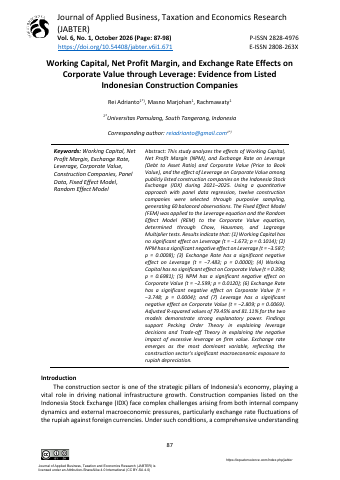
Average Net Working Capital among listed Indonesian construction issuers dropped from IDR 1,911.42 billion in 2021 to IDR 640.83 billion in 2025.
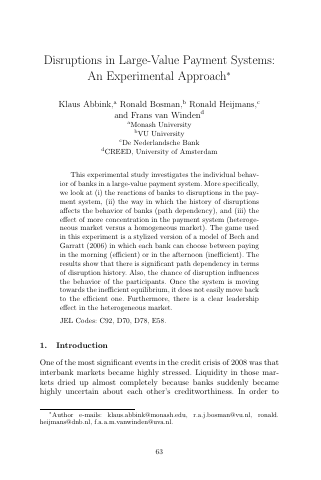
In 2008, TARGET2 settled a daily average of EUR 3.126 billion in value with 348,000 transactions.
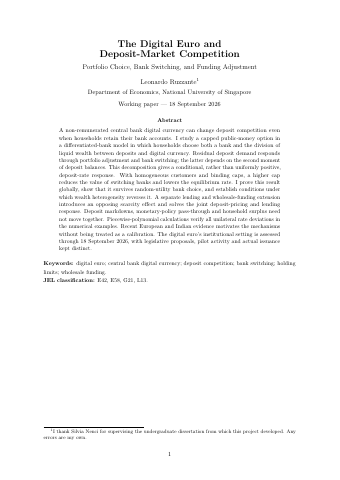
On 30 October 2025, the ECB announced the transition beyond the 2023–25 preparation phase with potential readiness for first issuance during 2029.
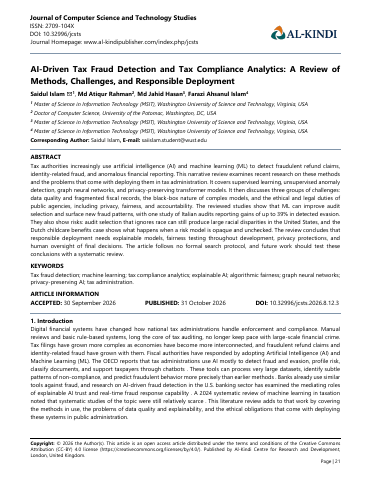
Replacing the least promising 10% of manual tax audits in Italy with taxpayers selected by an algorithm raised detected tax evasion by up to 39%.
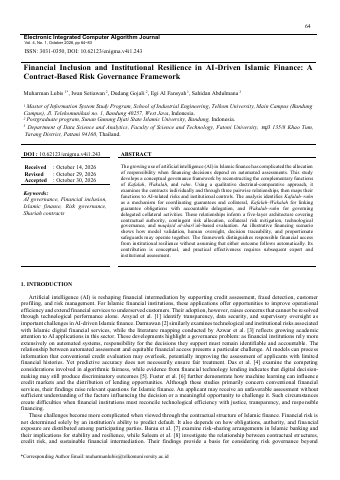
The research paper was published in Electronic Integrated Computer Algorithm Journal covering pp 64~83 in Vol. 4, No. 1.
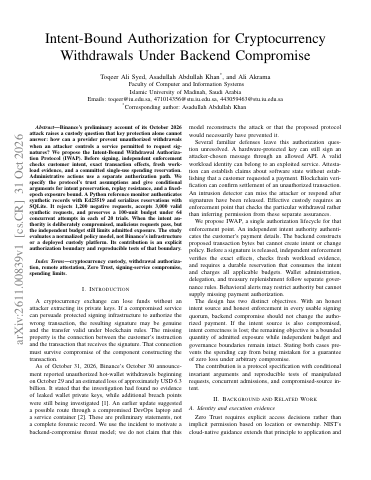
The Intent-Bound Withdrawal Authorization Protocol (IWAP) introduces an independent enforcement boundary to prevent unauthorized cryptocurrency transfers during backend compromise.
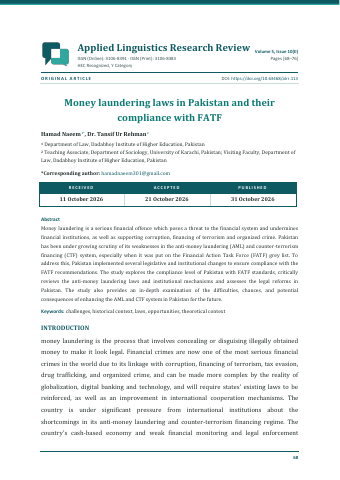
Pakistan introduced legislative and institutional changes to align its anti-money laundering and counter-terrorism financing systems with FATF standards [p.1].
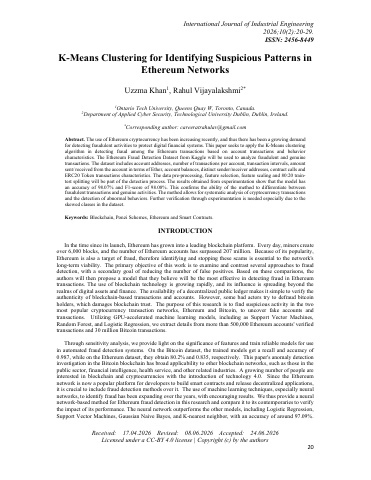
The experimental results show that the proposed K-Means clustering model achieved a classification accuracy of 98.07% and an F1-score of 98.08%.
More than 10.000 types of cryptocurrencies exist worldwide, with Bitcoin being the most widely recognized and capitalized digital asset.
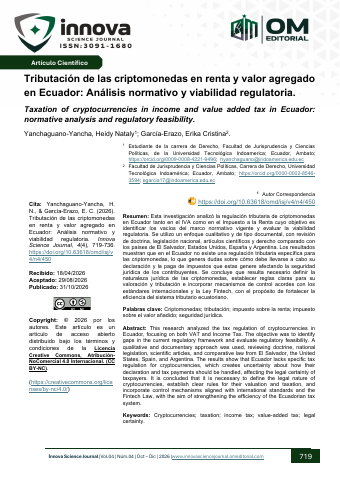
Income from Virtual Digital Assets is subject to a 30% tax rate under Section 115BBH of the Income Tax framework.
During H1 2022, 10 Nigerian Deposit Money Banks expended N81.92 billion on ICT, representing a 58.7% rise from 2021 to construct digital channels and connect with fintechs.
World Bank statistics reported 97.74 million unbanked adults in Indonesia in 2021.
The study presents a conceptual evaluation of digital currency adoption published in Vol. 13, No. 4 of the journal.
A cross-sectional survey of 5,335 adult patients found that health insurance awareness was 60.9%, while ownership was 19.9% and medical care utilization was 15.8%.