Celebrity Investments in Start-ups and Their Implications: A Study of the Indian Context (EPH - International Journal of Business & Management Science)
Summary
- Indian celebrities are actively transitioning from traditional brand ambassadors to strategic equity investors and co-founders in startups.p.2
- DPIIT officially defines an Indian startup as an entity under 10 years old with an annual turnover under ₹100 crore.p.2
- Celebrity investors actively participated in 30 financing rounds in 2022 alone.p.3
- Bollywood startup investments experienced a sharp decline down to $3.6 million in 2024.p.3
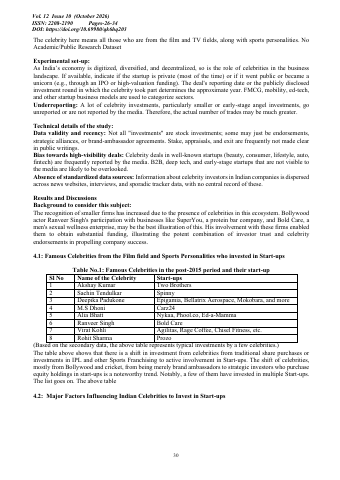
- As of December 2023, more than 110 startups in India had received investments from celebrities.p.4
- Recognized startups in India saw an increase of over 38,000% from 471 startups in 2016.p.4
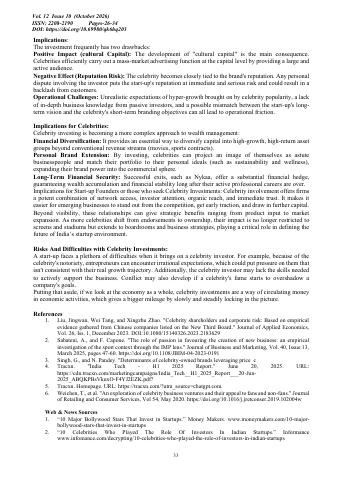
- Marketing research notes that startups must spend at least 5 times more for each rupee on celebrity endorsements to gain significant marketing impact.p.7
Key insights
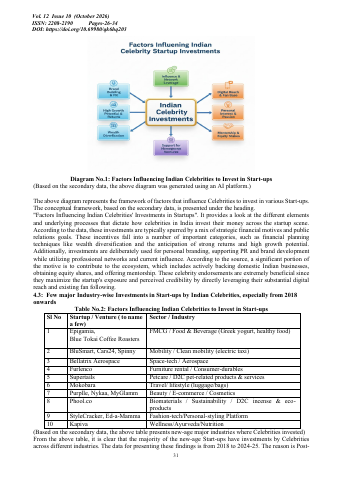
- Indian celebrities are expanding beyond traditional advertising into direct equity holders, strategic partners, and startup co-founders.p.2
- Empirical research on Indian manufacturing startups supports the Pecking Order Theory, prioritizing internal financing over external investment.p.3
- The presence of celebrity shareholders can elevate corporate risk by introducing instability into capital structures dependent on celebrity influence for debt funding.p.3
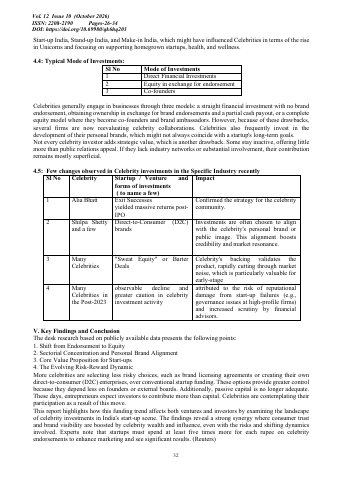
- Celebrity investment structures in India primarily follow three models: direct cash investments, sweat equity for endorsement, or complete co-founder equity partnerships.p.7
- Investment activity among celebrities declined post-2023 due to increased caution over potential reputational damage caused by startup governance issues.p.7
- Investing in early-stage ventures offers celebrities long-term wealth diversification away from volatile sports and entertainment earnings.p.8
Pages
 p.1
 p.2
 p.3
 p.4
 p.5
 p.6
 p.7
 p.8
 p.9
Topics and entities
Summary and figures generated from the document and checked automatically: every number shown appears on the cited page. Publishers can request removal.