The Risks of Institutional Failure Within a Cashless Society
Digital payment adoption reduces transaction costs and administrative duties, but introduces risks of resource centralization without institutional checks [p.1].
248 documents
Digital payment adoption reduces transaction costs and administrative duties, but introduces risks of resource centralization without institutional checks [p.1].
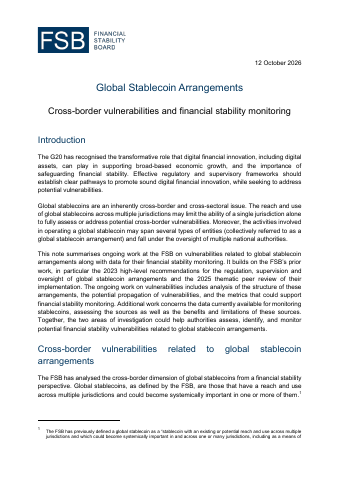
As of mid-2026, the total market value for stablecoins stands at around $300 billion.
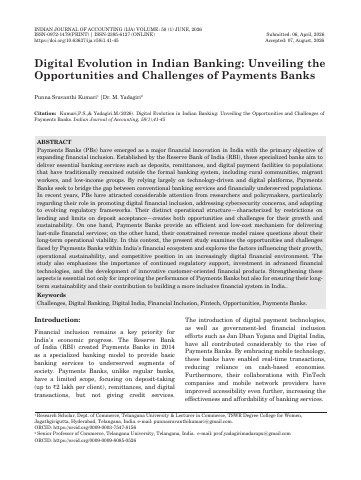
The Reserve Bank of India created Payments Banks in 2014 as a specialized banking model to deliver basic financial services to underserved populations.
Small and Medium Sized Enterprises across the world utilize FinTech services at approximately 25 percent.
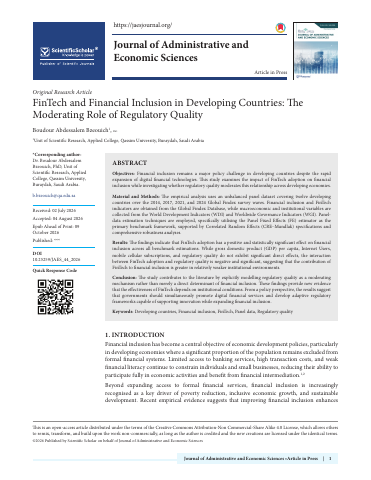
The empirical study examines the impact of FinTech adoption on financial inclusion using an unbalanced panel dataset of 12 developing countries across the 2014, 2017, 2021, and 2024 Global Findex survey waves.
The study conducts an empirical investigation covering 74 countries over the 2002 – 2022 period to evaluate how digital financial innovations impact systemic financial stability.
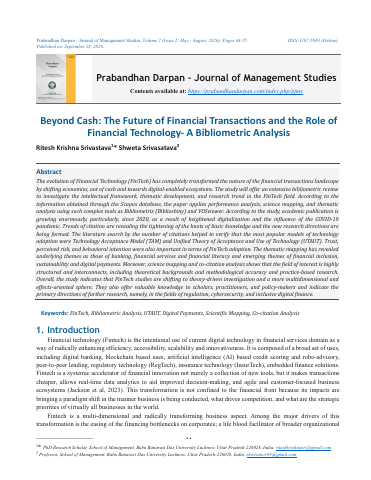
The systematic review protocol based on Google Scholar searches spanning 2004 to 2025 screened 98 unique references and retained 74 publications.
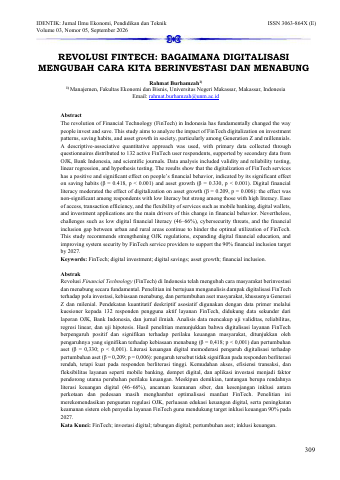
The study collected primary data from a sample size of 200 financial sector employees across Kathmandu Valley using a structured questionnaire on a 5-point Likert scale.
The study analyzes a dataset of 47 publicly reported FinTech cyber incidents occurring between 2008 and 2025.
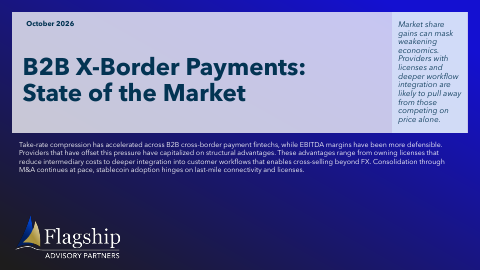
Growth halved across B2B cross-border payout cohorts between 2023 and 2025, with enterprise payout fintechs showing better margin performance.
The document dataset involved 177 authors with an average citation rate of 18.79 per document and an average age of 3.56 years.
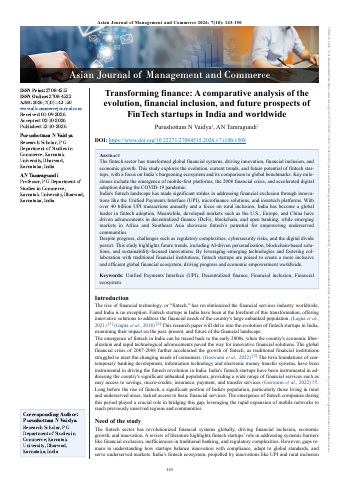
India records over 40 billion UPI transactions annually, positioning it as a leader in fintech adoption.
Corporate stablecoin adoption live in production doubled from 9% in 2025 to 18% in 2026.
M&A deal volumes in fraud and digital identity grew at ~18% CAGR between 2015–25, with 2025 marked as the most active year on record.
The adult account ownership rate in Morocco stands at approximately 53%, reflecting ongoing progress alongside notable urban-rural and gender disparities.
UPI transaction volume grew continuously over five years from 2,233 crore transactions in FY2020-21 to 18,585 crore transactions in FY2024-25.
Real median family income rose 7 percent between the 2022 to 2025 surveys, while real mean family income fell 6 percent.
Digital finance has transformed financial services while expanding the cyber-attack surface across banking, FinTech platforms, and decentralized systems [p.1].
This study evaluates the impact of banking industry technology on customer services in Cochin using a sample size of 142 respondents.
The national FinTech ecosystem reached 1,200 companies with daily transactions of USD 890 million or around Rp 14 trillion, growing 62% year-on-year per May 2025.
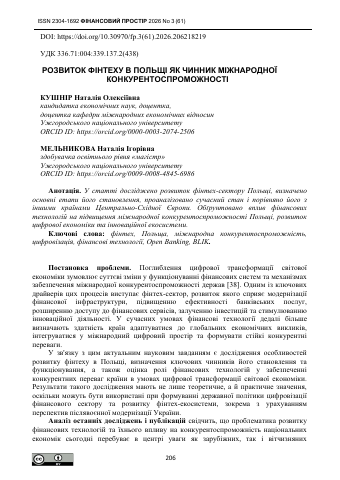
Poland's fintech ecosystem includes over 400 active companies employing over 22,000 people.
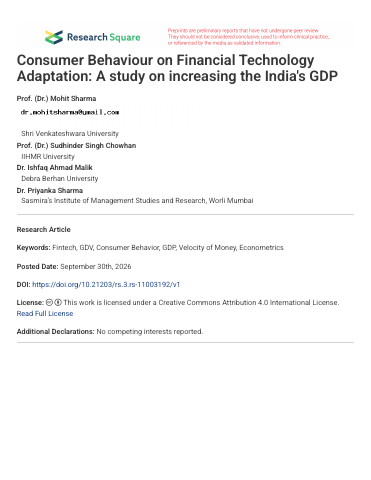
Every 1% increase in gross digital transaction value (GDV) makes a positive contribution of about 0.14% to India's real GDP growth rate.
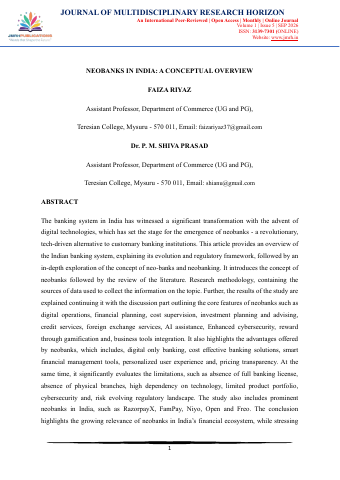
Neobanking as a concept first emerged in the UK in 2013 and in Germany in 2015.
During H1 2022, 10 Nigerian Deposit Money Banks expended N81.92 billion on ICT, representing a 58.7% rise from 2021 to construct digital channels and connect with fintechs.
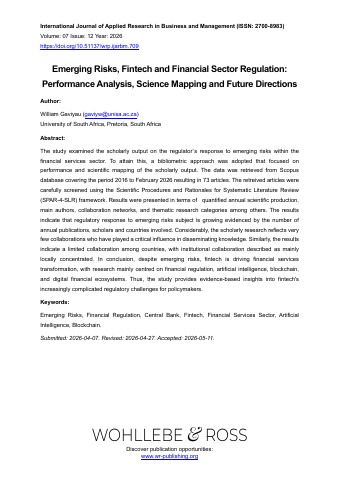
The study conducted a bibliometric mapping of 97 peer-reviewed Scopus articles published between 2010 and 2025 to evaluate policy-driven digital payment adoption in informal economies.
Global payments industry revenues reached 2,5 trln AQSh dollari, but revenue growth decelerated from 12 foiz in 2023 to 4 foiz in 2024.
Celent surveyed 2,515 global consumer banking customers across five global regions to assess satisfaction, switching attitudes, and technology expectations.
The share of internet users among the population of Uzbekistan reached 94,2 % in January–August 2025, compared to 93,3 % in 2024.
The Indian MSME sector contributes approximately 30% of India's Gross Domestic Product (GDP), 45% of manufacturing output, and over 40% of total exports.
The study conducted qualitative in-depth interviews with 26 FinTech users across Kano (14) and Abuja (12) to examine digital payment experiences.