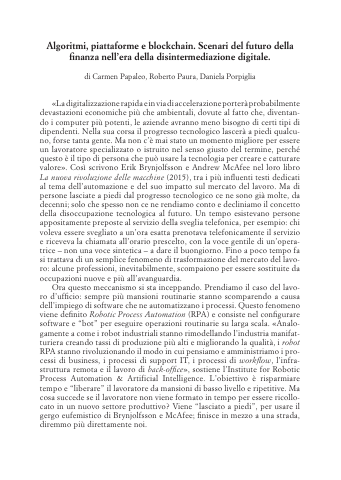
Algorithms, Platforms, and Blockchain: Future Scenarios of Finance in the Era of Digital Disintermediation
Digital payment transactions in the European Union increased from 4.8% of total transactions in 2007 to 73.3% in 2014.
1,216 documents
Digital payment transactions in the European Union increased from 4.8% of total transactions in 2007 to 73.3% in 2014.
The study analyzes quantitative data from 750 overfunded campaigns out of 800 successful campaigns conducted between 2015 and 2024.
Regulation (EU) 2020/1503 (RPFP) sets a threshold excluding equity crowdfunding offers above 5,000,000 EUR from its standardized framework
Following the implementation of EU ECSP regulations and domestic legislation in 2022, market consolidation left 1 equity crowdfunding provider and 3 debt platforms operating in Poland.
Geopolitical risk acts as a key driver of traditional and emerging risks, featuring in over 50% of the topics discussed in the report.
Digital transformation over the last decade has driven the shift toward crowd models, as highlighted in issue 12 (253) of Economic Sciences.
As of August 2025, the Capital Markets Board of Türkiye has officially licensed 18 equity-based crowdfunding platforms.
More than 87% of adults in Colombia held at least one formal financial product according to national financial inclusion reporting.
Copenhagen Infrastructure Partners manages 12 investment funds with total capital exceeding €30 billion from over 180 institutional investors worldwide.
The number of registered self-employed individuals in Russia reached 15.9 million as of 28.02.2026, representing over 20.8% of the economically active population.
Access to agricultural credit must serve as a driver for the ecological transition to Agriculture 4.0, which requires substantial upfront capital.
In the United States, individual private credit loans typically range between $10 and $500 million, with total volume surpassing $1.2 trillion.
Total European B2C e-commerce turnover increased by 7%, rising from €842 billion to €911 billion in 2025.
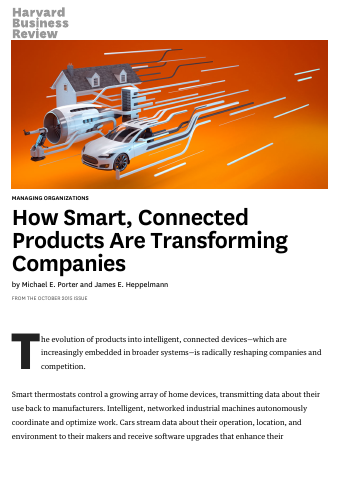
Companies operating in a smart, connected environment face 10 new strategic decisions that reshape every activity in their value chain.
As of September 30, 2025, the federal banking agencies identified no material differences among accounting standards applicable to insured depository institutions.
The Financial Conduct Authority spent £14m on its InvestSmart campaign to promote positive investing principles.
In 2024, the Swiss financial sector directly generated a gross value added of CHF 73.2 Mrd. and supported 245’800 jobs (FTE).
The share of SMEs in GDP in Kazakhstan increased from 28.4% in 2018 to 36.5% in 2023, employing 4.3 million people across 2.2 million registered entities.
Italy ranks among the top ten countries globally for scientific output with over 2.6 million publications.
An exploratory study based on 19 semi-structured interviews analyzes the financial instruments and stakeholder expectations surrounding Italian energy communities.
In Indonesia, individual investors with an annual income below Rp500.000.000 face a maximum investment cap of 5% of their annual earnings under POJK 57/2020.
The development of smart enterprises in Ukraine is hindered by high transaction costs and informational asymmetry rather than solely low labor costs.
A stratified sample of 151 key actors from Ecuador's financial system was analyzed to evaluate five dimensions of financial inclusion.
Total turnover of German SMEs grew moderately by 2% in 2024 to EUR 5,179 billion, while average turnover growth per enterprise stood at 1.2%.
Over 53% of SMEs believe economic conditions will deteriorate over the next 12 months.
The quantitative study surveyed 532 active private CFP investors, 1027 potential investors, and 1004 non-investors in Russia in 2025.
Eight G20 members achieved the highest rating of 5/5 for direct access of non-bank payment service providers in 2025.
A total of eight G20 members achieved the highest 5/5 rating for direct access of non-bank payment service providers in 2025, including Brazil, China, Indonesia, Mexico, the Republic of Korea, Türkiye, the United Kingdom, and the European Union.
Eight G20 members achieved the maximum score of 5/5 for direct access for non-bank payment service providers in 2025.
A total of 8 G20 members achieved the highest rating of 5/5 for direct access to payment systems for non-bank payment service providers (NBPSPs) in 2025.