The FinTech-AI Nexus: A Paradigm Shift in Anti-Money Laundering Surveillance and Enforcement (Potchefstroom Electronic Law Journal/Potchefstroomse Elektroniese Regsblad)
Summary
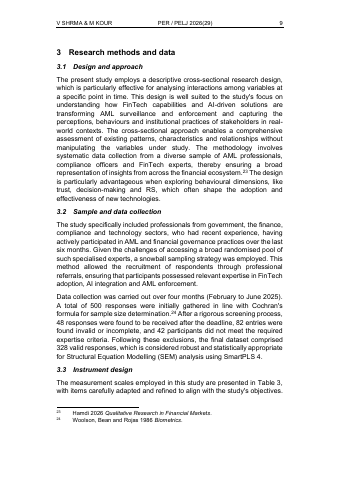
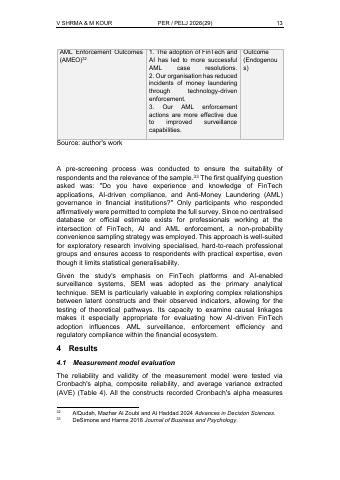
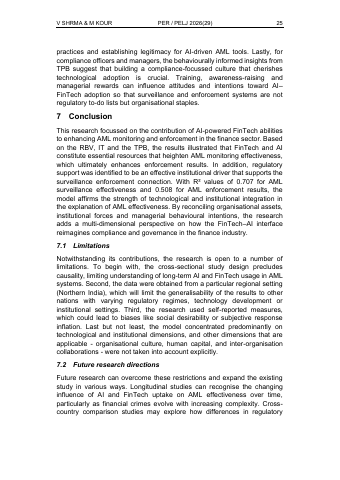
- Data collection conducted between February and June 2025 yielded 500 initial survey responses, resulting in a final sample of 328 valid responses after screening [p.9].p.9
- The model demonstrates high predictive power, explaining an R² of 0.707 of the variance in AML surveillance efficiency [p.17].p.17
- The conceptual framework explains an R² of 0.508 of the variance in AML enforcement outcomes [p.17].p.17
- Normative pressures are the strongest predictor of AML surveillance efficiency with a path coefficient of β = 0.725 [p.17].p.17
- Regulatory support shows a strong direct effect on AML enforcement outcomes with β = 0.571 [p.17].p.17
Key insights
- FinTech capabilities and AI adoption act as strategic resources that significantly enhance anti-money laundering surveillance efficiency [p.6, p.7].p.6
- Normative pressures from industry standards and international expectations drive institutions to improve surveillance systems [p.7].p.7
- Regulatory support directly strengthens enforcement success and positively moderates the link between surveillance efficiency and enforcement [p.17].p.17
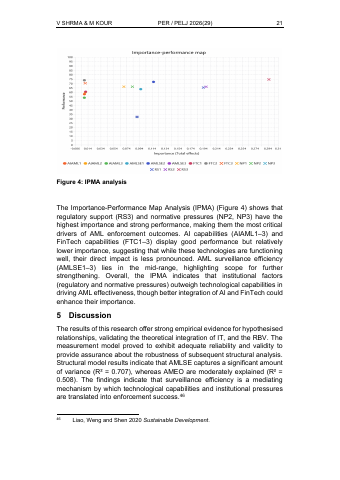
- Importance-Performance Map Analysis reveals that regulatory support has the highest total effect (0.571) and performance (70.397) on enforcement outcomes [p.19].p.19
- Institutional forces outweigh purely technological drivers in determining overall AML enforcement success [p.21].p.21
Pages
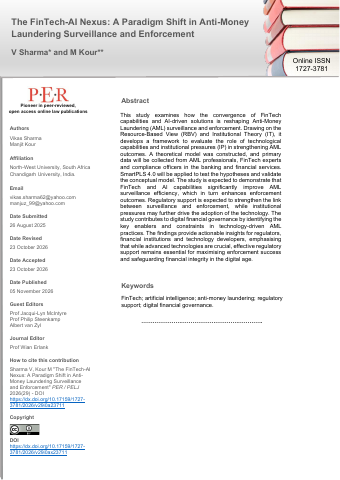 p.1
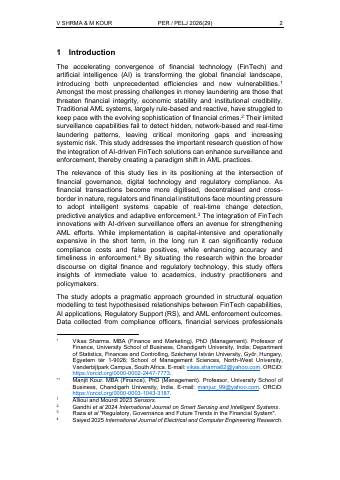 p.2
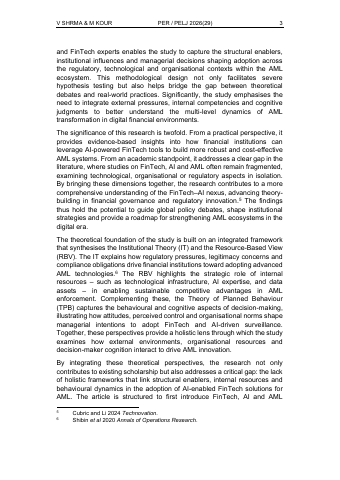 p.3
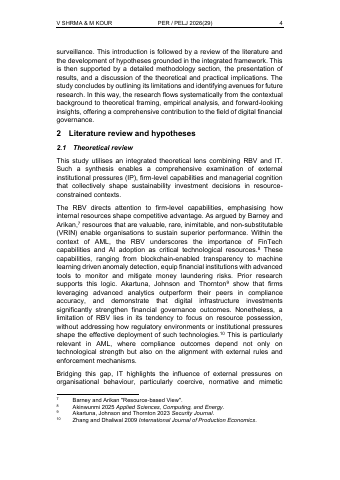 p.4
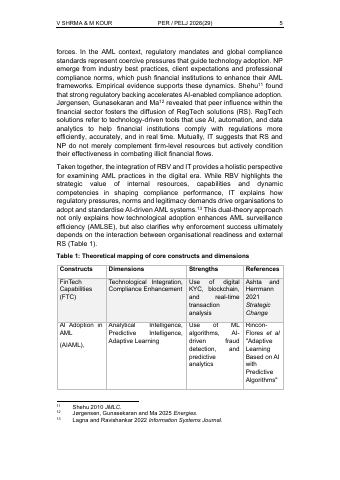 p.5
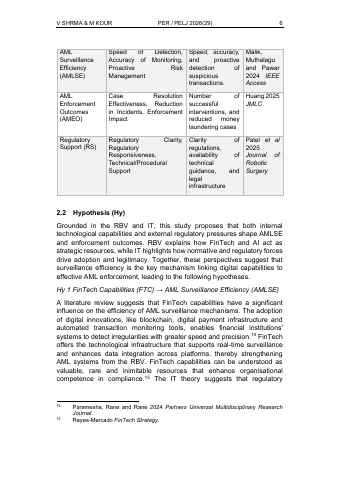 p.6
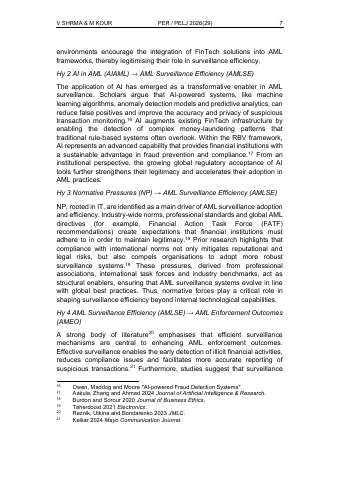 p.7
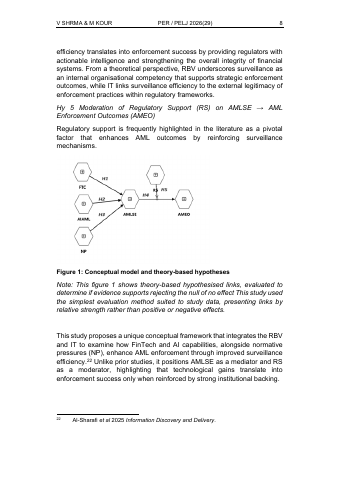 p.8
 p.9
 p.10
 p.11
 p.12
 p.13
 p.14
 p.15
 p.16
 p.17
 p.18
 p.19
 p.20
 p.21
 p.22
 p.23
 p.24
 p.25
 p.26
 p.27
 p.28
 p.29
 p.30
 p.31
 p.32
 p.33
Topics and entities
Summary and figures generated from the document and checked automatically: every number shown appears on the cited page. Publishers can request removal.