Subsidy Expiration and Green Innovation: Does External Financing Have a Role? (Research Square)
SaveSummary
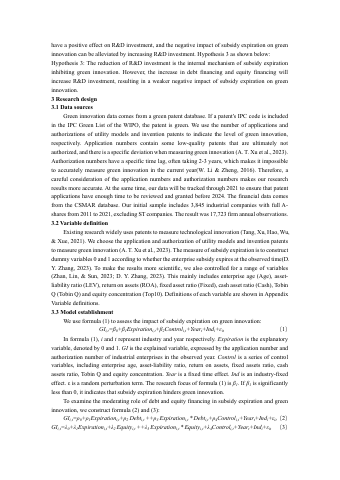
- The study examines a sample of 3,845 Chinese listed industrial enterprises across 17,723 firm annual observations from 2011 to 2021 to analyze green innovation dynamics after subsidy expiration.p.9
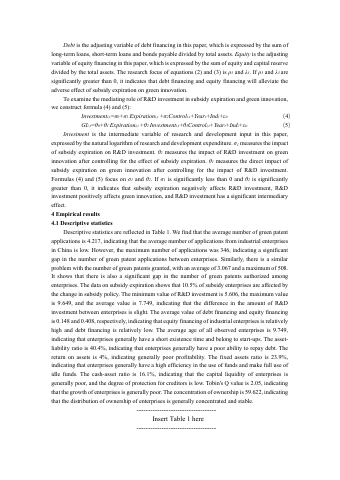
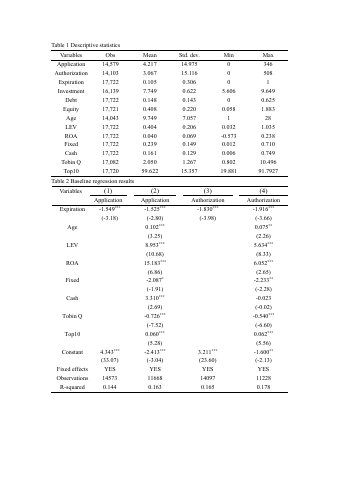
- Descriptive statistics reveal that 10.5% of subsidized enterprises in the sample were affected by changes in government subsidy policy.p.10
- Average green patent applications stand at 4.217 with a maximum of 346, while authorized green patents average 3.067 with a maximum of 508.p.10
- Sampled enterprises demonstrate an average equity financing ratio of 0.408 compared to an average debt financing ratio of 0.148.p.10
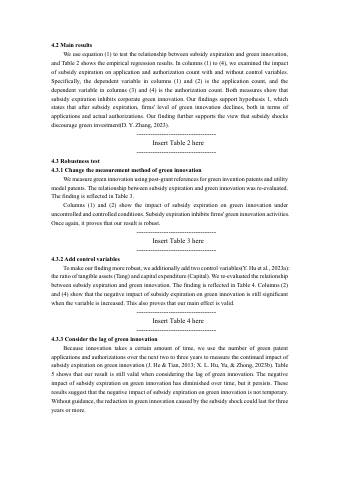
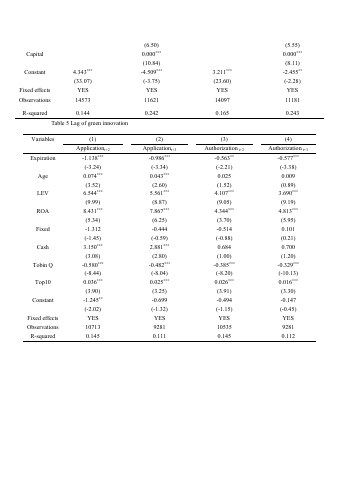
- Baseline regression results confirm that subsidy expiration significantly inhibits green innovation, with coefficients of -1.525 for applications and -1.916 for authorizations.p.27
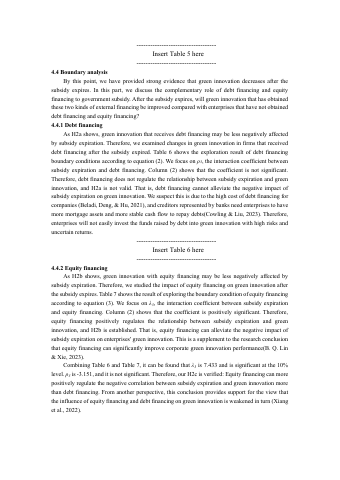
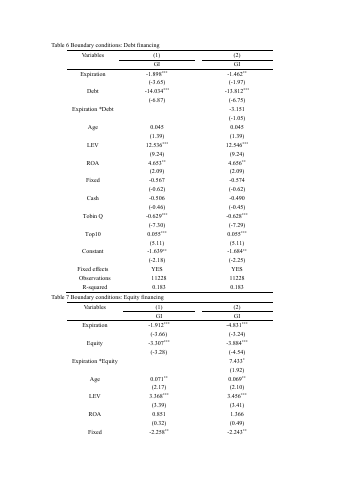
- Equity financing mitigates the negative impact of subsidy expiration with an interaction coefficient of 7.433, whereas debt financing shows an insignificant interaction coefficient of -3.151.p.12
Key insights
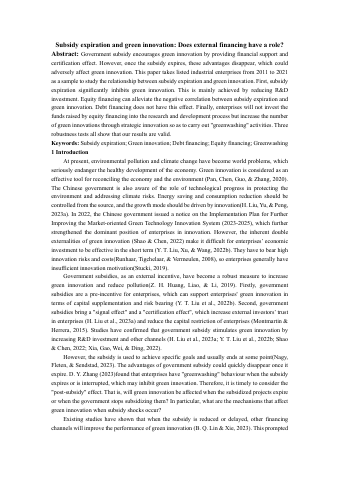
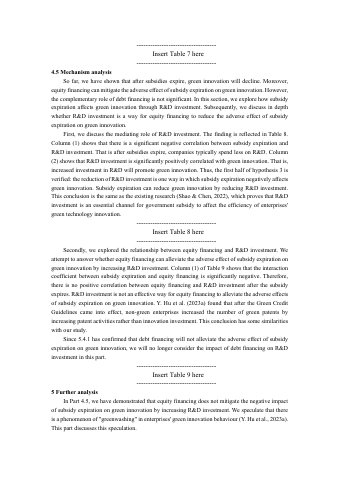
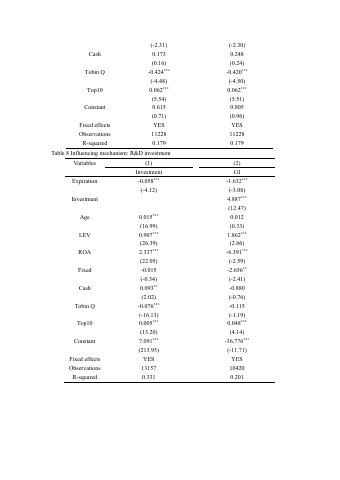
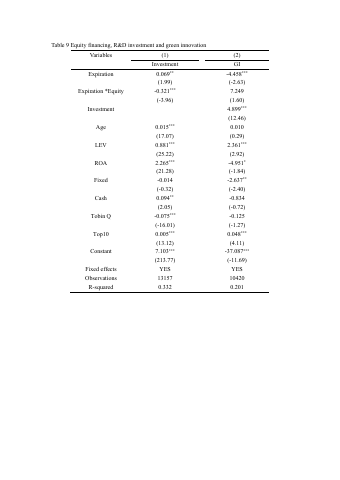
- Subsidy expiration significantly inhibits green innovation primarily by reducing R&D investment.p.2
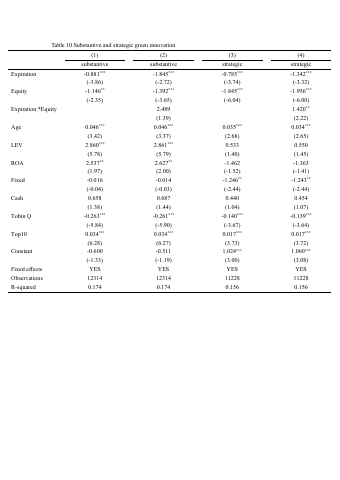
- Equity financing alleviates the negative impact of subsidy expiration on green innovation, whereas debt financing does not.p.2
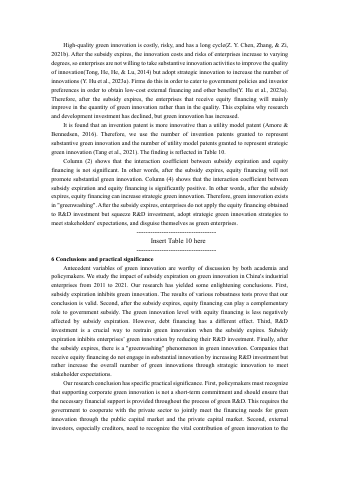
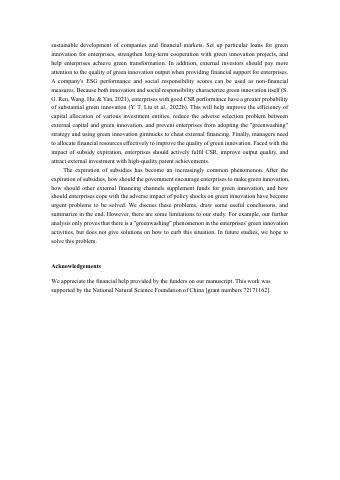
- Enterprises obtaining equity financing after subsidy expiration pursue strategic green innovation rather than substantive innovation, resulting in greenwashing.p.3
- The negative impact of subsidy expiration on green innovation persists for 3 years or more if no supplementary guidance is provided.p.11
- Debt financing fails to mitigate post-subsidy innovation decline because risk-averse banks require tangible collateral and stable cash flows rather than high-risk green R&D.p.12
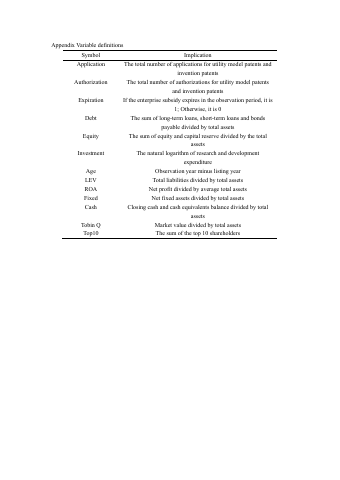
- Invention patents represent substantive green innovation, whereas utility model patents measure strategic green innovation.p.14
Pages
 p.1
 p.2
 p.3
 p.4
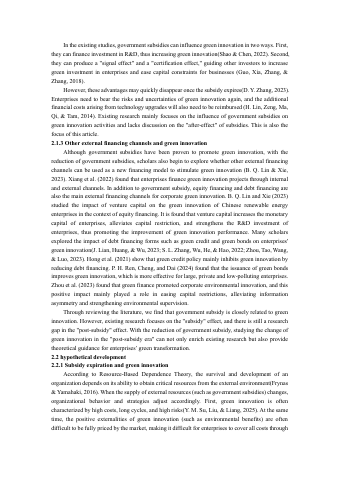 p.5
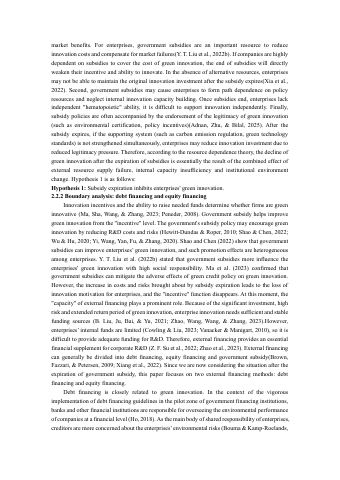 p.6
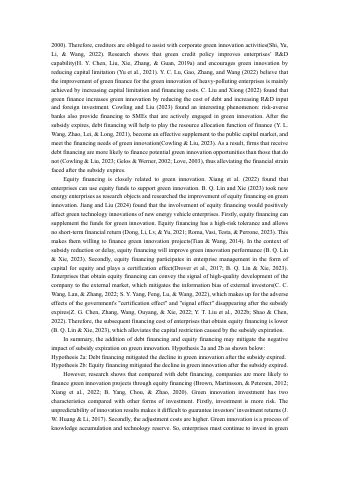 p.7
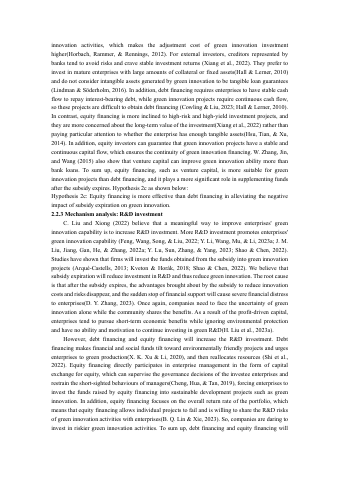 p.8
 p.9
 p.10
 p.11
 p.12
 p.13
 p.14
 p.15
 p.16
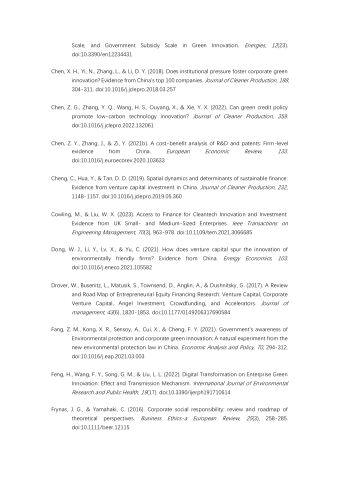 p.17
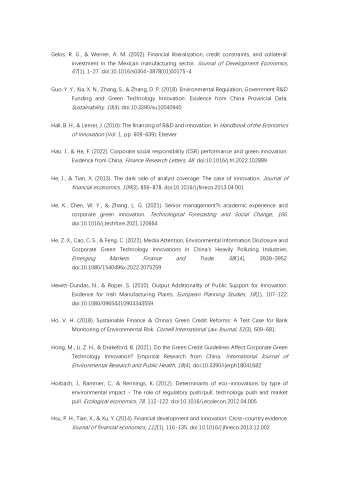 p.18
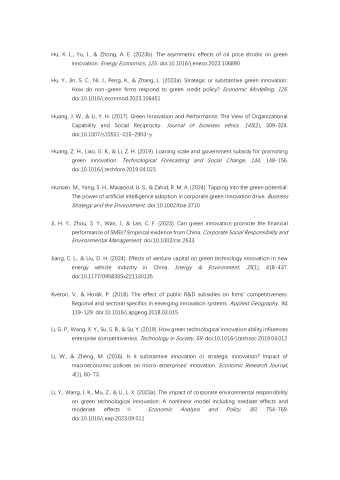 p.19
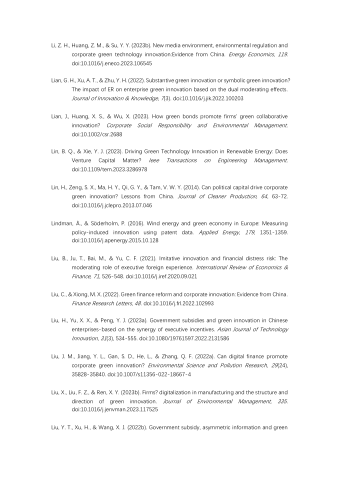 p.20
 p.21
 p.22
 p.23
 p.24
 p.25
 p.26
 p.27
 p.28
 p.29
 p.30
 p.31
 p.32
 p.33
Funders mentioned
Topics and entities
Summary and figures generated from the document and checked automatically: every number shown appears on the cited page. Publishers can request removal.