Fintech Investment and Innovation in African Financial Services: Trends and Drivers
The article was submitted on 29 July 2026, accepted on 15 November 2026, and published on 25 December 2026.
307 documents
The article was submitted on 29 July 2026, accepted on 15 November 2026, and published on 25 December 2026.
Amazon executed a $200M acquisition of BNPL lender Axio in early 2025 to expand into Indian digital lending.
Mutual fund managers earn up to 7.8 percent a year more on firms whose board members share their educational networks.
Morocco's National Entrepreneurship Context Index (NECI) score declined from 4.3 to 3.9 during the 2024–2025 period.
Financial markets operate across two temporal horizons: the speculative Short Future Shadow and the physical Long Shadow.
Preliminary fundraising figures for European PE/VC funds in H1 2026 reached €67.6bn, representing a 6% increase from the revised H1 2025 figure of €63.8bn.
Family offices globally manage an estimated US$10 trillion in assets, with total sector numbers ranging from 8,000 to 17,000.
In the Post-period, AI accounts for around 60% of VC investment volume in the US, compared to roughly 31% in Europe.
Asset tokenization serves as a digital financing mechanism converting real asset rights into blockchain-based tokens (page 2).
Gartner forecast generative AI spending of $644 billion for 2025, even as OpenAI reported 800 million weekly ChatGPT users in October 2025.
An international workshop was organized in May 2025 to evaluate the impact of for-profit providers and financial investors in healthcare across national borders.
Formal legal subsumption fails to fully address decentralized finance, tokens, and autonomous organizations, requiring criteria based on agent behavior, risk, and proportional state response [p.1].
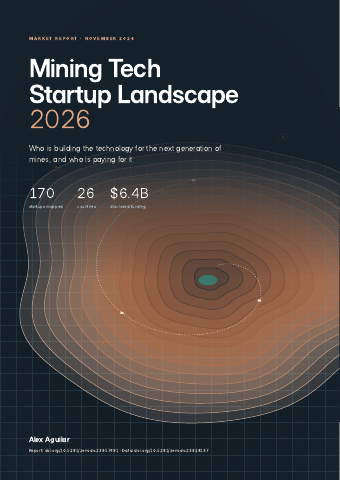
Funding concentration is high, with five startups holding 44% ($2.8B) of total disclosed capital, while US startups hold 71% of the global total.
Canada's business entry rates fell from 24.5% in the 1980s to roughly 13% pre-pandemic, with fewer than 1.5% of small businesses ever scaling into medium or large firms.
At the beginning of 2026, the registry of electronic money systems of the Central Bank of Uzbekistan contained 12 registered systems.
Generation Z (born 1995–2010) represents the primary target demographic for early-stage AI companion hardware startups.
The study population comprises 96 fintech companies licensed in Saudi Arabia by the Saudi Arabian Monetary Authority.
Islamic crowdfunding currently accounts for only 3-5% of total FinTech funding in the Arab Gulf region.
As of August 2025, Indonesia recorded approximately 17.6 million Single Investor Identification (SID) accounts in its capital market.
The critical review assesses evidence on digital record auditability in SME lending, analyzing 8 maximum-contrast analytical cases out of an assessment register of 220 study records.
The share of innovative products in Ukraine's total output does not exceed 2%, compared to 85% in the US, 75% in Japan, and 55% in Germany.
Access to finance remains one of the main structural barriers to small business growth due to a lack of collateral, credit history, and stable cash flow.
OpenAI disclosed $122 billion in committed financing at an $852 billion post-money valuation in March 2026.
UK AI venture financing registered a compounding annual growth rate exceeding 25% between 2016 and 2023.
Worldwide investments in FinTech reached US $226.6 billion in 2021, driving digital financial innovation globally.
An anonymous trader earned nearly half a million dollars in profit on a prediction market platform by wagering on the removal of Venezuelan President Nicolás Maduro shortly before his capture by the U.S. military.
SECA represents the Swiss private equity, venture capital, and corporate finance industries with a base of more than 550 members.
Formal venture capital investment in the Eastern Cape accounts for <5% of South Africa's total venture capital deal flow.
Brazilian Business Outlook declined significantly between 2000 and 2025 at −0.42 points per year (p = 0.005).
The research analyzes intellectual asset protection strategies across 10 selected business operations using a three-criterion decision matrix.