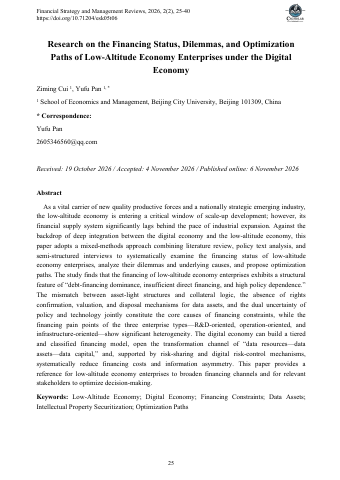
Research on the Financing Status, Dilemmas, and Optimization Paths of Low-Altitude Economy Enterprises under the Digital Economy (Financial Strategy and Management Reviews)
What changed
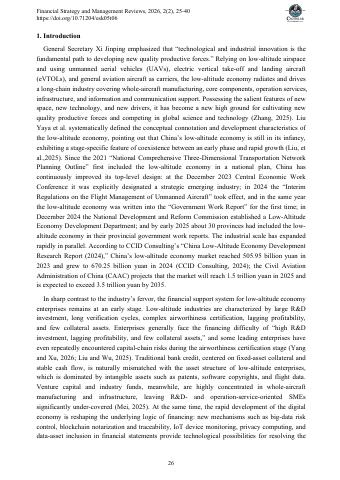
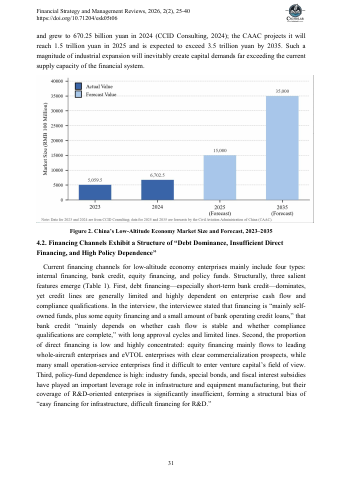
505.95 billion yuan in 2023 to 670.25 billion yuan in 2024
China low-altitude economy market growth p.2
Summary
- China's low-altitude economy market reached 505.95 billion yuan in 2023 and expanded to 670.25 billion yuan in 2024, with projections of 1.5 trillion yuan in 2025 and over 3.5 trillion yuan by 2035.p.2
- By early 2025, approximately 30 provinces in China had integrated the low-altitude economy into their provincial government work reports following its national strategic designation.p.2
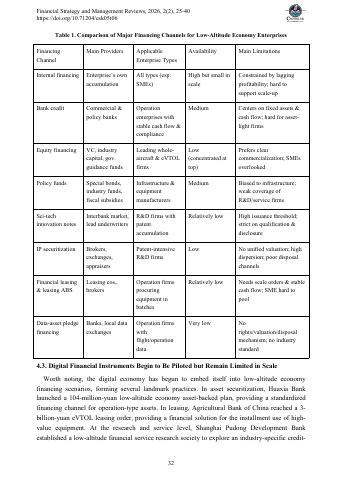
- Financing across the sector remains dominated by debt, with a low share of direct equity financing and an over-reliance on policy funds biased toward infrastructure over R&D.p.7
- Early digital financial pilots have been implemented, such as Huaxia Bank's 104-million-yuan asset-backed plan and Agricultural Bank of China's 3-billion-yuan eVTOL leasing deal.p.8
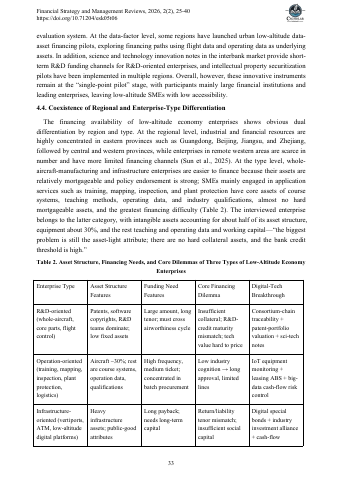
- For typical knowledge-intensive, asset-light service SMEs, intangible assets represent about half of total assets, creating severe barriers to accessing traditional collateral-based bank loans.p.9
Key insights
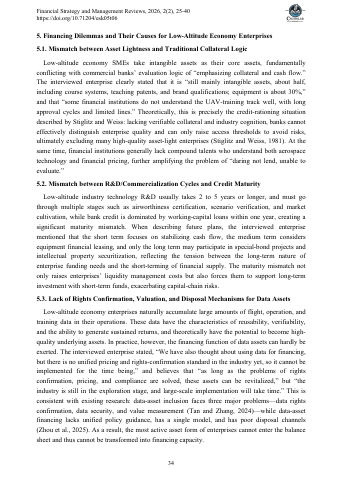
- A fundamental mismatch exists between the asset-light structure of low-altitude SMEs and traditional commercial banks' collateral-focused credit evaluation logic.p.10
- The long R&D and airworthiness certification cycle of 2 to 5 years conflicts with bank credit dominated by one-year short-term working-capital loans.p.10
- The absence of standardized rights confirmation, pricing guidelines, and disposal mechanisms hinders companies from converting operational and flight data into balance-sheet assets.p.10
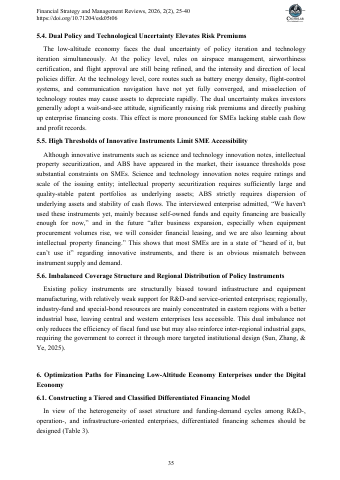
- Simultaneous policy evolution and un-converged core technology routes increase risk premiums and inflate financing costs across the sector.p.11
- Stringent entity scale, rating requirements, and asset-dispersion criteria prevent SMEs from leveraging innovative instruments like sci-tech notes and IP securitization.p.11
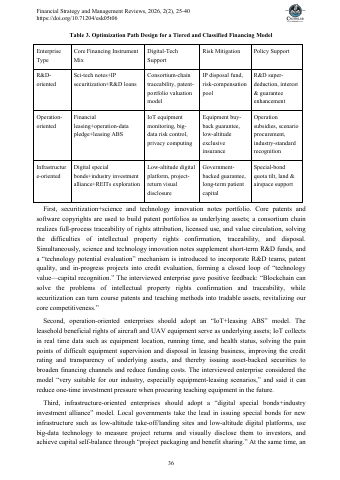
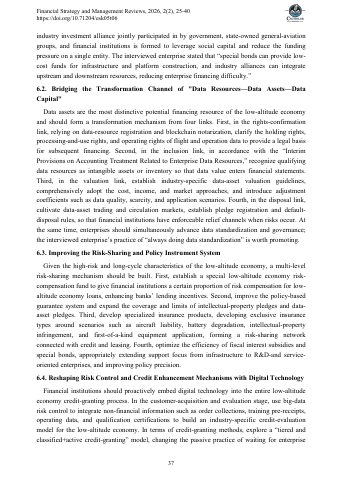
- A tiered financing model proposes blockchain-backed IP securitization for R&D firms, IoT leasing ABS for operations, and digital special bonds for infrastructure.p.12
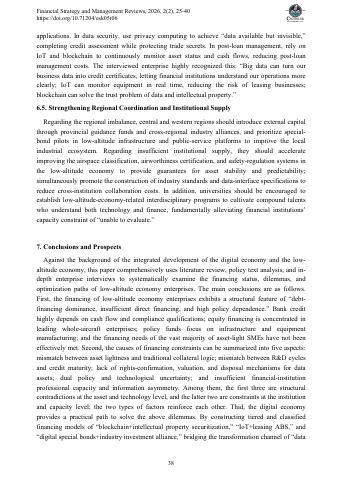
- Establishing specialized low-altitude risk-compensation funds, policy guarantees, and customized insurance can effectively improve bank lending incentives.p.13
Pages
 p.1
 p.2
 p.3
 p.4
 p.5
 p.6
 p.7
 p.8
 p.9
 p.10
 p.11
 p.12
 p.13
 p.14
 p.15
 p.16
Topics and entities
BankingDeep tech investmentInfrastructure investmentPrivate debt and venture debtProject financePublic funding and grantsSME finance and lendingStartup fundingAgricultural Bank of ChinaCCID ConsultingCivil Aviation Administration of ChinaHebei Chunjiu Intelligent Technology Co., Ltd.Huaxia BankNational Development and Reform CommissionShanghai Pudong Development Bank
Summary and figures generated from the document and checked automatically: every number shown appears on the cited page. Publishers can request removal.