Inverse Fintech: From Economic Proposition to Practical Application (Zenodo (CERN European Organization for Nuclear Research))
Summary
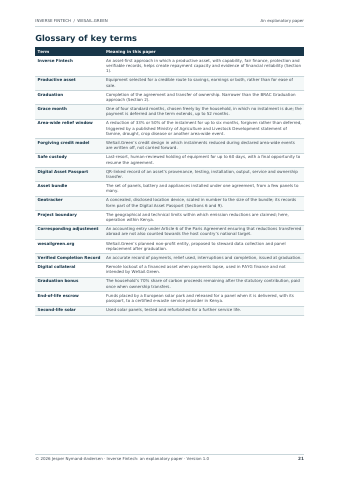
- Inverse Fintech defines an asset-first financing framework where access to a productive asset creates repayment capacity and financial track record, planned to be tested in a 300-household pilot in Kenya.p.1
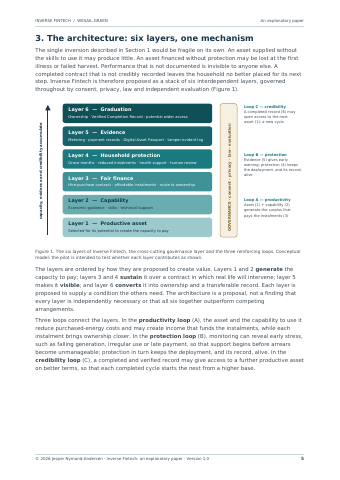
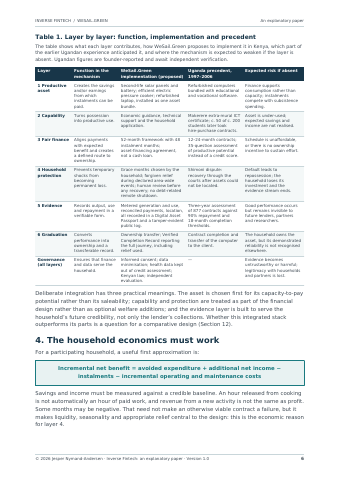
- The operational architecture comprises a stack of six layers: productive asset, capability, fair finance, household protection, evidence, and graduation.p.5
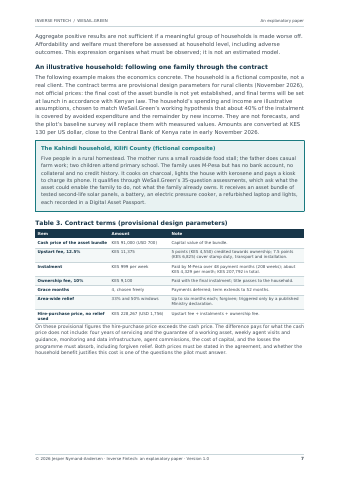
- The illustrative model features a bundle priced at KES 91,000 (USD 700) financed through KES 999 weekly instalments over 48 payment months, leading to a total hire-purchase price of KES 228,267 (USD 1,756).p.7
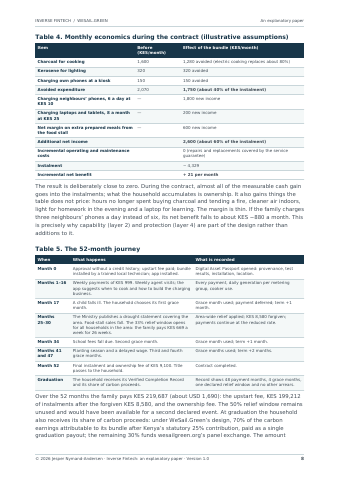
- The contract framework spans 52 months with 4 optional grace months and area-wide relief windows providing 33% or 50% forgiven instalment reductions during government-declared events.p.7
- At graduation, 70% of net carbon earnings attributable to the asset bundle are allocated as a one-time bonus to the household after Kenya's statutory 25% contribution.p.8
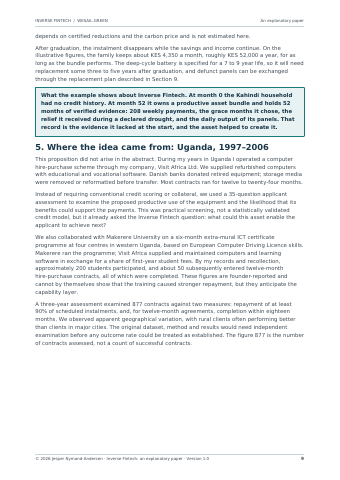
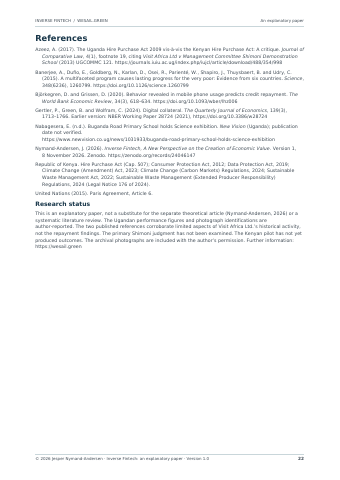
- The concept originated in Uganda between 1997 and 2006 with Visit Africa Ltd, where an assessment tracked 877 computer hire-purchase contracts against a 90% repayment threshold.p.9
Key insights
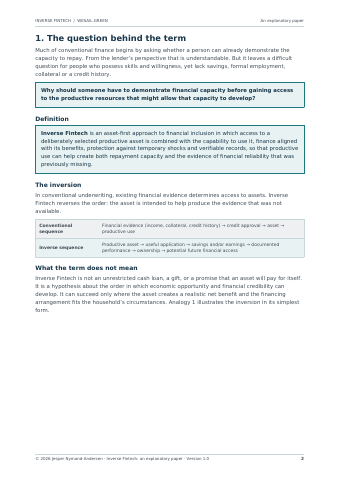
- Inverse Fintech reverses traditional underwriting by providing productive assets first to generate verifiable repayment capacity rather than requiring prior credit history.p.2
- Unlike standard pay-as-you-go solar models that use lockout technology to remotely disable power upon non-payment, the model relies on structured relief and capability building.p.4
- Asset tracking via concealed geotrackers provides proof of local presence for carbon accounting and informs European suppliers about the lifecycle and recycling of second-life solar panels.p.11
- Area-wide relief of 33% or 50% is forgiven rather than deferred when triggered by published Ministry declarations for events such as drought.p.12
- Operational data from metering and payments are anchored in a tamper-evident Merkle-tree log to produce an independently verifiable performance record.p.14
- European solar parks place funds into an end-of-life escrow account that releases payment only when panels are delivered to a certified e-waste provider in Kenya.p.17
Pages
 p.1
 p.2
 p.3
 p.4
 p.5
 p.6
 p.7
 p.8
 p.9
 p.10
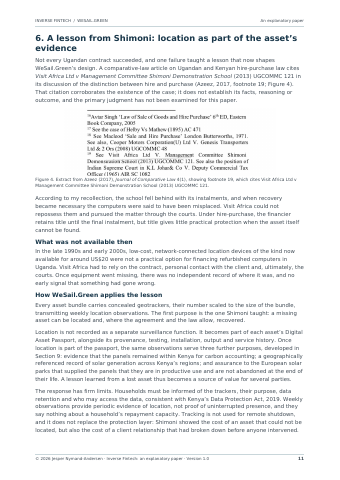 p.11
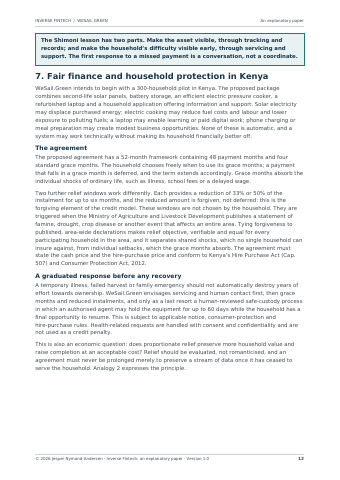 p.12
 p.13
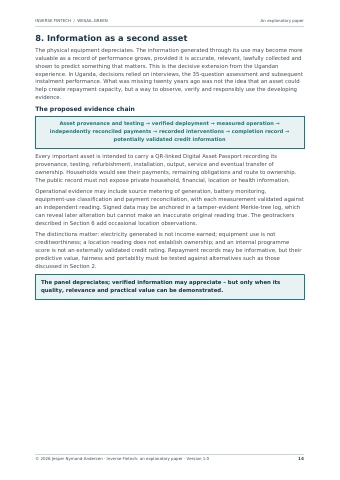 p.14
 p.15
 p.16
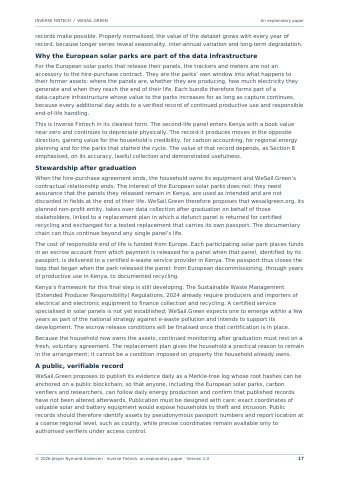 p.17
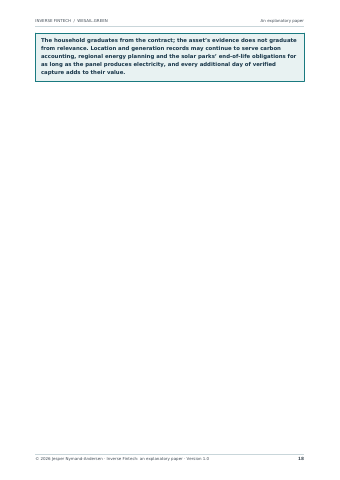 p.18
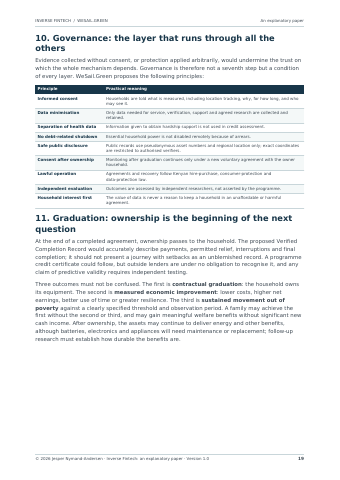 p.19
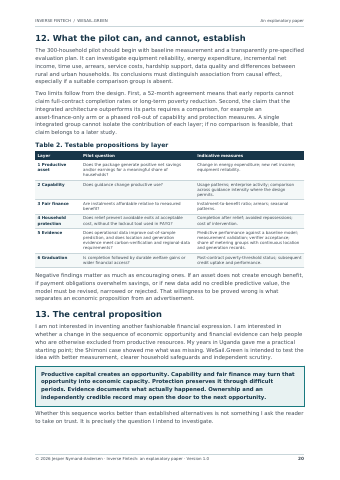 p.20
 p.21
 p.22
Topics and entities
Summary and figures generated from the document and checked automatically: every number shown appears on the cited page. Publishers can request removal.