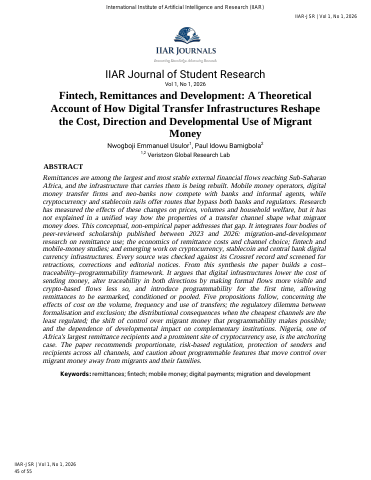
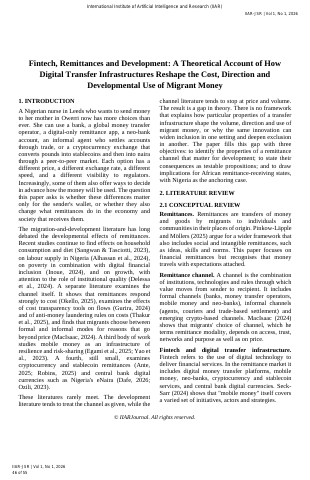
Fintech, Remittances and Development: A Theoretical Account of How Digital Transfer Infrastructures Reshape the Cost, Direction and Developmental Use of Migrant Money (IIAR Journal of Student Research)
Summary
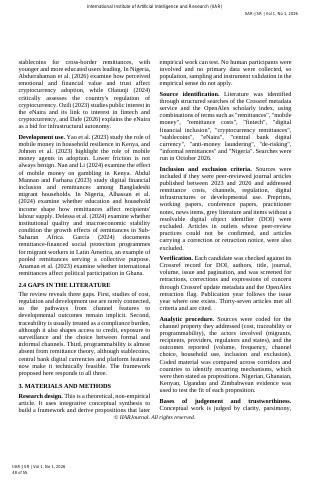
- Literature searches were conducted in October 2026 focusing on peer-reviewed research published between 2023 and 2026.p.4
- The framework establishes 5 testable theoretical propositions linking remittance channel properties to developmental consequences.p.6
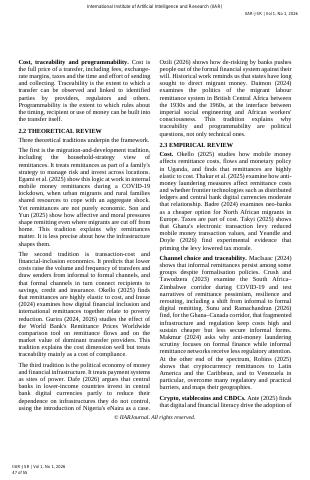
- Historical precedent includes state-managed migrant labor remittance systems in British Central Africa operating between the 1930s and the 1960s.p.3
- The article is published across 11 pages in the IIAR Journal of Student Research.p.11
Key insights
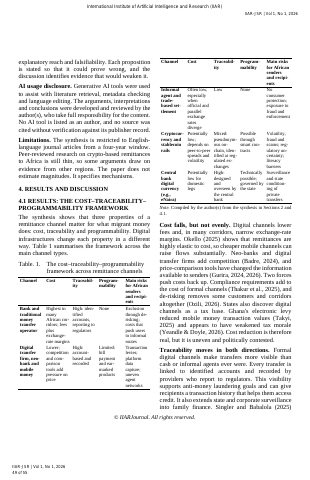
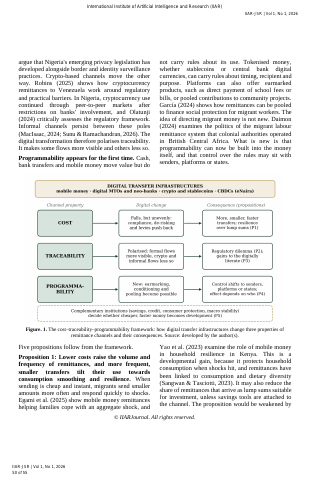
- Digital transfer infrastructures reshape remittance channels along three core dimensions: cost, traceability, and programmability.p.5
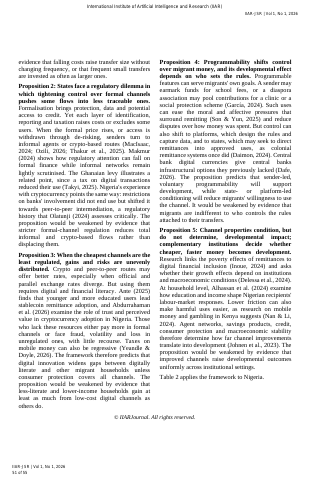
- Lower transaction costs encourage more frequent, smaller remittances that favor household consumption smoothing and resilience over lump-sum investments.p.6
- Increasing regulatory burdens and taxes on formal channels risk displacing flows into less traceable informal or peer-to-peer alternatives.p.7
- Sender-led voluntary programmability enhances developmental impact, whereas state- or platform-led conditioning reduces migrants' willingness to send money.p.7
- Complementary domestic institutions and macroeconomic stability dictate whether cheaper remittance transfers generate sustained economic development.p.7
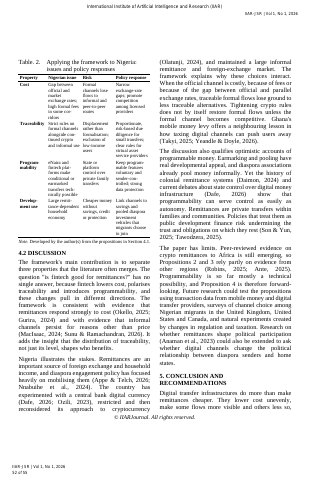
- Wide gaps between official and parallel foreign-exchange rates drive Nigerian remittance senders away from formal channels into peer-to-peer markets.p.8
Pages
 p.1
 p.2
 p.3
 p.4
 p.5
 p.6
 p.7
 p.8
 p.9
 p.10
 p.11
Topics and entities
Summary and figures generated from the document and checked automatically: every number shown appears on the cited page. Publishers can request removal.