Fintech Enabled ESG Investing for Sustainable Finance and Responsible Capital Allocation (Startupreneur Business Digital (SABDA Journal))
Summary
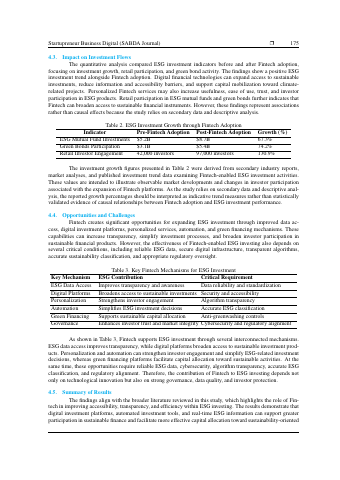
- ESG mutual fund investments grew by 67.3% from $5.2B pre-adoption to $8.7B post-Fintech adoption.p.8
- Green bonds participation expanded by 74.2% from $3.1B to $5.4B following Fintech adoption.p.8
- Retail investor engagement increased by 130.9%, rising from 42,000 investors pre-adoption to 97,000 investors post-adoption.p.8
- The conceptual framework links Fintech innovation, ESG mechanisms, investor participation, and sustainable finance outcomes.p.2
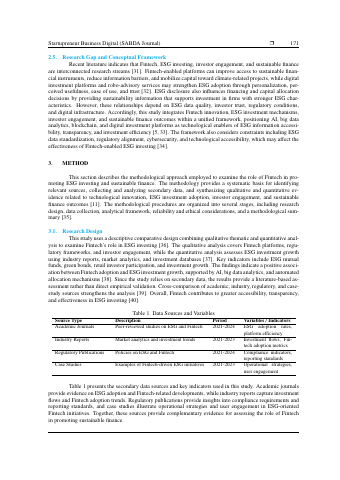
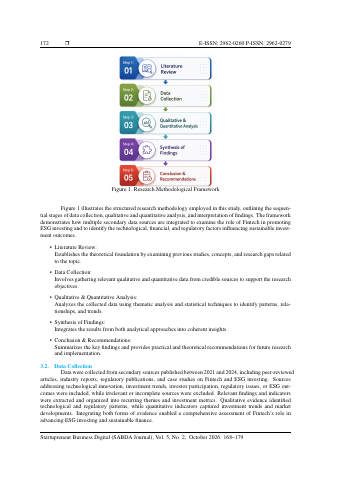
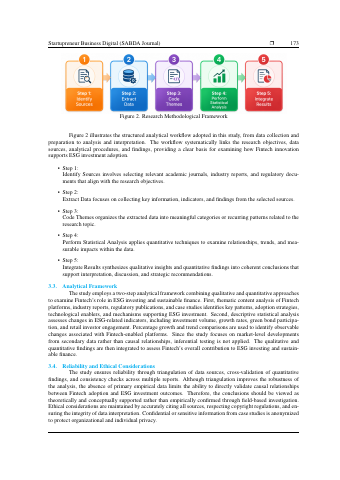
- Secondary data analyzed in the methodology spans academic, industry, and regulatory literature published between 2021 and 2024.p.4
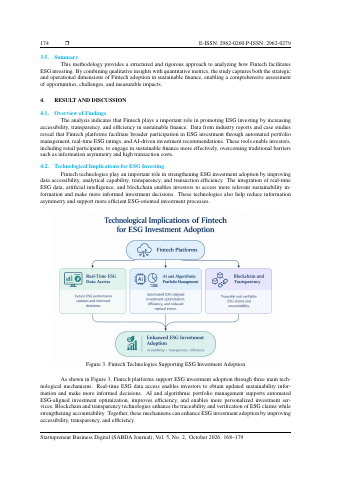
- Core supporting technologies include AI, big data analytics, blockchain, and cloud computing to facilitate ESG decision-making and traceability.p.3
Key insights
- Fintech platforms help reduce information asymmetry and lower transaction costs, enabling broader participation in sustainable finance.p.1
- Artificial intelligence improves ESG portfolio management by optimizing complex data, though its utility relies heavily on underlying data quality.p.3
- Blockchain technology enhances transparency and verifiable record-keeping for green bond issuance and sustainability claims, mitigating greenwashing risks.p.3
- Fintech adoption is positively associated with higher retail participation in ESG mutual funds and green bonds.p.8
- Key operational requirements for effective Fintech ESG tools include standardized ESG ratings, reliable datasets, algorithmic transparency, and robust cybersecurity.p.8
- Policy measures must emphasize standardized reporting frameworks, anti-greenwashing enforcement, and digital infrastructure investment in emerging markets.p.9
Pages
 p.1
 p.2
 p.3
 p.4
 p.5
 p.6
 p.7
 p.8
 p.9
 p.10
 p.11
 p.12
Topics and entities
Summary and figures generated from the document and checked automatically: every number shown appears on the cited page. Publishers can request removal.