Financial Ecosystems and Entrepreneurial Dynamics of Women-Led Micro and Small Enterprises: Empirical Evidence from Nalgonda District, Telangana (International Journal For Multidisciplinary Research)
SaveSummary
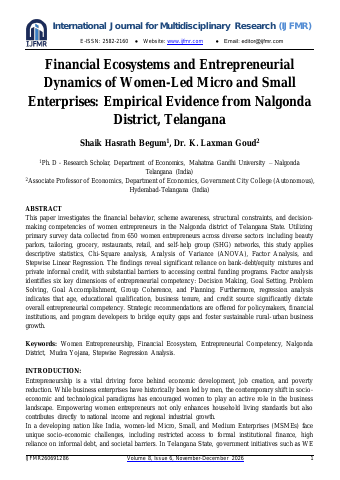
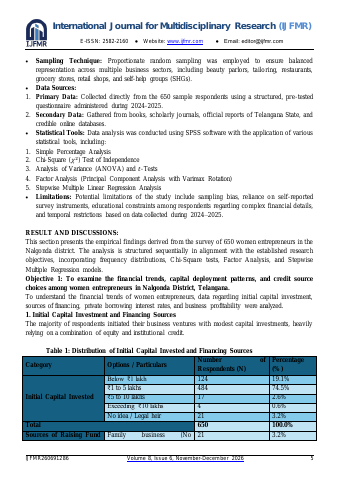
- The study surveyed 650 women entrepreneurs across sectors like beauty parlors, tailoring, restaurants, grocery, retail, and self-help group networks in Nalgonda District.p.1
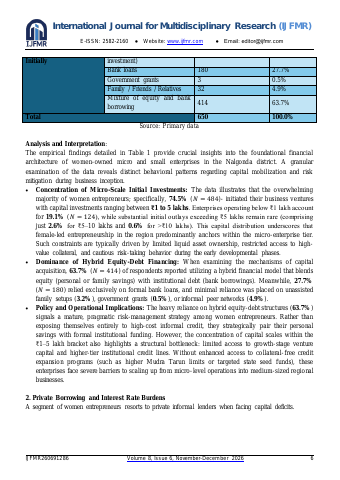
- 63.7% of respondents utilized a hybrid financing model combining equity with bank borrowings, while 27.7% relied solely on bank loans.p.6
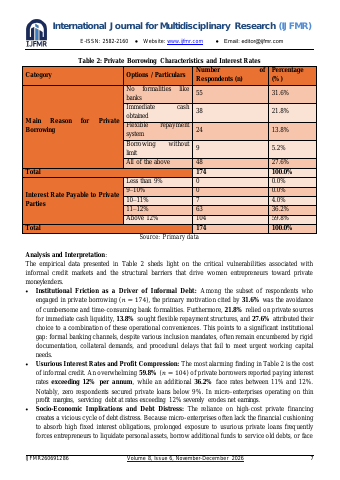
- Out of 174 private informal borrowers, 59.8% faced interest rates exceeding 12% per annum, and 36.2% paid between 11% and 12%.p.7
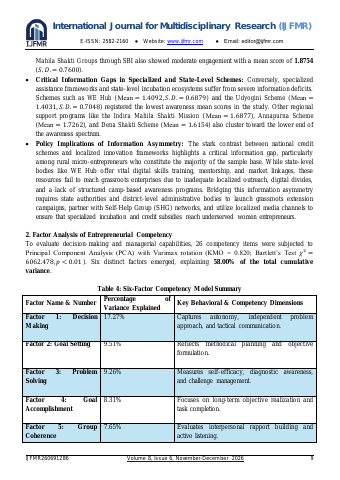
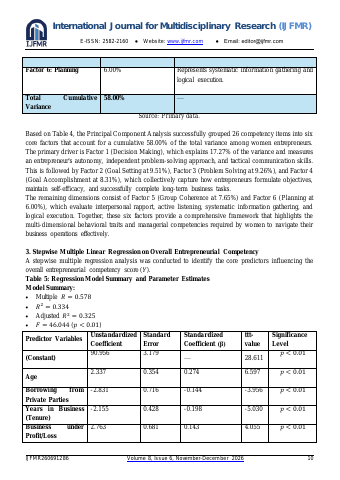
- Factor analysis identified six competency dimensions explaining 58.00% of cumulative variance, led by Decision Making at 17.27%.p.9
Key insights
- Most women-led businesses in Nalgonda District remain concentrated in the micro-enterprise tier due to capital constraints and limited liquid assets.p.6
- Avoidance of cumbersome bank formalities and immediate liquidity needs drive 31.6% and 21.8% of informal private borrowing respectively.p.7
- Usurious private interest rates above 12% create severe profit compression and cyclical debt distress among micro-entrepreneurs.p.7
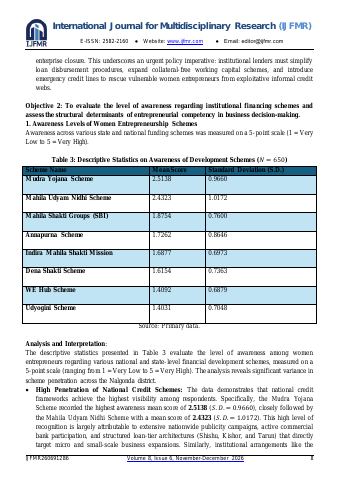
- Information asymmetry persists in regional incubation frameworks like WE Hub compared to well-publicized national schemes like Mudra Yojana.p.9
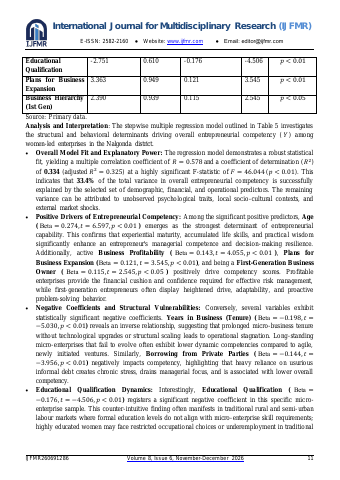
- Age and experiential maturity serve as the strongest positive predictor of overall managerial competence among women entrepreneurs.p.11
- Prolonged business tenure without technological or structural upgrades correlates with lower dynamic competency and operational stagnation.p.11
- Dependence on private informal debt negatively impacts managerial competency scores due to chronic financial stress.p.11
Pages
 p.1
 p.2
 p.3
 p.4
 p.5
 p.6
 p.7
 p.8
 p.9
 p.10
 p.11
 p.12
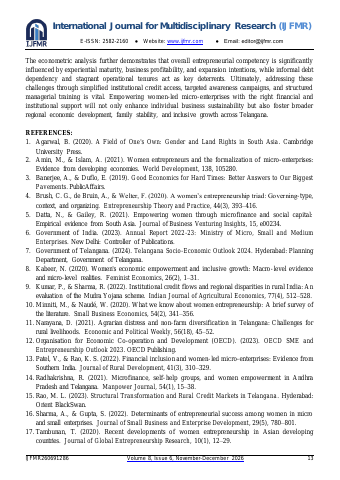 p.13
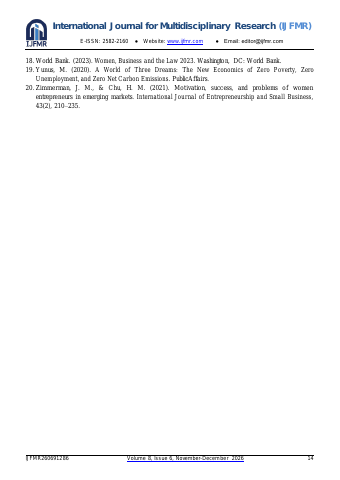 p.14
Funders mentioned
Topics and entities
Summary and figures generated from the document and checked automatically: every number shown appears on the cited page. Publishers can request removal.