Can Regulation Curb AI Adoption Narrative–Practice Decoupling? An Agent-Based Model of the A-Share Market (Research Square)
Summary
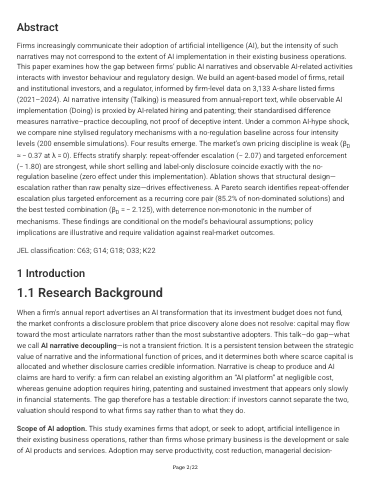
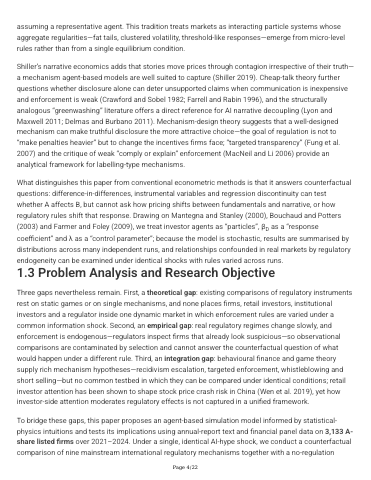
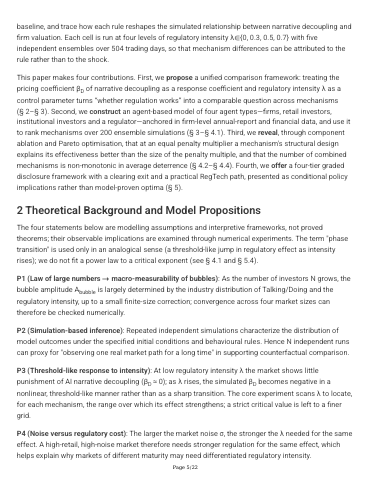
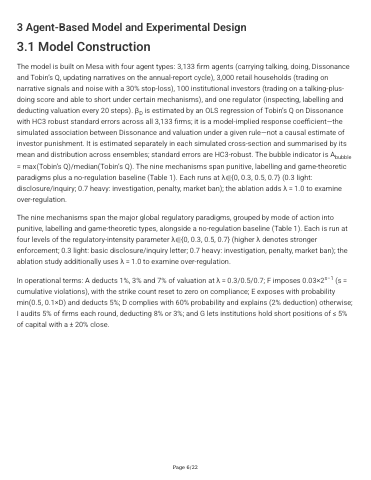
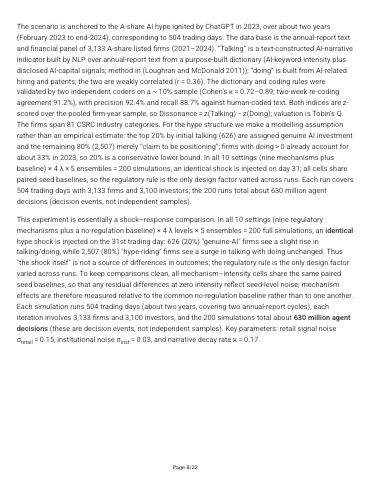
- The study builds an agent-based simulation model using annual-report text and financial panel data on 3,133 A-share listed firms from 2021–2024.p.4
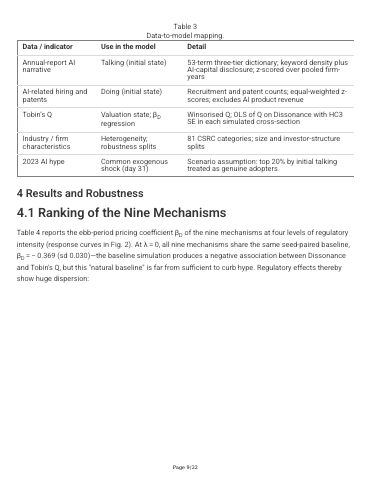
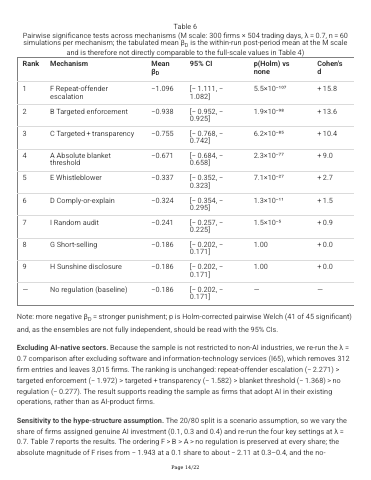
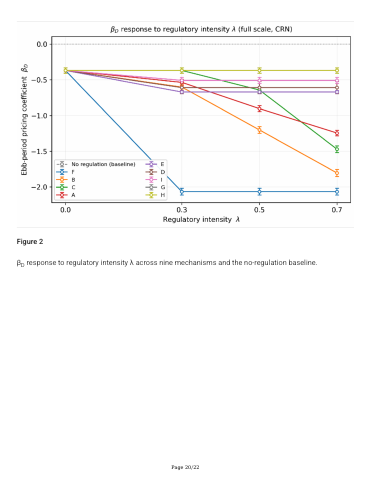
- In a baseline market with no regulation (λ = 0), natural pricing discipline against narrative decoupling is weak, resulting in a response coefficient of βD ≈ − 0.37.p.2
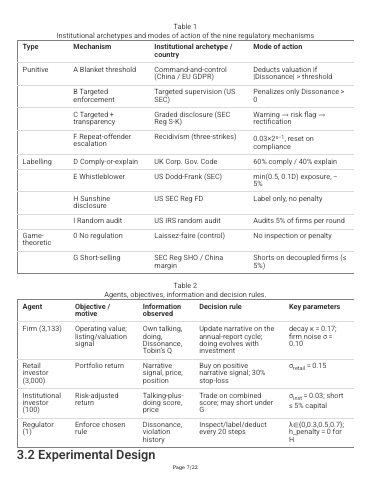
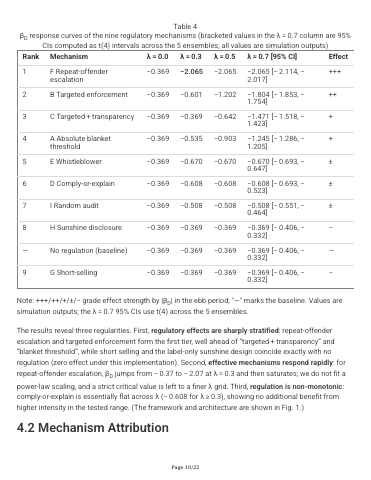
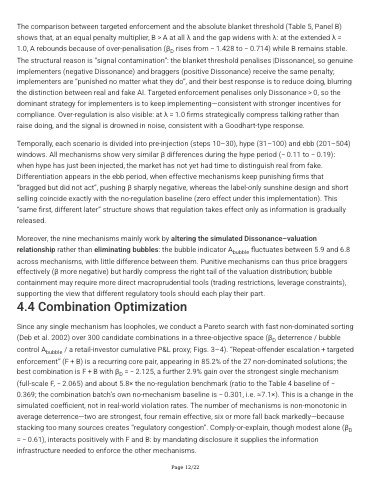
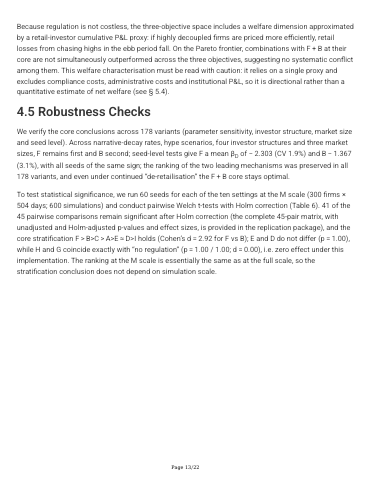
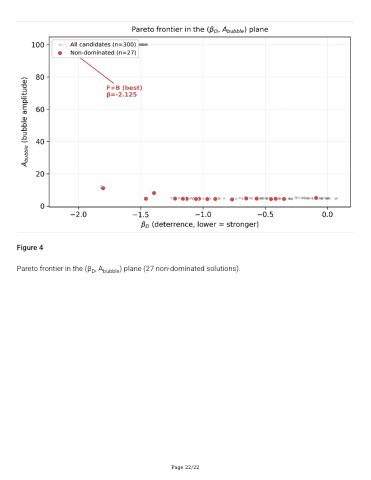
- A Pareto search across 300 candidate combinations shows that combining repeat-offender escalation and targeted enforcement achieves βD = − 2.125 and appears in 85.2% of non-dominated solutions.p.12
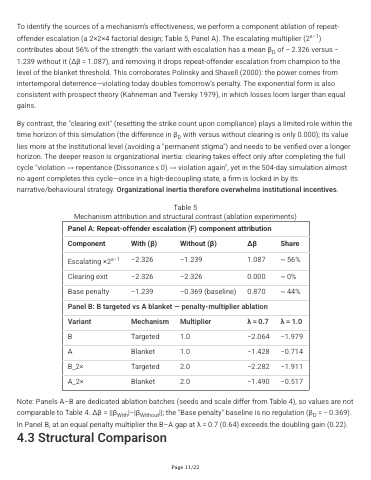
- Component ablation demonstrates that the escalating multiplier 2s−1 contributes approximately 56% of the strength in repeat-offender escalation.p.11
Key insights
- Market pricing discipline alone is insufficient to punish AI narrative decoupling, showing a baseline response coefficient βD of − 0.369.p.10
- Repeat-offender escalation achieves the highest enforcement efficacy among single mechanisms, increasing βD to − 2.065 at intensity λ = 0.3.p.10
- Structural mechanism design influences deterrent effectiveness more than raw penalty size, as targeted enforcement penalizing only positive dissonance avoids signal contamination.p.12
- Short selling and label-only disclosure coincide exactly with the no-regulation baseline, generating zero additional deterrent effect under simulated A-share institutional conditions.p.2
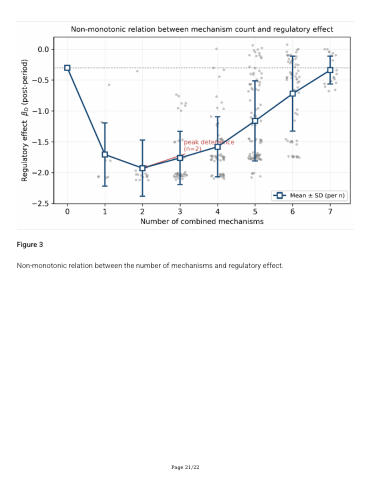
- Regulatory deterrence is non-monotonic in the number of combined mechanisms, with 2 to 4 mechanisms performing best and six or more creating regulatory congestion.p.12
- The intertemporal escalating multiplier 2s−1 provides about 56% of the deterrent power in repeat-offender escalation.p.11
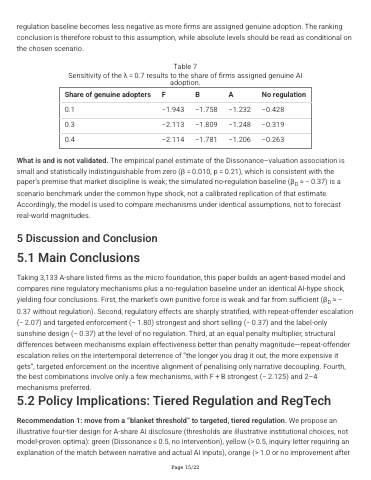
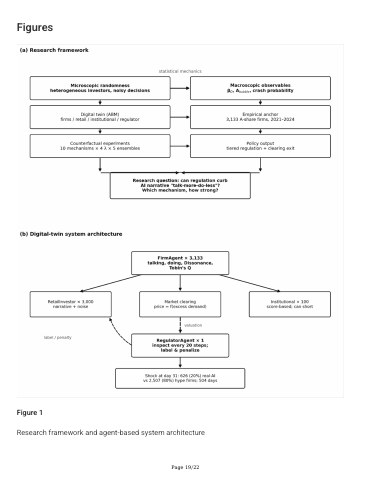
- Excluding 312 software and information-technology service firm entries leaves mechanism rankings unchanged, confirming conclusions apply to operational AI adopters rather than AI producers.p.14
Pages
 p.1
 p.2
 p.3
 p.4
 p.5
 p.6
 p.7
 p.8
 p.9
 p.10
 p.11
 p.12
 p.13
 p.14
 p.15
 p.16
 p.17
 p.18
 p.19
 p.20
 p.21
 p.22
Topics and entities
Summary and figures generated from the document and checked automatically: every number shown appears on the cited page. Publishers can request removal.