Beyond Accuracy: A Multi-Dimensional Explainability and Model-Risk Framework for AI-Based Credit Decisions in Banking (Computer and decision making.)
SaveSummary
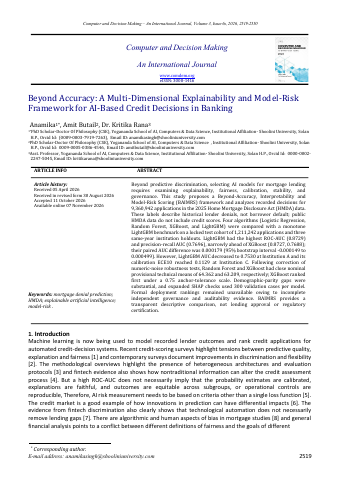
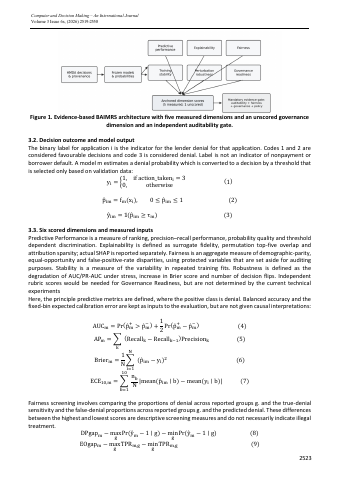
- The study proposes the BAIMRS framework and analyzes recorded decisions for 9,360,942 applications in the 2025 HMDA data.p.1
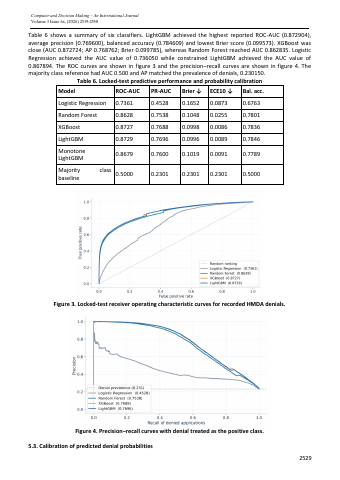
- LightGBM achieved the highest ROC-AUC (0.872904), with XGBoost close behind (AUC 0.872724).p.11
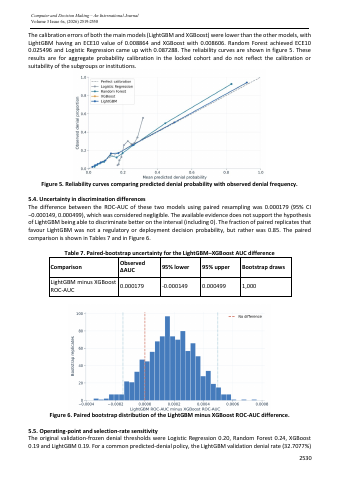
- The paired ROC-AUC difference between LightGBM and XGBoost was 0.000179 and was considered negligible.p.12
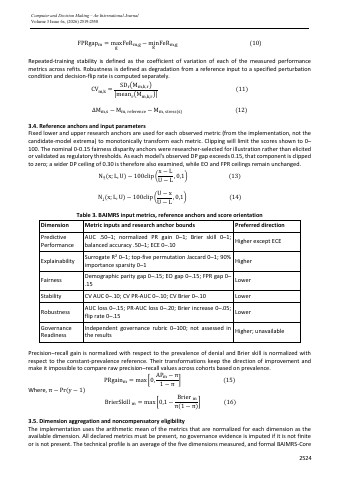
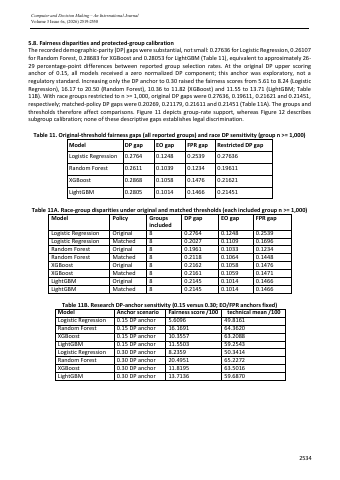
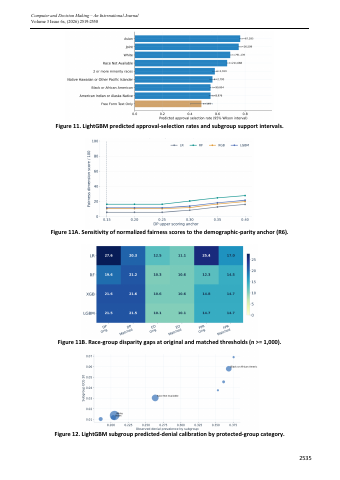
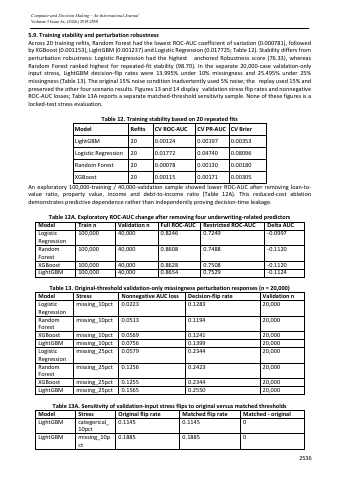
- Demographic-parity gaps were 0.27636 for Logistic Regression, 0.26107 for Random Forest, 0.28683 for XGBoost and 0.28053 for LightGBM.p.16
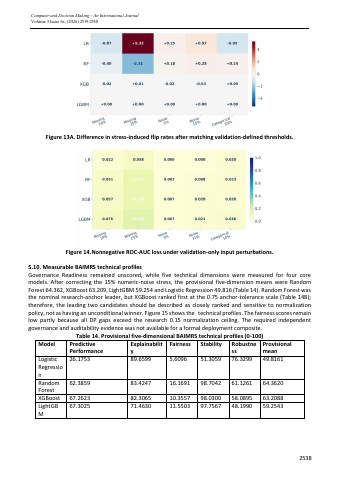
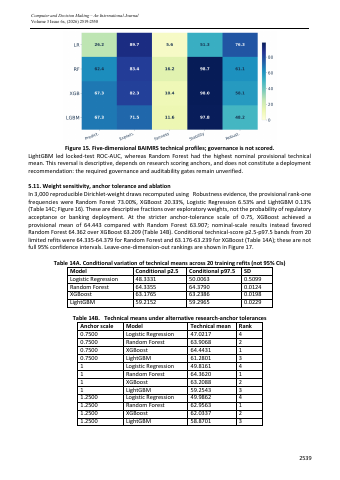
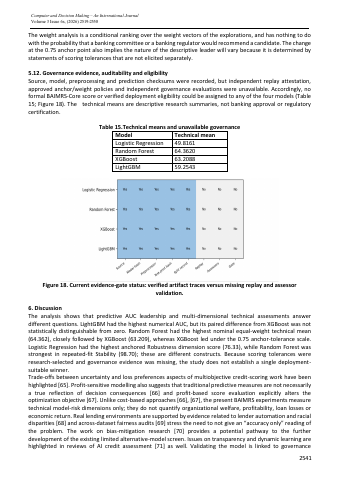
- Provisional five-dimension means were Random Forest 64.362, XGBoost 63.209, LightGBM 59.254 and Logistic Regression 49.816.p.20
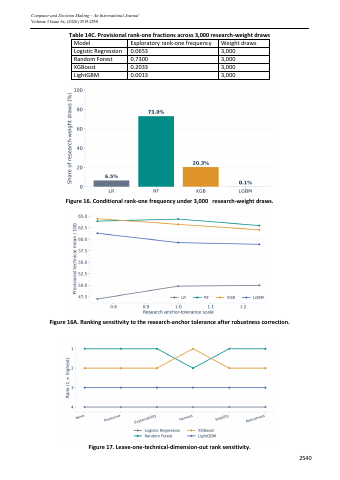
- Random Forest ranked first in 73.00% of weight draws and XGBoost in 20.33%.p.21
Key insights
- The labels describe historical lender denials, not borrower default, and public HMDA data do not include credit scores.p.1
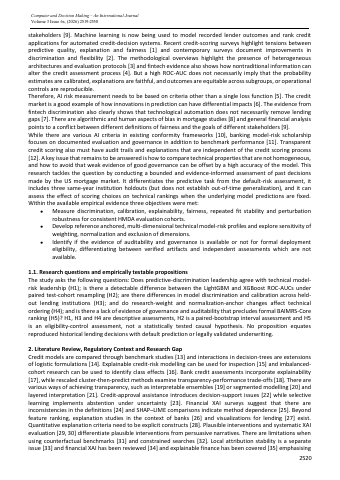
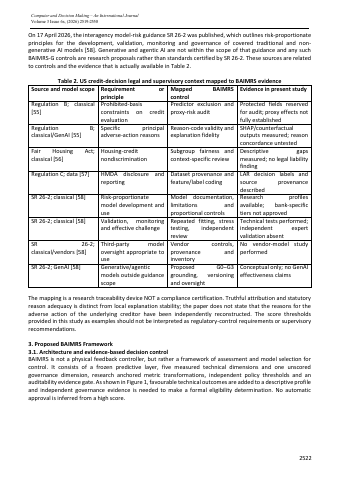
- Interagency model-risk guidance SR 26-2 was published on 17 April 2026 for traditional and non-generative AI models.p.4
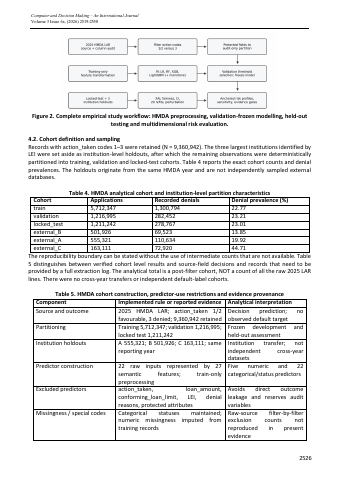
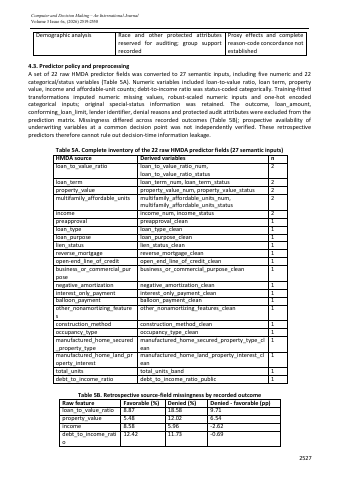
- A set of 22 raw HMDA predictor fields was converted to 27 semantic inputs.p.9
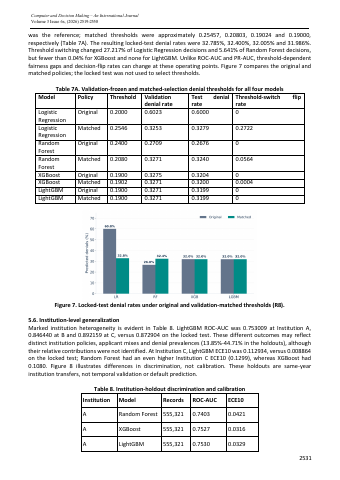
- LightGBM calibration was better than that of Random Forest and Logistic Regression, with an ECE10 value of 0.008864.p.12
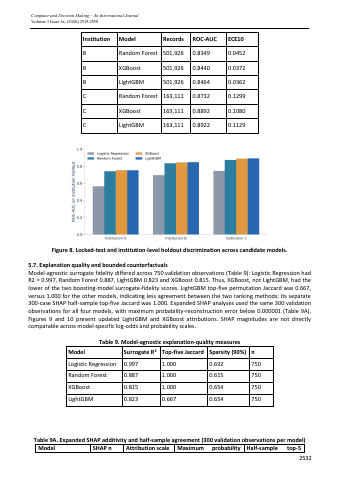
- LightGBM ROC-AUC was 0.753009 at Institution A, 0.846440 at B and 0.892159 at C, showing marked institution heterogeneity.p.13
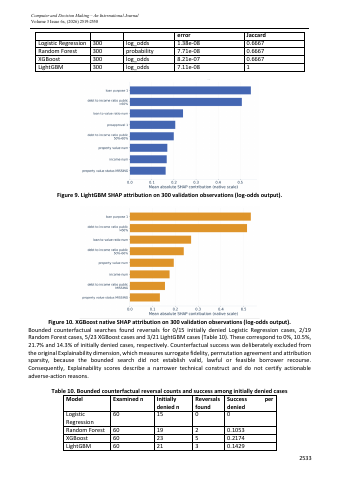
- Bounded counterfactual searches found reversals in 5/23 XGBoost cases and 3/21 LightGBM cases.p.15
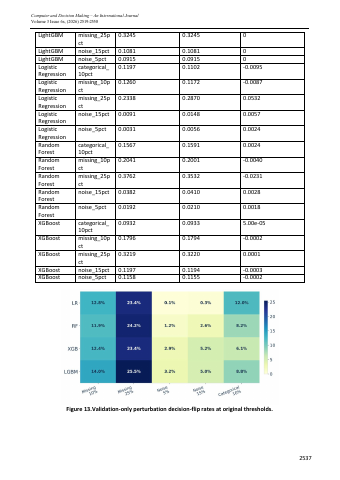
- LightGBM decision-flip rates were 13.995% under 10% missingness and 25.495% under 25% missingness.p.18
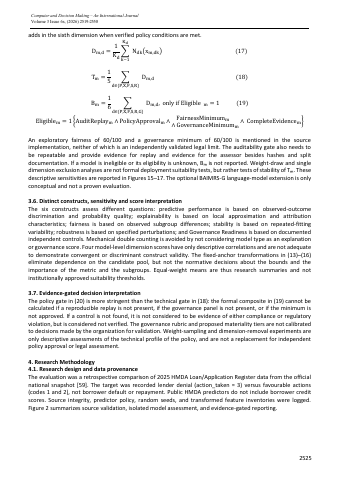
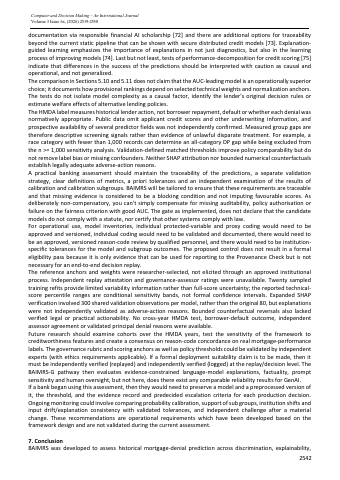
- Governance and independent replay requirements remained unmet, so no formal deployment ranking was possible.p.25
Pages
 p.1
 p.2
 p.3
 p.4
 p.5
 p.6
 p.7
 p.8
 p.9
 p.10
 p.11
 p.12
 p.13
 p.14
 p.15
 p.16
 p.17
 p.18
 p.19
 p.20
 p.21
 p.22
 p.23
 p.24
 p.25
 p.26
 p.27
 p.28
 p.29
 p.30
 p.31
 p.32
Funders mentioned
Topics and entities
Summary and figures generated from the document and checked automatically: every number shown appears on the cited page. Publishers can request removal.