Analysing the Determinants of Access to Green Credit in India (Research Square)
SaveSummary
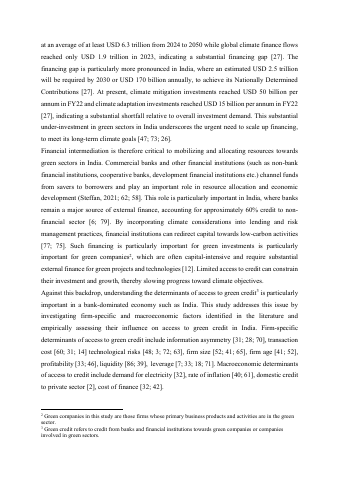
- India requires an estimated USD 2.5 trillion by 2030, or USD 170 billion annually, to meet its Nationally Determined Contributions, facing a large climate finance gap.p.4
- Climate mitigation and adaptation investments in India reached USD 50 billion per annum and USD 15 billion per annum in FY22, respectively.p.4
- Commercial banks are the major source of external finance in India, accounting for roughly 60% of credit provided to the non-financial sector.p.4
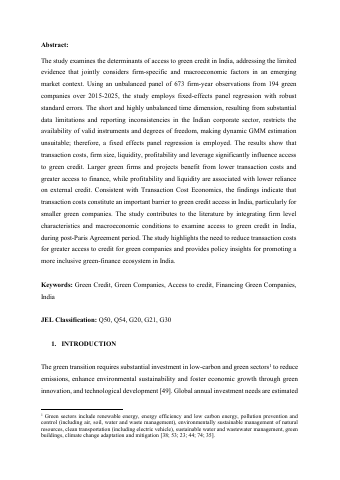
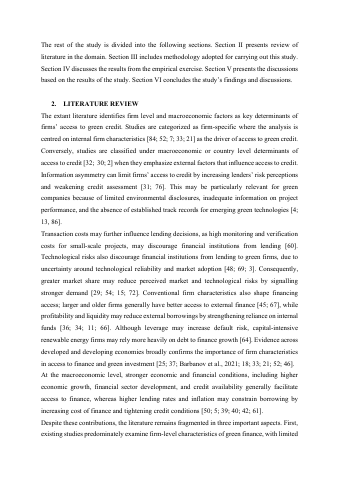
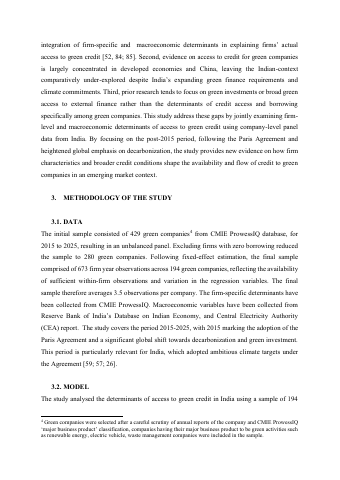
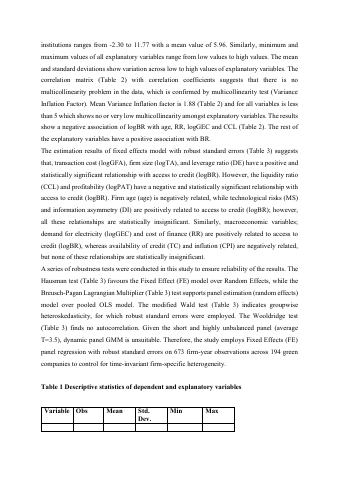
- The empirical sample covers an unbalanced panel of 673 firm-year observations across 194 green companies in India spanning from 2015 to 2025.p.3
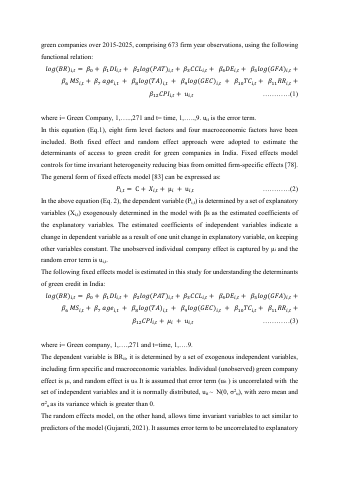
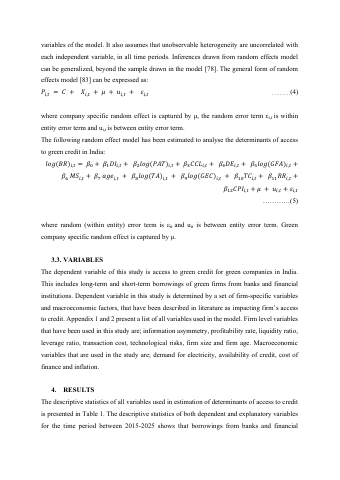
- A fixed-effects panel regression model was selected because dynamic panel GMM estimation was unsuitable due to a short average time dimension of T=3.5 per firm.p.9
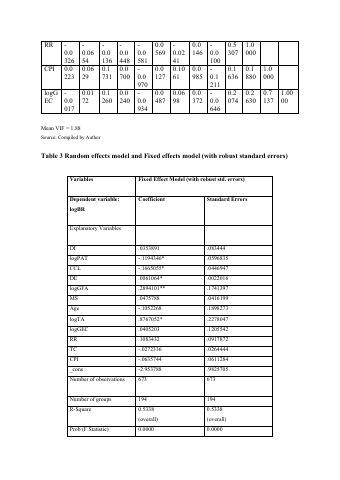
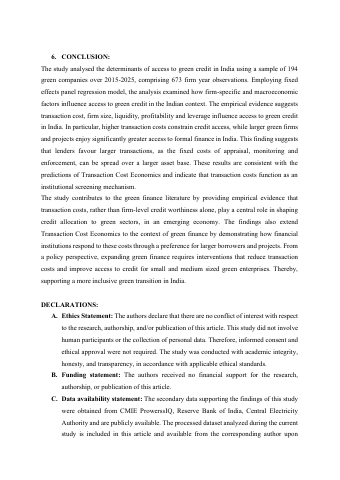
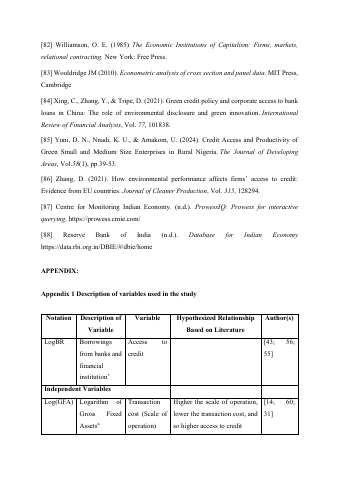
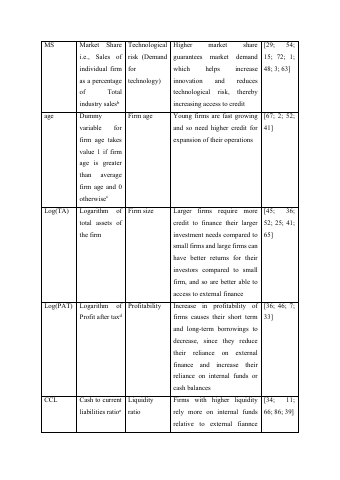
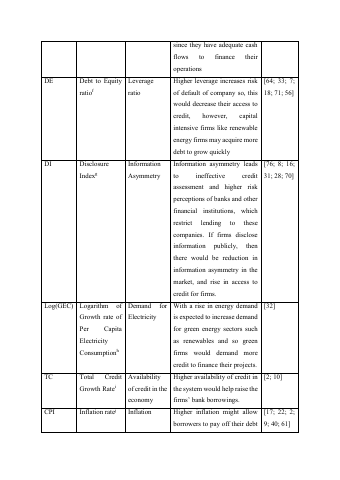
- The findings show that transaction costs, firm size, and leverage have a positive and statistically significant relationship with access to green credit.p.9
- Internal firm liquidity and profitability show a negative and statistically significant relationship with bank and financial institution borrowings.p.9
Key insights
- Global climate finance flows reached USD 1.9 trillion in 2023 against an annual global requirement of at least USD 6.3 trillion between 2024 and 2050.p.4
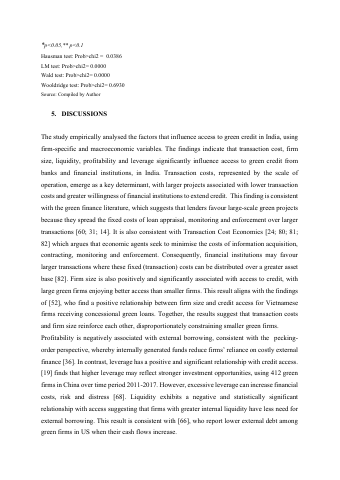
- Fixed costs associated with loan appraisal, monitoring, and enforcement make financial institutions prefer larger green projects to achieve lower transaction costs.p.12
- Larger green companies possess superior access to external credit compared to smaller green enterprises in India.p.12
- Consistent with the pecking-order theory, higher firm profitability reduces reliance on costly external borrowings by allowing reliance on internal funds.p.12
- Higher corporate liquidity leads to reduced external debt reliance as internal cash balances adequately fund ongoing operational needs.p.12
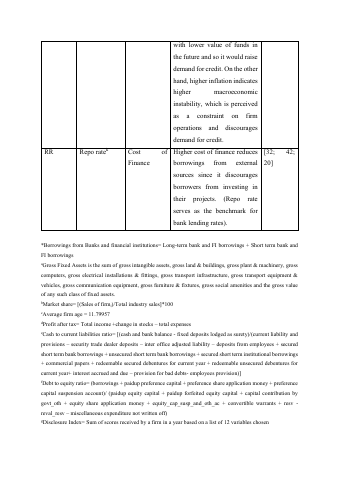
- Macroeconomic factors including electricity demand, cost of finance, credit availability, and inflation did not exhibit statistically significant effects in the estimated model.p.9
- Green transaction costs serve as an institutional screening mechanism that disproportionately restricts credit access for small and medium-sized green firms.p.13
Pages
 p.1
 p.2
 p.3
 p.4
 p.5
 p.6
 p.7
 p.8
 p.9
 p.10
 p.11
 p.12
 p.13
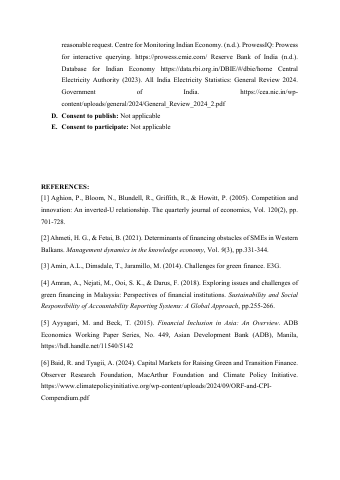 p.14
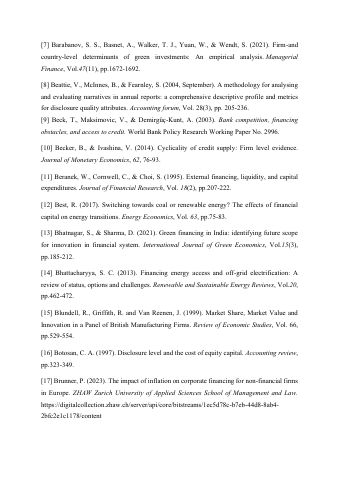 p.15
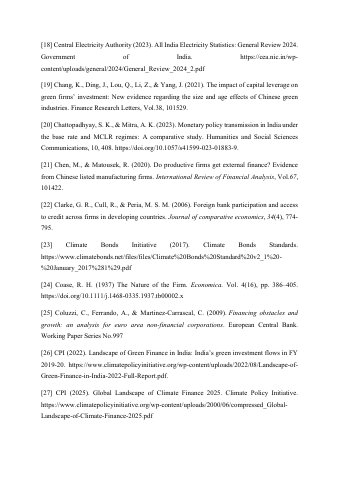 p.16
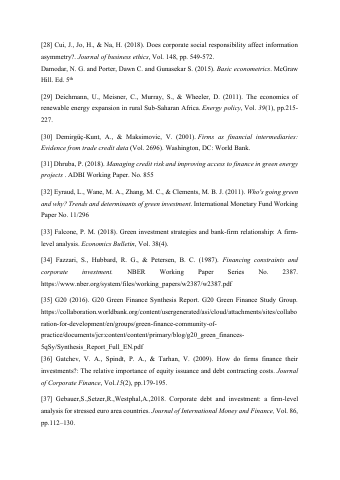 p.17
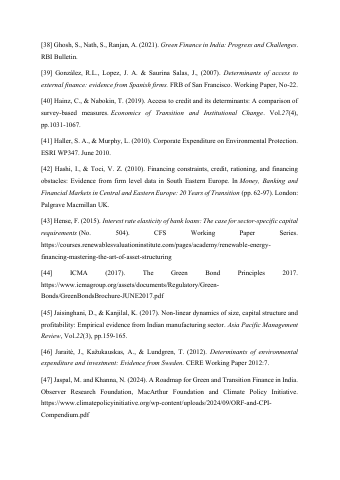 p.18
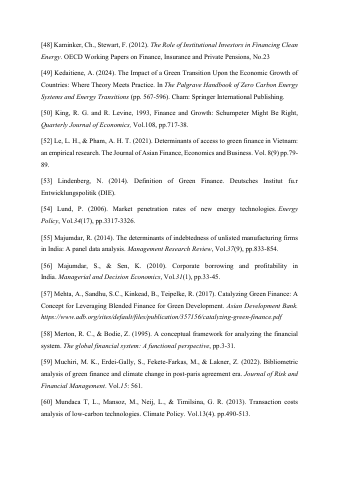 p.19
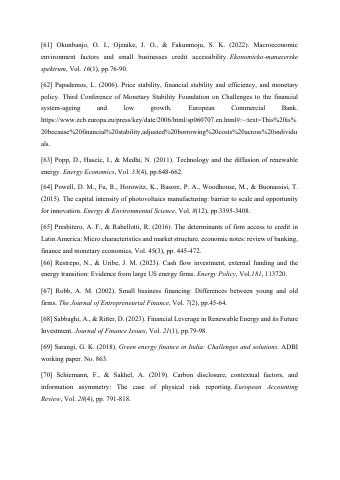 p.20
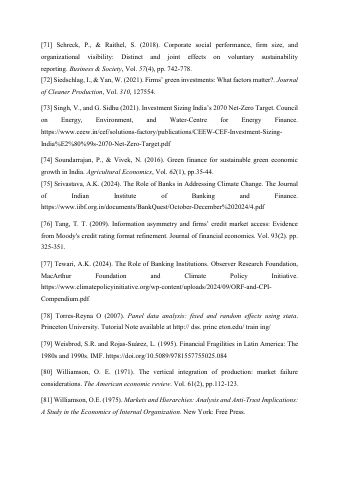 p.21
 p.22
 p.23
 p.24
 p.25
 p.26
 p.27
Funders mentioned
Topics and entities
Summary and figures generated from the document and checked automatically: every number shown appears on the cited page. Publishers can request removal.