The Changing Exit Environment and Its Impact on Private Markets
UK private capital markets face a structural liquidity gap, with PE sponsors deploying capital at a 2.1x deployment-to-exit ratio between 2021 and 2025.
342 documents
UK private capital markets face a structural liquidity gap, with PE sponsors deploying capital at a 2.1x deployment-to-exit ratio between 2021 and 2025.
Total incremental fundraising in CEE reached €1.87 billion in 2025, representing a 3% decrease from 2024 but remaining 21% above the previous five-year average.
Acquisition-related deals made up 75% of all activity by count YTD, leading estimated volume at €11.7 billion.
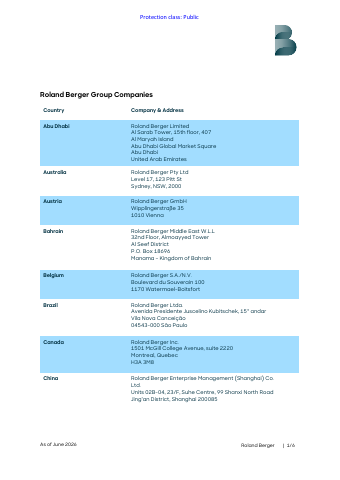
Roland Berger Limited in Abu Dhabi is located at Al Sarab Tower, 15th floor, 407 as of June 2026.
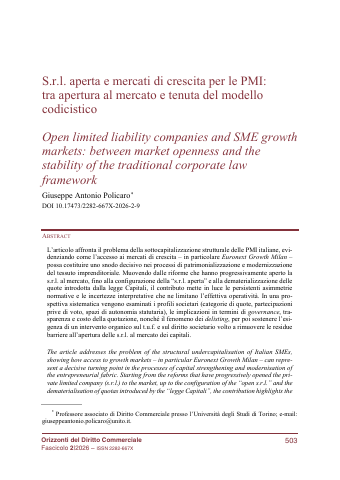
Italian SMEs face structural undercapitalization, maintaining average equity ratios below 30%, whereas Northern European economies exceed 40-45%.
Finnish buyout and growth investors raised €535 million in new capital in 2025, representing a 47% decrease compared to the previous year.
Between 1950 and the present, aggregate per capita national wealth in France, Germany, Italy, and Spain multiplied by 18 times, rising from 37% to 83% of US per capita national wealth.
The study analyzes financial data from 163 Polish companies that conducted a total of 188 equity crowdfunding (ECF) campaigns between 2014 and 2023.
Introduced in December 2024 by Rob Murray, the Defence, Security and Resilience Bank (DSR Bank) is designed as a multilateral development bank with an initial capital of around €117 billion.
Sveriges Riksbank started publishing values for SWESTR on 2 September 2021 based on transaction data from 9 banks.
Total Danish VC investments reached EUR 182 million in Q1 2026, representing a 71% decline compared to EUR 620 million in Q4 2025.
European VC deal value reached €21.9 billion in Q1 2026, driven by unprecedented AI deal penetration of 61.3%.
Alternative online lenders can offer fast business financing but charge high interest rates ranging from 18–40% per year.
Industrials led global sector distribution in Q1 2026, accounting for 61 IPOs and $14b in proceeds.
Excluding China, the global alternative finance market grew continuously from $44 billion in 2015 to $113 billion in 2020.
In the Riksbank's survey, 91 per cent of respondents used Swish in the past month, making mobile payments increasingly widespread.
Nordic VC exit value rose to €18.7 billion in 2025, heavily driven by Klarna's €12.7 billion IPO.
The Business Innovation Center (BIC) opened in 2003 as a space of 4000 square meters articulated in 35 modules dedicated to innovative business ventures.
The Nordic PE market recorded an average of 392 deals per quarter in 2025, compared with 377 in 2024, 355 in 2023, and 388 in 2022.
Academic research by Signori and Vismara (2016) estimates the annual return on equity crowdfunding investments at approximately 9%.
Digital payment transactions in the European Union increased from 4.8% of total transactions in 2007 to 73.3% in 2014.
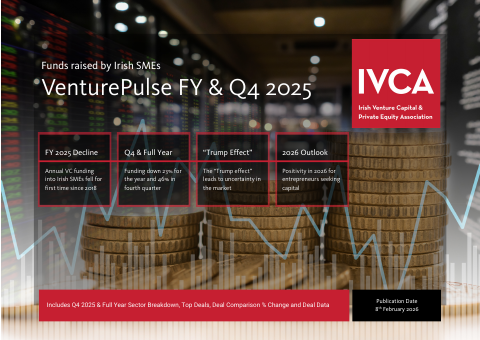
Annual VC funding into Irish SMEs fell by 23% in FY 2025, marking the first annual decline since 2018.
Every year in Europe, approximately 450,000 business transfers take place, with around 150,000 facing the risk of not being completed successfully.
A net 12% of euro area firms reported an increase in bank loan interest rates, up from 2% in the previous quarter.
Europe requires an estimated additional annual investment of approximately €1.4 trillion, equivalent to around 7% of GDP, to finance its growth, digital, energy, defence, and transition goals.
The report presents findings from 307 family offices across more than 30 markets worldwide, with an average net worth of USD 2.7 billion.
SECA represents over 550 members across investment companies, banks, corporate finance advisors, lawyers, and private investors in Switzerland.
Funding across stages in Germany was evenly split, with the start-up segment raising EUR 726 million and the scale-up segment raising EUR 714 million.
Total European B2C e-commerce turnover increased by 7%, rising from €842 billion to €911 billion in 2025.
Access to agricultural credit must serve as a driver for the ecological transition to Agriculture 4.0, which requires substantial upfront capital.