Systemic Perspectives on Portfolio Management, Behavioral Finance and Financial Culture (Contemporary research analysis journal.)
Summary
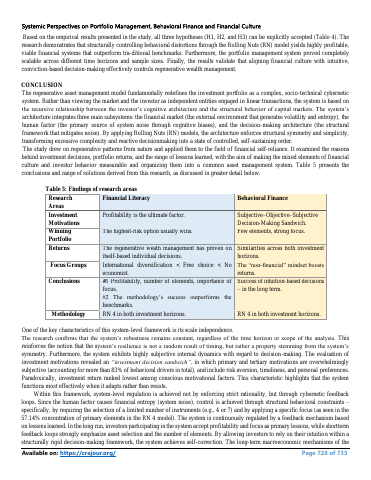
- The empirical study evaluated 1,722 investment portfolios over short-term (3-month) and long-term (10-year) horizons to test systemic resilience.p.1
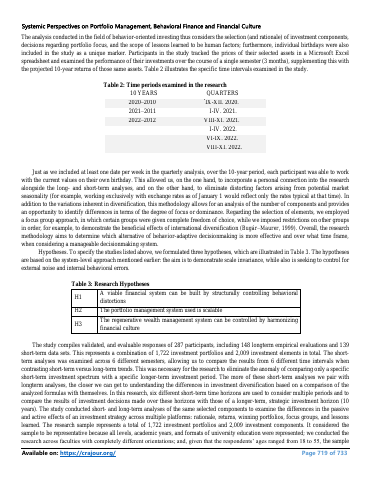
- The research sample analyzed 287 participants, combining 148 long-term empirical evaluations and 139 short-term data sets across 2,009 investment elements.p.4
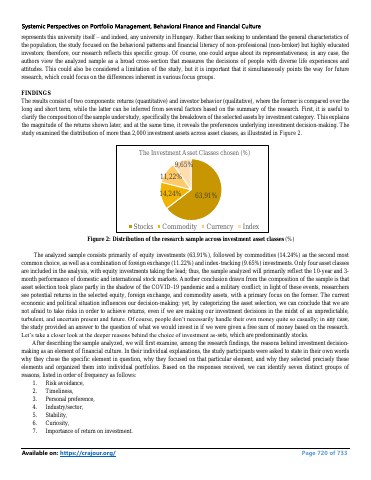
- Equity investments represented the largest asset class in the sample at 63.91%, followed by commodities at 14.24%, foreign exchange at 11.22%, and index-tracking investments at 9.65%.p.5
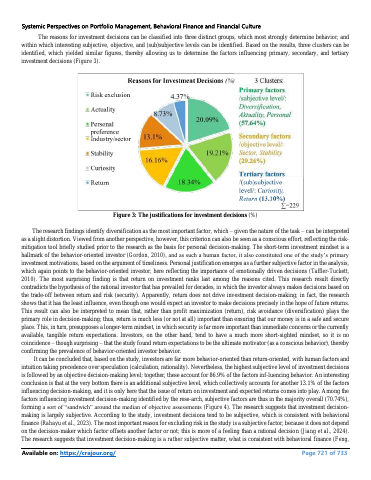
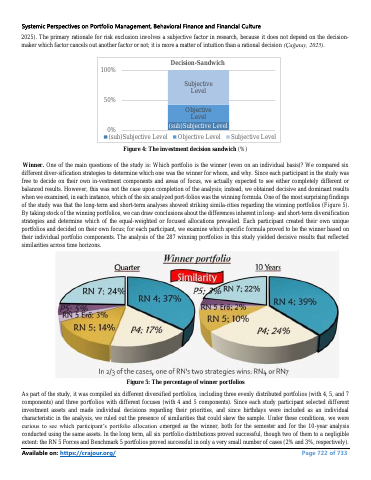
- Subjective factors accounted for 70.74% of decision-making motivators, creating a decision sandwich around objective assessments.p.6
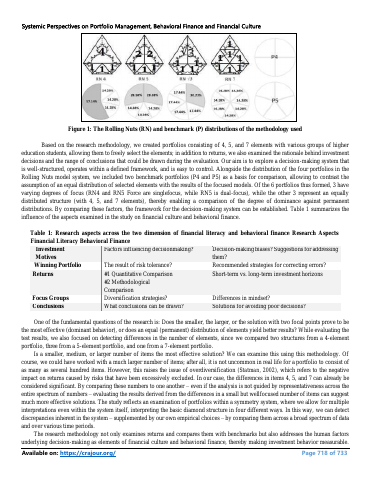
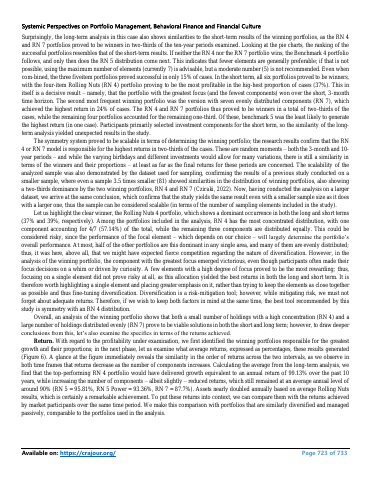
- The concentrated Rolling Nuts 4 (RN 4) model emerged as the winning formula in 37% of short-term cases and 39% of long-term cases.p.8
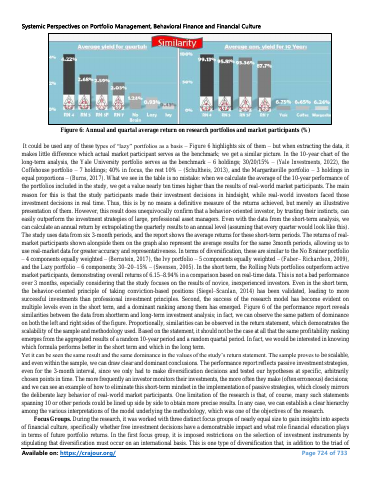
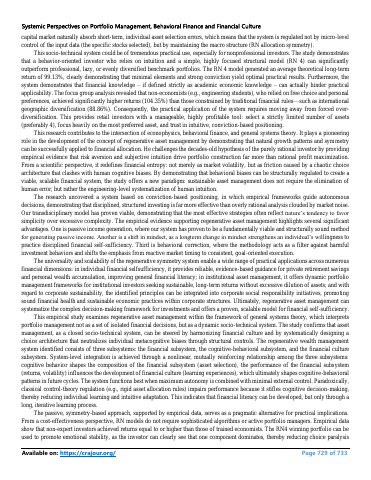
- Short-term Rolling Nuts portfolios outperformed active market benchmarks with overall quarterly returns ranging from 6.15–8.94%.p.9
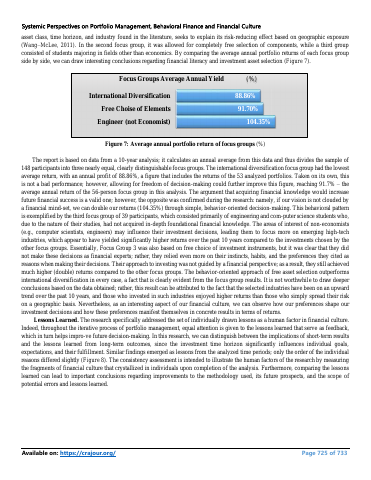
- Engineering and non-economist students in Focus Group 3 achieved an average annual portfolio return of 104.35%, outperforming other focus groups.p.10
Key insights
- Human behavioral biases operate as intrinsic system noise that can be structurally managed through choice architecture rather than eliminated.p.1
- The structural robustness of the Rolling Nuts portfolio models displays scale independence across different time horizons, sample sizes, and participant demographics.p.1
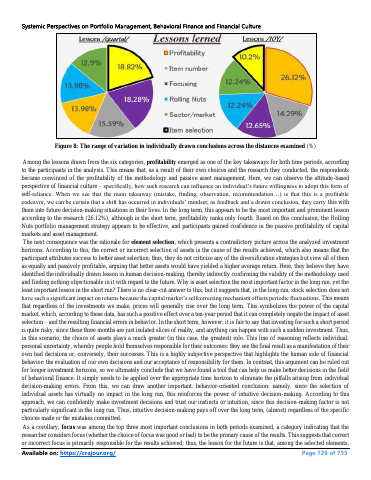
- Return on investment ranked lowest among conscious decision-making drivers, contradicting traditional rational investor hypotheses.p.6
- Winning portfolio allocations show strong structural similarities across 3-month and 10-year timeframes, with RN 4 and RN 7 accounting for two-thirds of top outcomes.p.8
- Novice investors relying on conviction-based positioning outperformed professional market benchmarks in short-term performance evaluations.p.9
- Non-economist participants relying on personal high-tech preferences doubled the annual returns of participants restricted to international geographic diversification.p.10
- Capital market self-correcting mechanisms absorb individual asset selection errors over long investment horizons.p.11
- Enforcing strict academic rationality disrupts internal cybernetic feedback mechanisms in portfolio management systems.p.1
Pages
 p.1
 p.2
 p.3
 p.4
 p.5
 p.6
 p.7
 p.8
 p.9
 p.10
 p.11
 p.12
 p.13
 p.14
 p.15
 p.16
 p.17
 p.18
Topics and entities
Summary and figures generated from the document and checked automatically: every number shown appears on the cited page. Publishers can request removal.