Spillover Effect Between Oil Prices, Climate Risks, and Carbon Prices in China: Dynamic Effects and Key Drivers (Frontiers in Environmental Science)
SaveSummary
- The study examines dynamic interactions among decomposed oil price shocks, physical and transition climate-risk indices, and China's regional carbon price represented by the Guangdong pilot market.p.1
- China aims to reach peak carbon emissions by 2030 and carbon neutrality by 2060.p.2
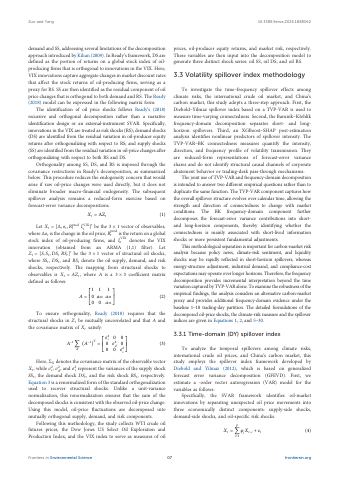
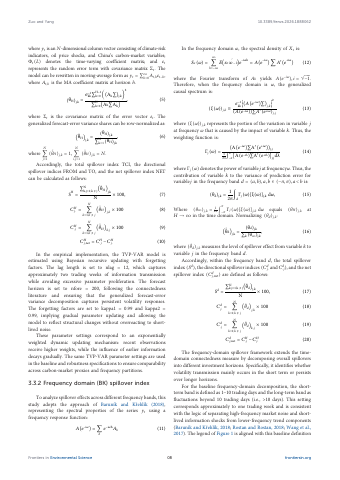
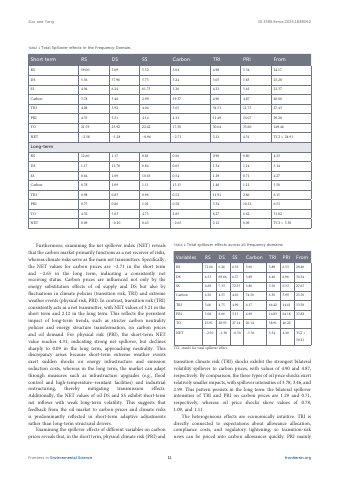
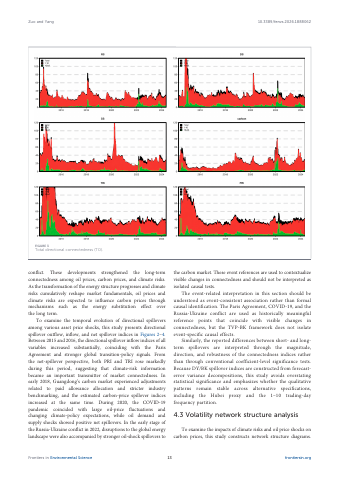
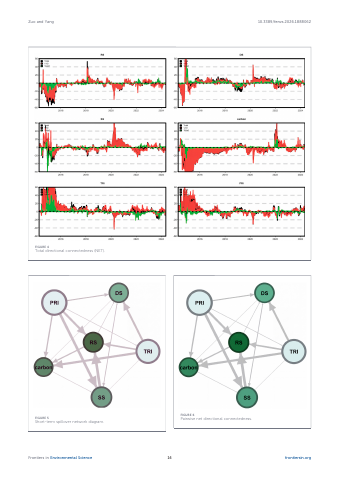
- The total connectedness index (TCI) is 24.91 in the short term and 5.30 in the long term.p.11
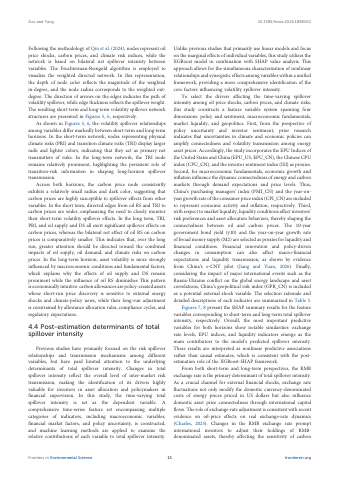
- The NET values for carbon prices are −2.71 in the short term and −2.65 in the long term, so carbon acts as a net receiver of risks.p.11
- With Hubei carbon prices, the short-term cTCI/TCI is 30.30%/25.25%, compared with 5.98%/4.99% in the long term.p.17
- Regional pilots differ from the national ETS launched in July 2021 in liquidity, sector coverage and allowance fungibility.p.18
Key insights
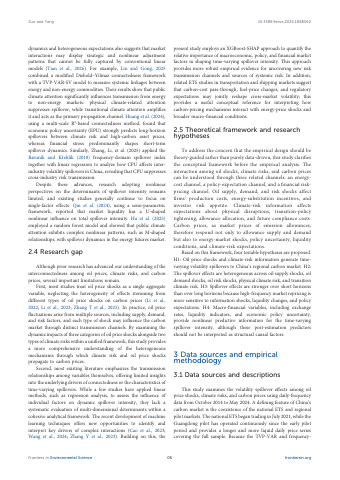
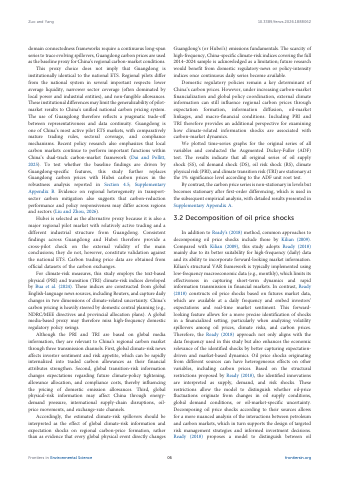
- The Guangdong carbon price is used as a proxy for China's regional carbon-market conditions because of data continuity.p.6
- Carbon prices behave mainly as net risk receivers, while climate risks serve as the main net transmitters.p.11
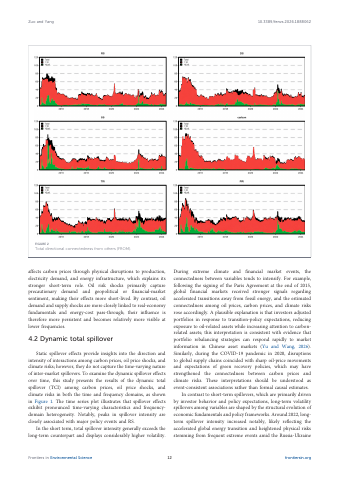
- Connectedness among oil prices, carbon prices and climate risks rose between 2015 and 2016, coinciding with the Paris Agreement.p.13
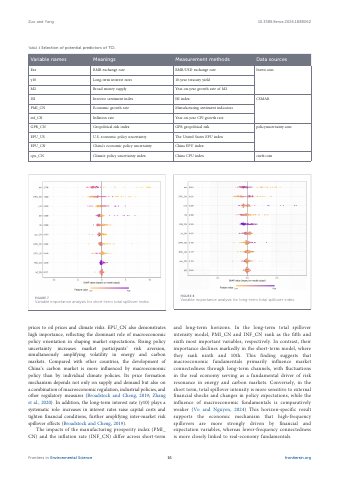
- Macroeconomic fundamentals such as PMI_CN and INF_CN rank fifth and sixth in the long-term model but ninth and 10th in the short-term model.p.16
- Oil risk shocks play a more prominent role in the short term, whereas oil demand shocks are the most influential factor over the long term.p.17
- The XGBoost-SHAP analysis identifies the RMB exchange rate, market liquidity and EPU_CN as the most important contributors to spillover intensity.p.17
Pages
 p.1
 p.2
 p.3
 p.4
 p.5
 p.6
 p.7
 p.8
 p.9
 p.10
 p.11
 p.12
 p.13
 p.14
 p.15
 p.16
 p.17
 p.18
 p.19
Topics and entities
Summary and figures generated from the document and checked automatically: every number shown appears on the cited page. Publishers can request removal.