Peripheral Entrepreneurship and Socio-Environmental Impact: Why Are They Not Recognized as Impact Businesses? (Artefactum)
SaveSummary
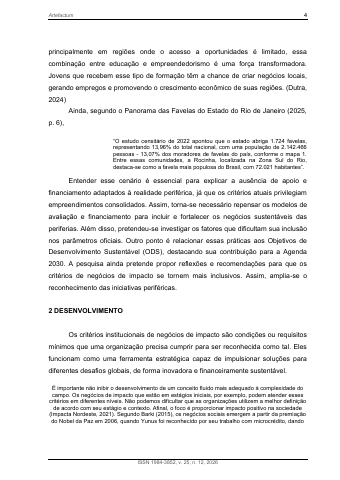
- The state of Rio de Janeiro has 1,724 favelas, representing 13.96% of the national total.p.4
- Of Brazilian individual microentrepreneurs, 35.83% never issued invoices and 27.53% do so only when the client asks.p.8
- Internet is present in 100% of class A households but only 68% of class D and E households.p.7
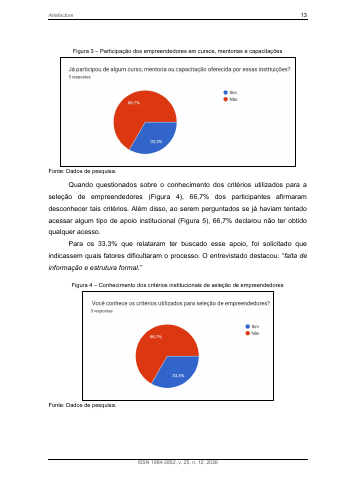
- Among the surveyed entrepreneurs, 66.7% said they know some support institution, but 66.7% had never joined a course, mentoring or training.p.12
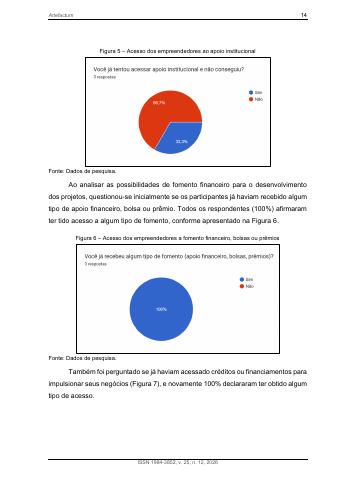
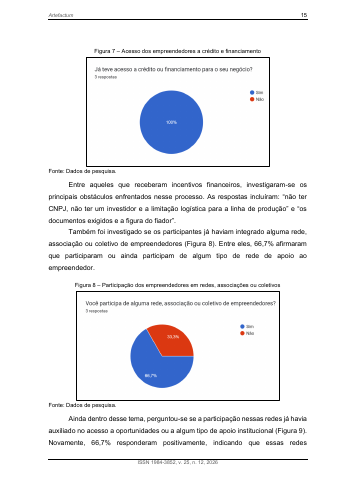
- All respondents (100%) reported having received some financial support, grant or prize.p.14
- 66.7% of participants did not know the criteria used to select entrepreneurs.p.13
Key insights
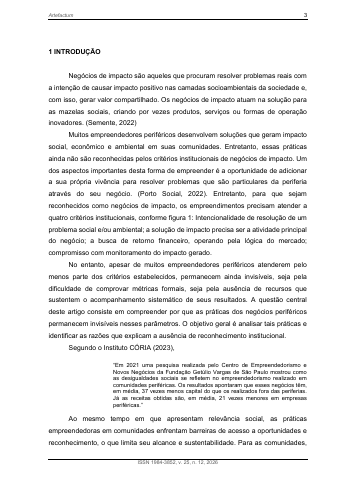
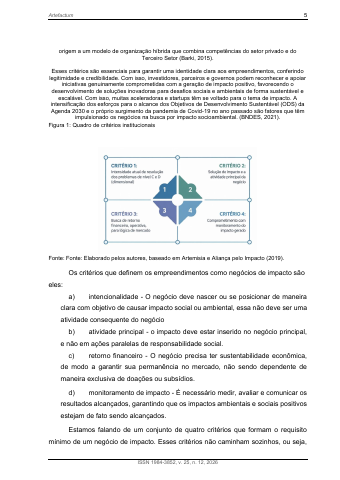
- To be recognized as impact businesses, ventures must meet four institutional criteria: intentionality, impact as main activity, financial return, and impact monitoring.p.3
- The criteria were built around formal, structured ventures, which restricts the inclusion of community and peripheral initiatives.p.6
- Peripheral organizations meet intentionality and main-activity criteria but mostly cannot prove consolidated financial return or consistent impact monitoring.p.6
- Bureaucratic requirements such as legal formalization and invoicing exclude businesses operating informally.p.8
- 72% of residents of favelas and communities are black or brown people, and structural racism is cited as a barrier to investment.p.7
- All surveyed entrepreneurs obtained some form of funding but report obstacles in reaching institutions willing to invest in their growth.p.19
- Institutional strengthening through courses, mentoring and training is proposed to help entrepreneurs meet the criteria.p.19
Pages
 p.1
 p.2
 p.3
 p.4
 p.5
 p.6
 p.7
 p.8
 p.9
 p.10
 p.11
 p.12
 p.13
 p.14
 p.15
 p.16
 p.17
 p.18
 p.19
 p.20
 p.21
 p.22
Topics and entities
Summary and figures generated from the document and checked automatically: every number shown appears on the cited page. Publishers can request removal.