Integration of Islamic Crowdfunding, Cash Waqf, and Islamic Microfinance for Poverty Alleviation in Ethiopia (International Journal of Islamic Economics and Finance Studies)
SaveSummary
- A survey collected data from 321 participants, of which 299 were valid responses.p.6
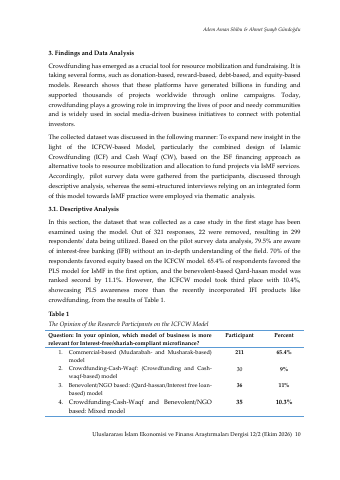
- 79.5% of respondents are aware of interest-free banking, and 70% favored equity based on the ICFCW model.p.10
- 65.4% of respondents favored the PLS model for Islamic microfinance as their first option, while Qard-hasan was ranked second by 11.1%.p.10
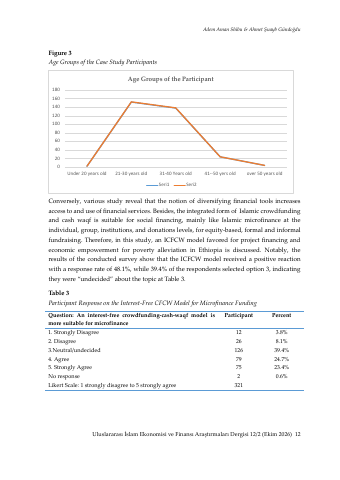
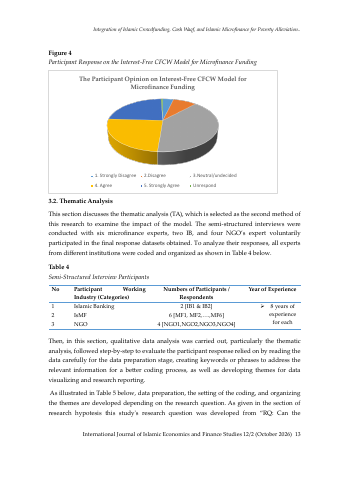
- The ICFCW model received a positive reaction with a response rate of 48.1%, while 39.4% were undecided.p.12
- Interest-free microfinancing came into effect in Ethiopia in 2021 with Directive No. MFI/32/2021.p.3
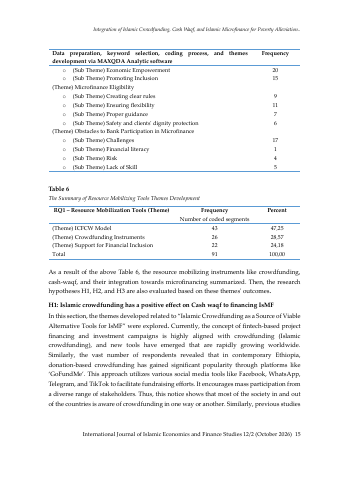
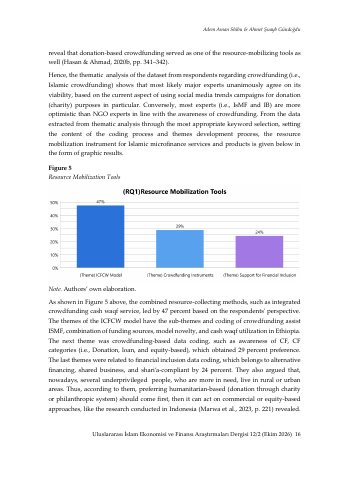
- In thematic analysis, the combined crowdfunding cash waqf theme led with 47 percent, followed by crowdfunding instruments at 29 percent.p.16
Key insights
- The global fintech market volume is estimated at around $79 billion in 2021.p.9
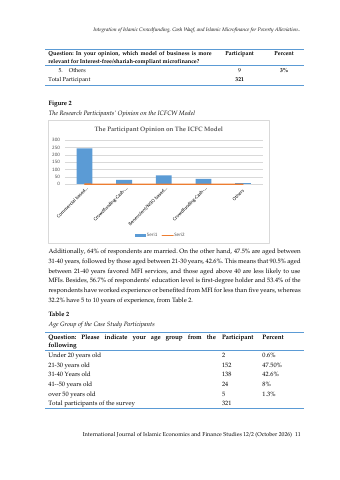
- 90.5% of respondents aged between 21-40 years favored MFI services.p.11
- Semi-structured interviews were held with six microfinance experts, two from Islamic banking and four from NGOs.p.13
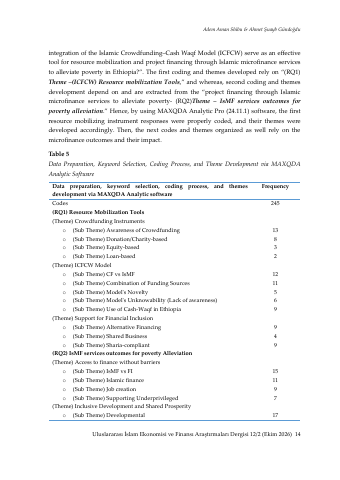
- Inclusive development and shared prosperity was the top outcome theme at 33.77%, followed by access to finance without barriers at 27.30%.p.18
- Combined, inclusive development (34%) and access to finance (27%) show that 61 percent viewed microfinance as a mechanism for shared prosperity.p.19
- Awareness of crowdfunding in Ethiopia remains low due to limited internet usage and underdeveloped digital services.p.17
- Respondents considered donation-based crowdfunding or qard-hasan more appropriate than equity-based crowdfunding at this stage.p.20
Pages
 p.1
 p.2
 p.3
 p.4
 p.5
 p.6
 p.7
 p.8
 p.9
 p.10
 p.11
 p.12
 p.13
 p.14
 p.15
 p.16
 p.17
 p.18
 p.19
 p.20
 p.21
 p.22
 p.23
 p.24
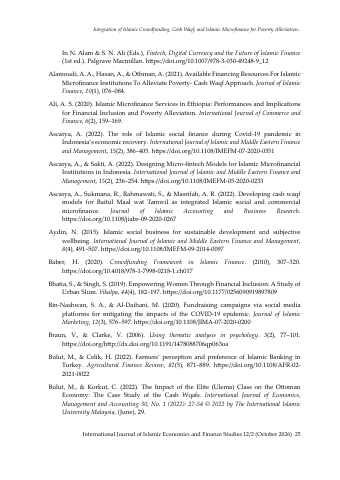 p.25
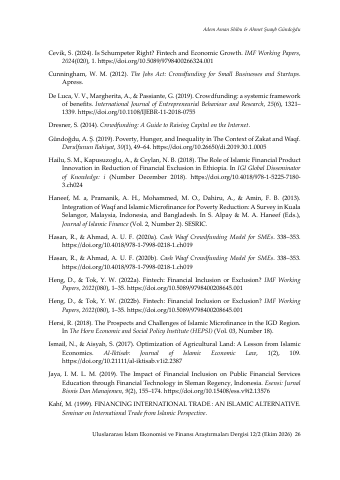 p.26
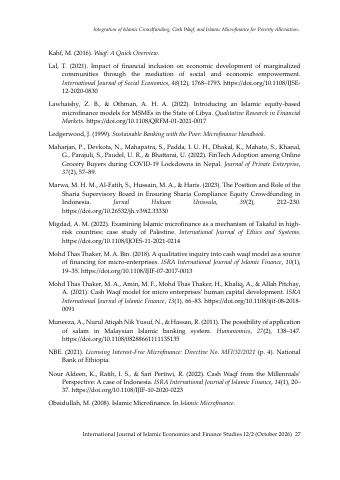 p.27
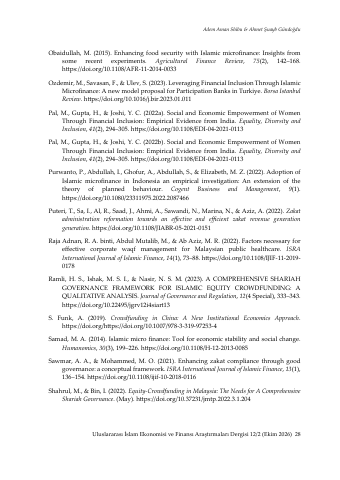 p.28
 p.29
Funders mentioned
Topics and entities
Summary and figures generated from the document and checked automatically: every number shown appears on the cited page. Publishers can request removal.