ESG, Customer Equity and Shareholder Value in the Digital Economy: The Moderating Effect of AI-Enabled Digital Transformation Intensity among Listed Banks in ASEAN and ECOWAS (Research Square)
SaveWhat changed
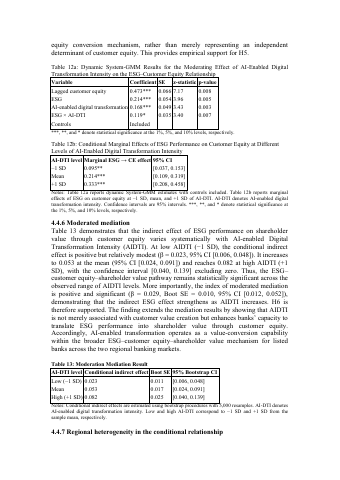
0.333 coefficient
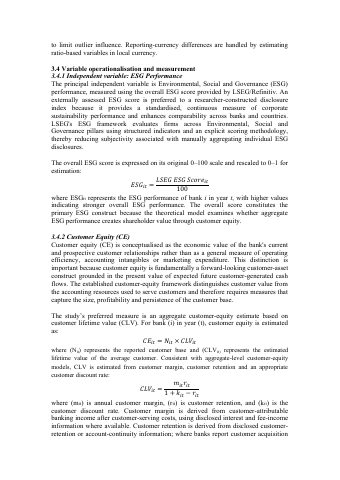
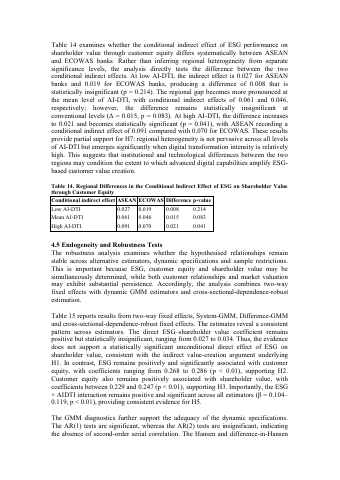
Marginal ESG effect on customer equity at +1 SD of AI-DTI (mean: 0.214) p.26
Summary
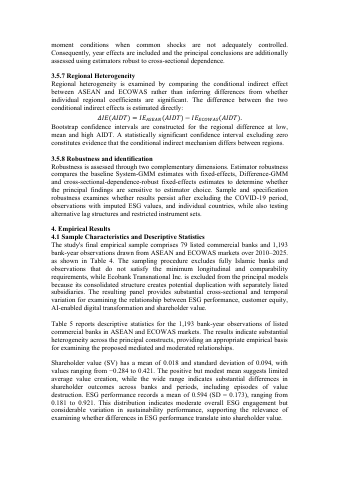
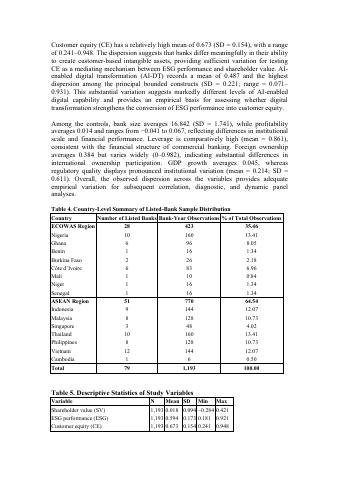
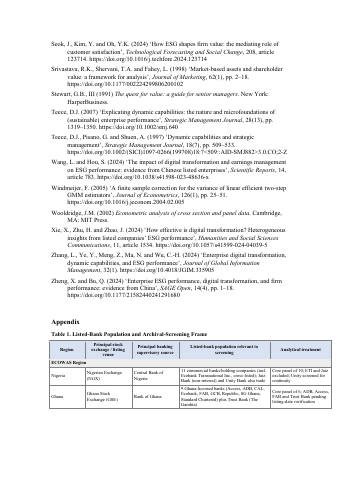
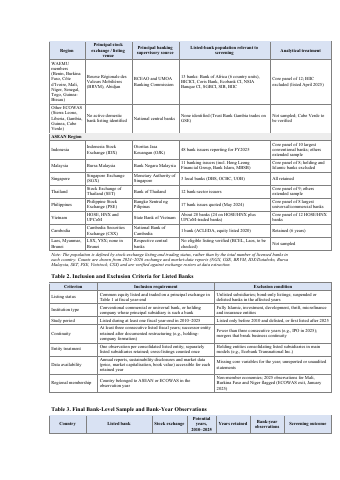
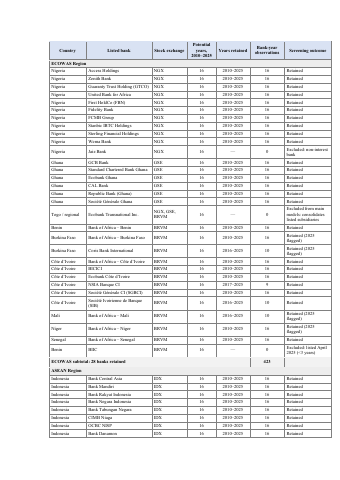
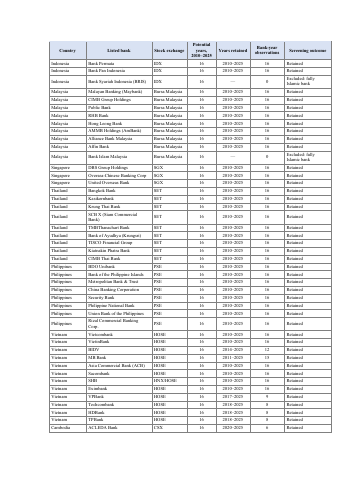
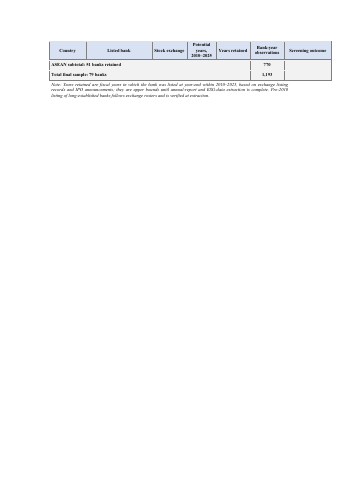
- The study uses 1,193 bank-year observations from 79 listed commercial banks over 2010–2025.p.2
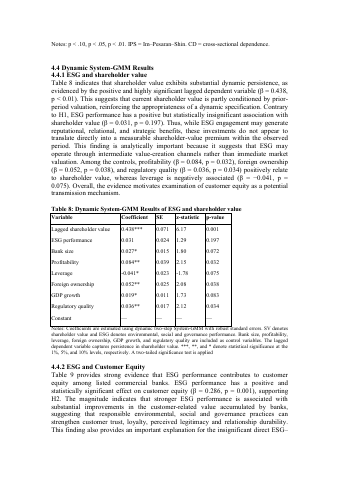
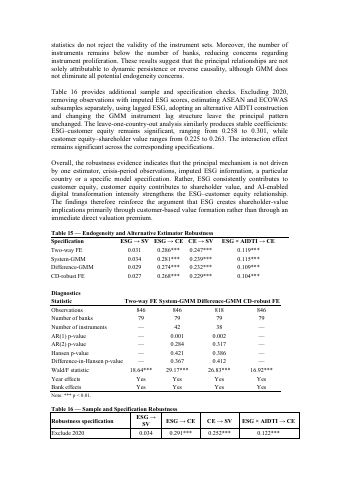
- ESG performance has a positive but statistically insignificant association with shareholder value (β = 0.031, p = 0.197).p.23
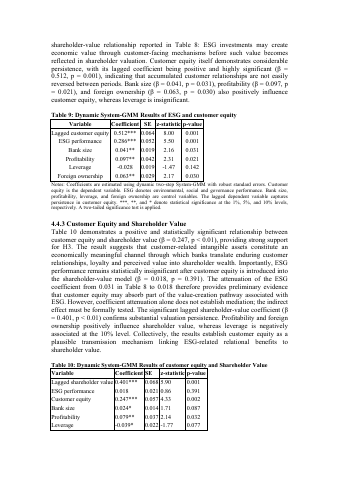
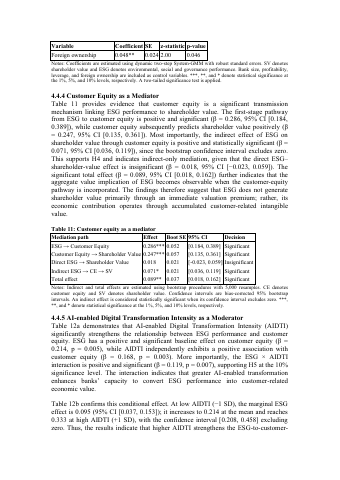
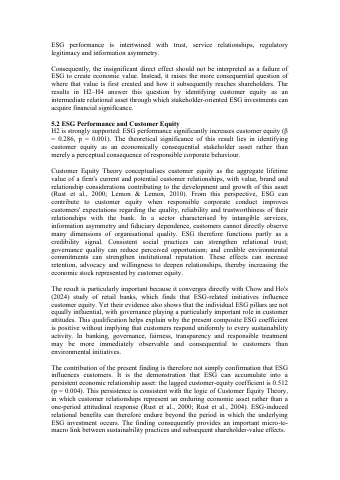
- ESG performance is positively linked to customer equity (coefficient 0.286).p.24
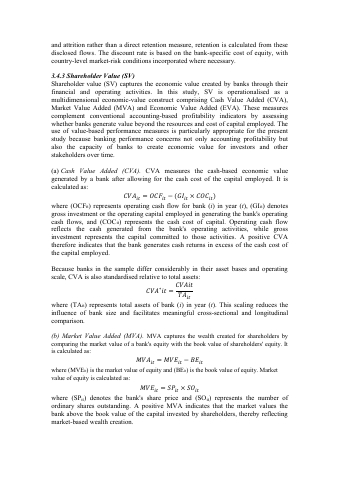
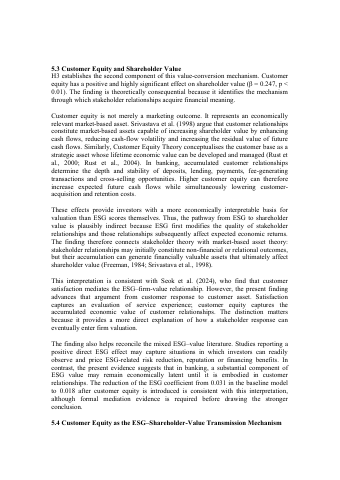
- Customer equity has a positive and significant relationship with shareholder value (β = 0.247, p < 0.01).p.24
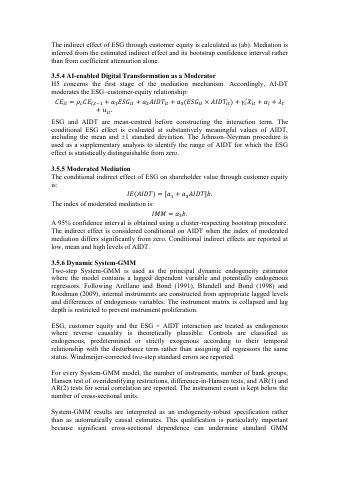
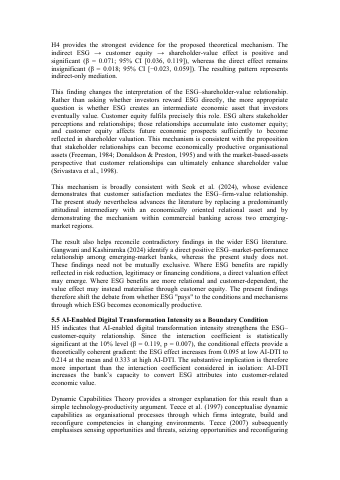
- The indirect effect of ESG on shareholder value through customer equity is positive and significant (β = 0.071, 95% CI [0.036, 0.119]), indicating indirect-only mediation.p.25
- The marginal ESG effect on customer equity rises from 0.095 at −1 SD to 0.214 at the mean and 0.333 at +1 SD of AI-enabled digital transformation intensity.p.26
Key insights
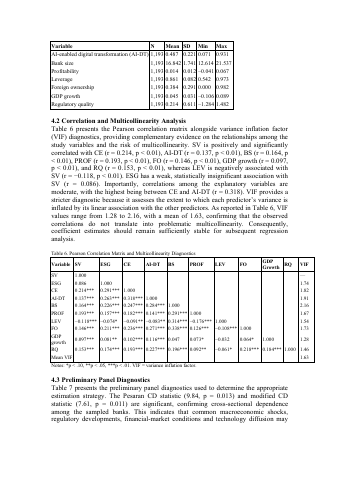
- Customer equity has a relatively high mean of 0.673 (SD = 0.154).p.20
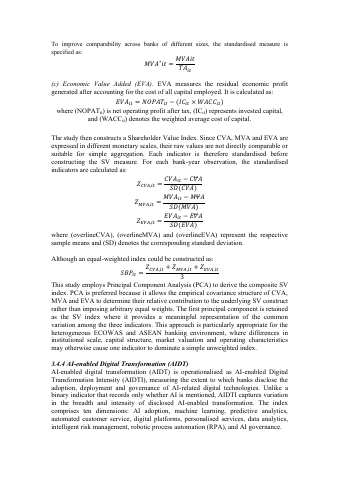
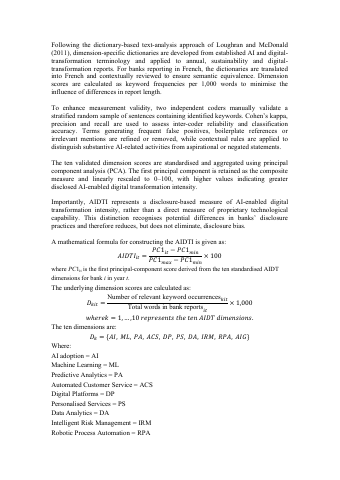
- AI-enabled digital transformation records a mean of 0.487 and the highest dispersion among the bounded constructs (SD = 0.221).p.20
- Shareholder value is positively correlated with customer equity (r = 0.214, p < 0.01).p.21
- VIF values range from 1.28 to 2.16, with a mean of 1.63, indicating no problematic multicollinearity.p.21
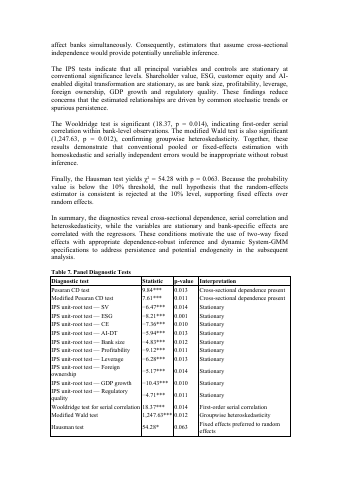
- The Hausman test yields χ² = 54.28 with p = 0.063, supporting fixed effects over random effects.p.22
- Customer equity shows considerable persistence, with a lagged coefficient of 0.512.p.24
Pages
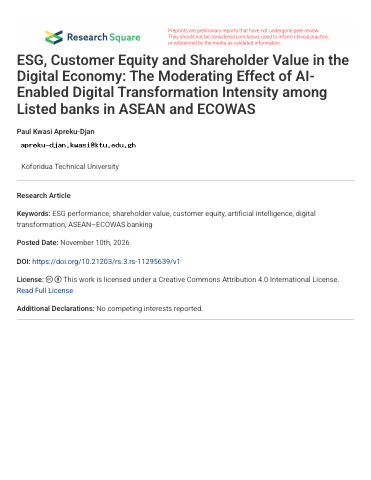 p.1
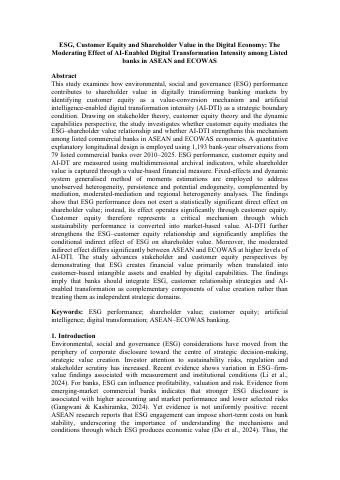 p.2
 p.3
 p.4
 p.5
 p.6
 p.7
 p.8
 p.9
 p.10
 p.11
 p.12
 p.13
 p.14
 p.15
 p.16
 p.17
 p.18
 p.19
 p.20
 p.21
 p.22
 p.23
 p.24
 p.25
 p.26
 p.27
 p.28
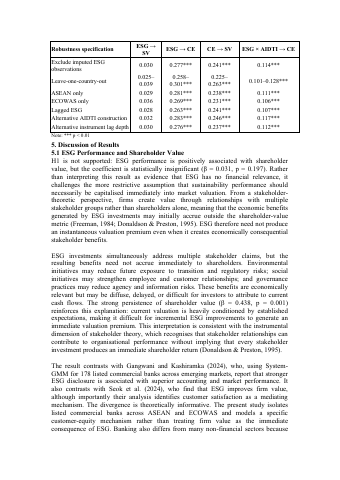 p.29
 p.30
 p.31
 p.32
 p.33
 p.34
 p.35
 p.36
 p.37
 p.38
 p.39
 p.40
 p.41
 p.42
 p.43
 p.44
 p.45
Funders mentioned
Topics and entities
Summary and figures generated from the document and checked automatically: every number shown appears on the cited page. Publishers can request removal.