Digital Islamic Finance for Inclusive and Sustainable Development: Opportunities, Ethical Challenges, and Policy Frameworks (International Journal of Islamic Personal and Family Finance)
SaveSummary
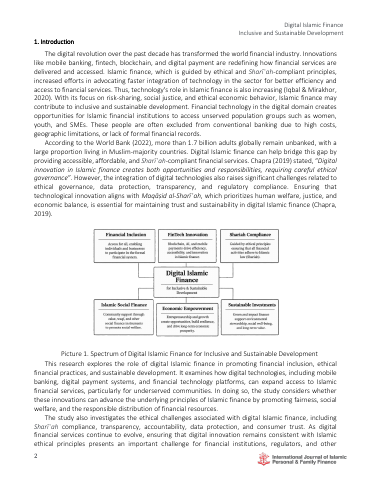
- According to the World Bank, more than 1.7 billion adults globally remain unbanked, many in Muslim-majority countries.p.2
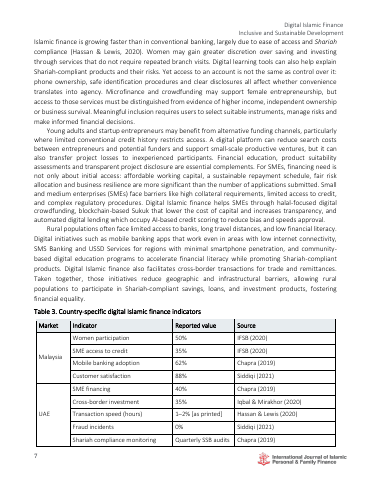
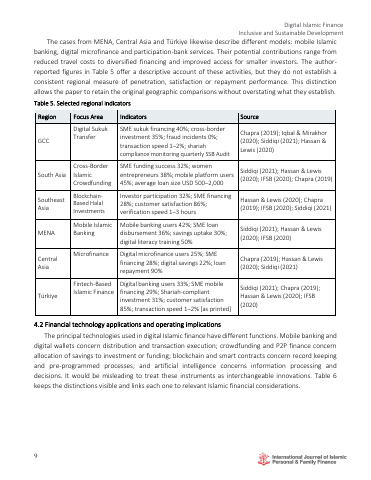
- Author-reported indicators include SME funding success of 32%, women entrepreneurs at 38% and a loan repayment rate of 92%.p.8
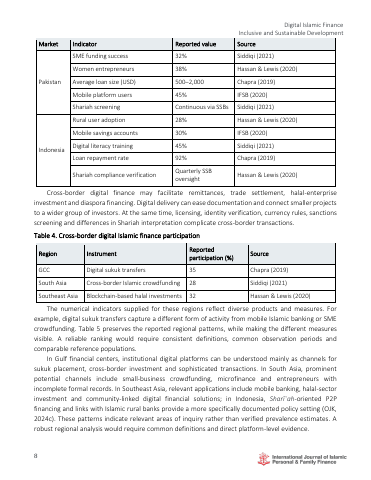
- Reported cross-border participation is 35% for GCC digital sukuk transfers, 28% for South Asian Islamic crowdfunding and 32% for blockchain-based halal investments in Southeast Asia.p.8
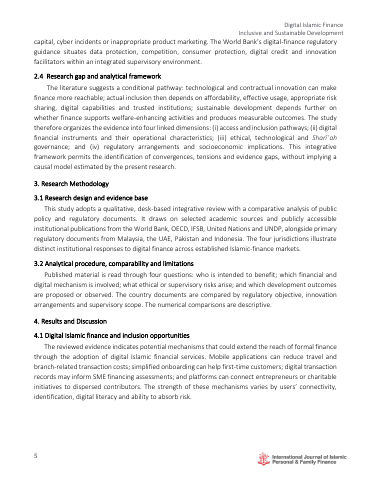
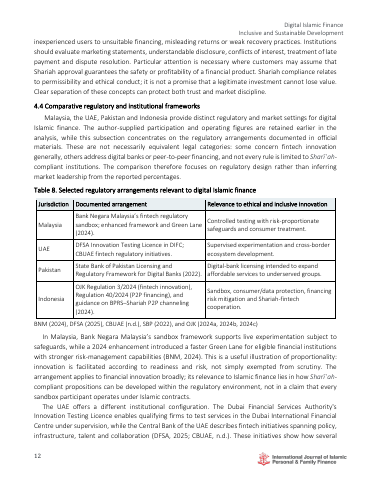
- The paper compares regulatory arrangements in Malaysia, the UAE, Pakistan and Indonesia.p.5
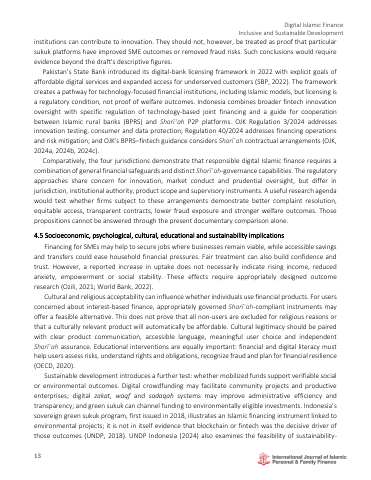
- Pakistan's State Bank introduced its digital-bank licensing framework in 2022 to expand access for underserved customers.p.13
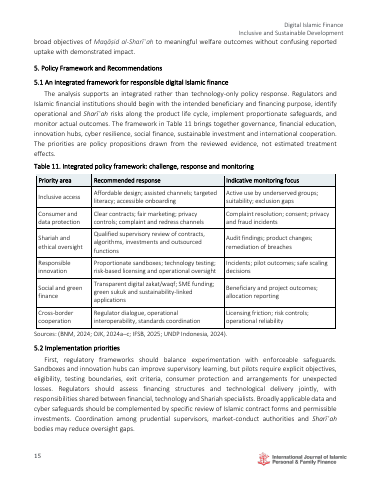
- The paper stresses that reported uptake figures should not be confused with demonstrated impact.p.15
Key insights
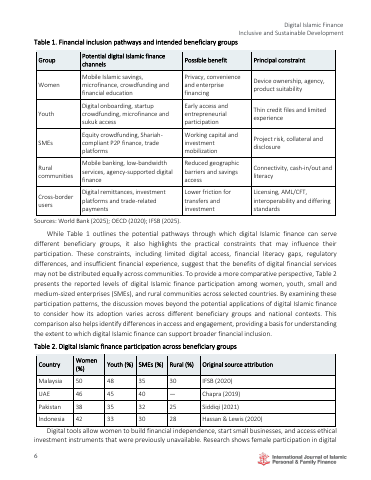
- Financial inclusion involves suitable, affordable and safe use of services, not only account ownership.p.3
- Reductions in poverty or emissions cannot be inferred directly from the existence of an Islamic finance instrument.p.4
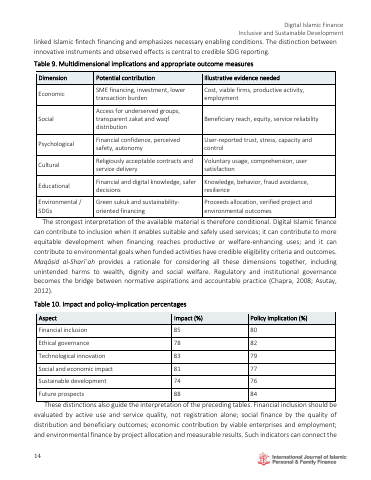
- The regional figures offer a descriptive account but do not establish a consistent measure of penetration, satisfaction or repayment performance.p.9
- Shariah compliance relates to permissibility and ethical conduct and is not a promise that an investment cannot lose value.p.12
- Licensing is a regulatory condition, not proof of welfare outcomes.p.13
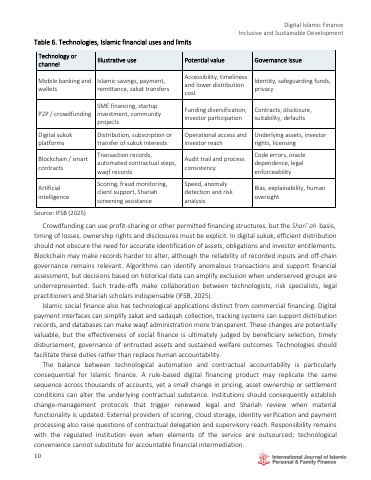
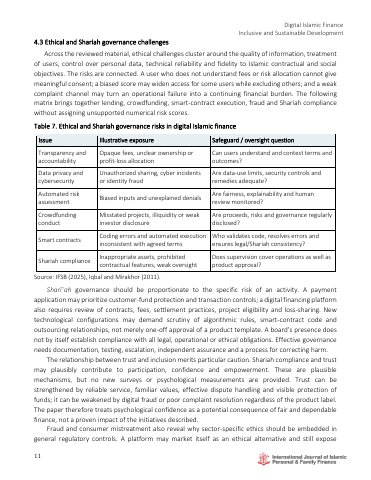
- Responsible digital Islamic finance needs both general financial safeguards and distinct Shariah-governance capabilities.p.13
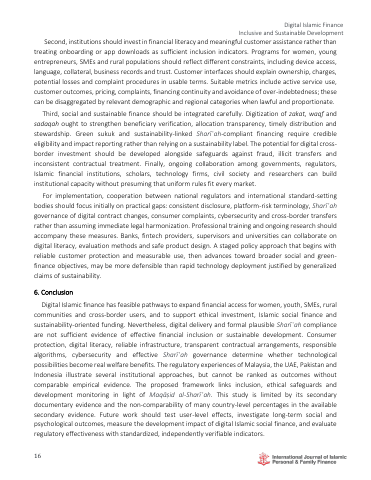
- The paper proposes an integrated policy framework covering inclusive access, consumer protection, Shariah oversight, innovation and social finance.p.15
Pages
 p.1
 p.2
 p.3
 p.4
 p.5
 p.6
 p.7
 p.8
 p.9
 p.10
 p.11
 p.12
 p.13
 p.14
 p.15
 p.16
 p.17
 p.18
Funders mentioned
Topics and entities
Summary and figures generated from the document and checked automatically: every number shown appears on the cited page. Publishers can request removal.