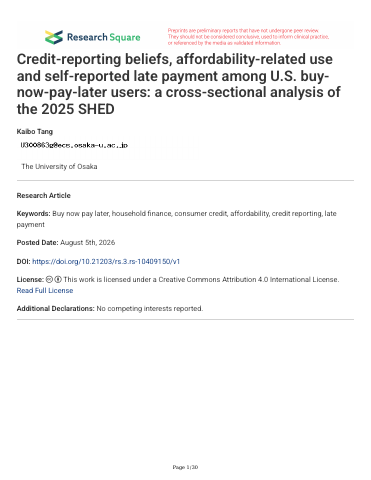
Credit-Reporting Beliefs, Affordability-Related Use and Self-Reported Late Payment Among U.S. Buy-Now-Pay-Later Users: A Cross-Sectional Analysis of the 2025 SHED (Research Square)
SaveLargest segment
54.1%
Users who accepted at least one credit-reporting statement (benchmark-discordant) p.2
Summary
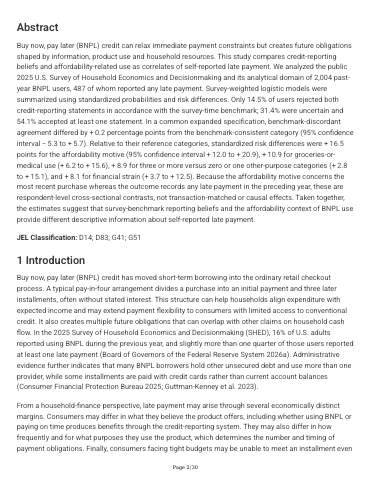
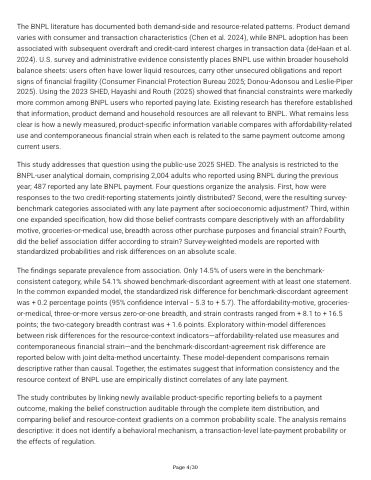
- The study analyses 2,004 past-year BNPL users in the 2025 Survey of Household Economics and Decisionmaking, of whom 487 reported any late payment.p.2
- Only 14.5% of users rejected both credit-reporting statements, while 31.4% were uncertain and 54.1% accepted at least one statement.p.2
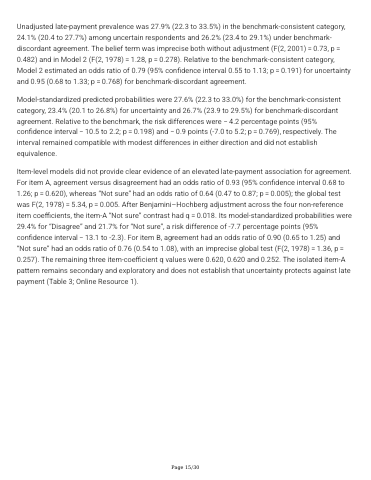
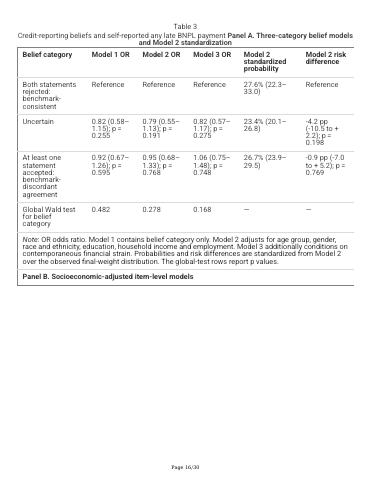
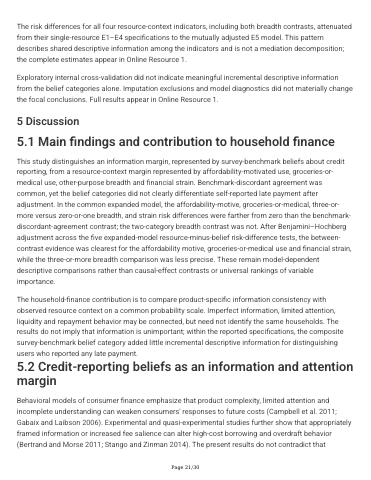
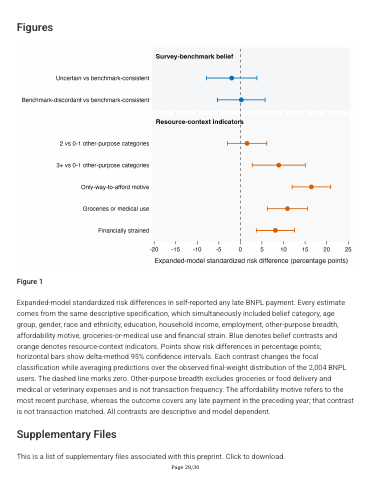
- Benchmark-discordant agreement differed by + 0.2 percentage points from the benchmark-consistent category, so beliefs did not clearly separate late payers.p.2
- The standardized risk difference for the affordability motive was + 16.5 points relative to its reference category.p.2
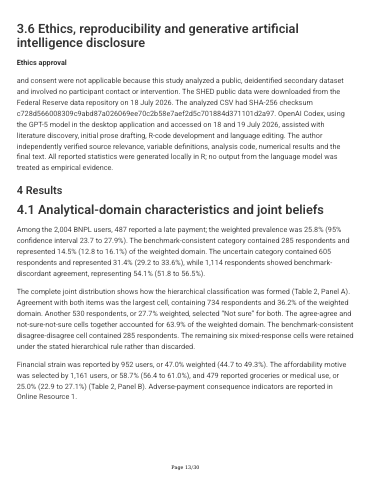
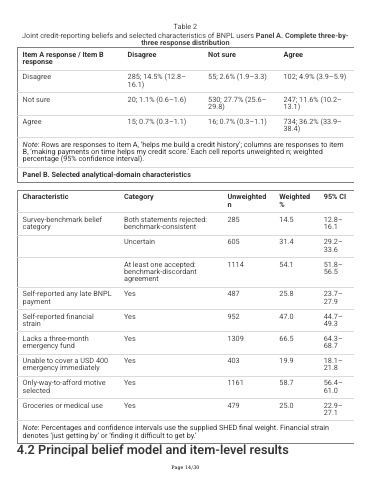
- The weighted prevalence of any late BNPL payment was 25.8%.p.13
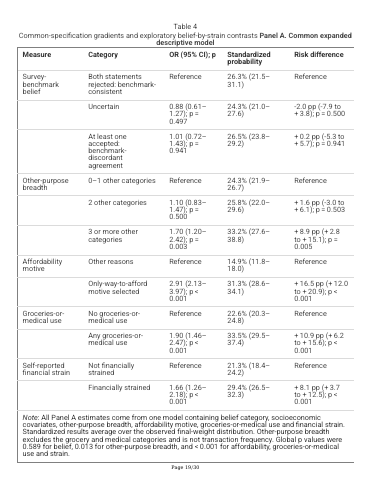
- Using three or more other-purpose categories carried a + 8.9 percentage point higher standardized late-payment probability than zero or one.p.19
Key insights
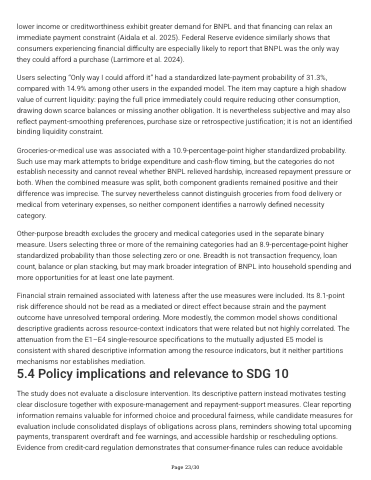
- Groceries-or-medical use was associated with a + 10.9 point risk difference for self-reported late payment.p.2
- Financial strain was associated with a + 8.1 point risk difference in the common expanded model.p.2
- Agreement with both credit-reporting items was the largest cell, with 734 respondents and 36.2% of the weighted domain.p.13
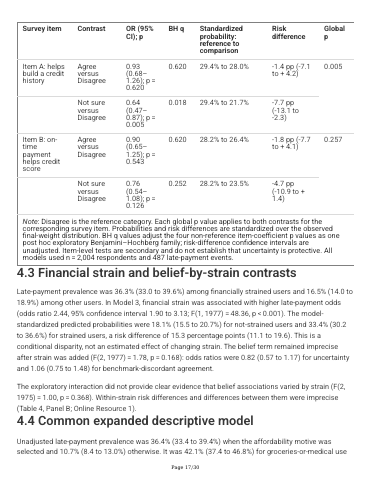
- Late-payment prevalence was 36.3% among financially strained users and 16.5% among other users.p.17
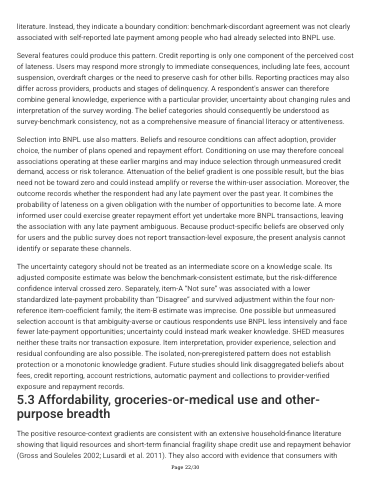
- Users selecting the only-way-to-afford motive had a standardized late-payment probability of 31.3%, compared with 14.9% among other users.p.19
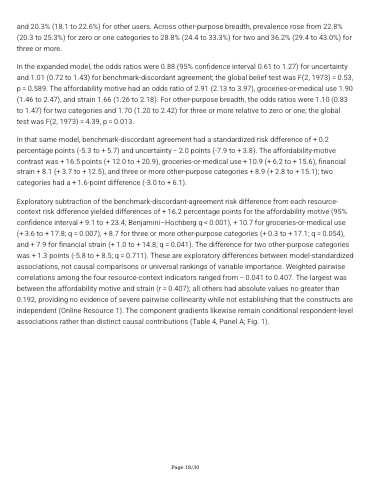
- The affordability motive had an odds ratio of 2.91 for late payment in the expanded model.p.18
- For item A, answering Not sure had an odds ratio of 0.64 versus disagreeing, a secondary exploratory result.p.15
Pages
 p.1
 p.2
 p.3
 p.4
 p.5
 p.6
 p.7
 p.8
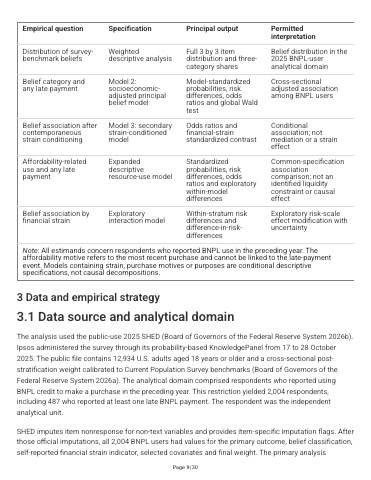 p.9
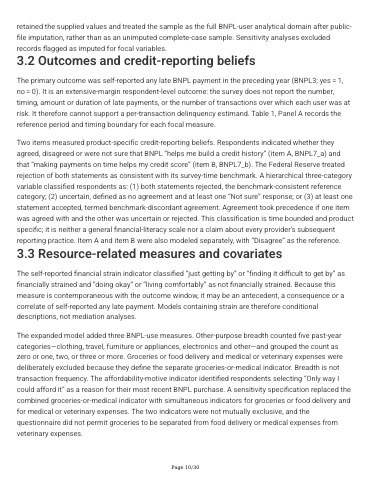 p.10
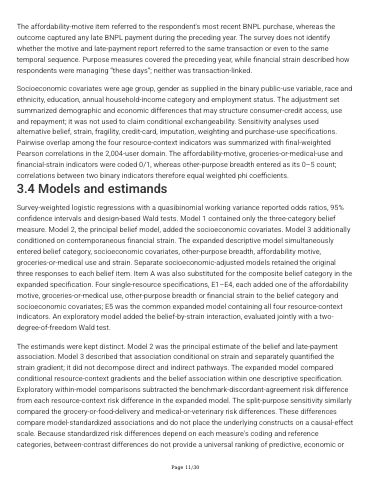 p.11
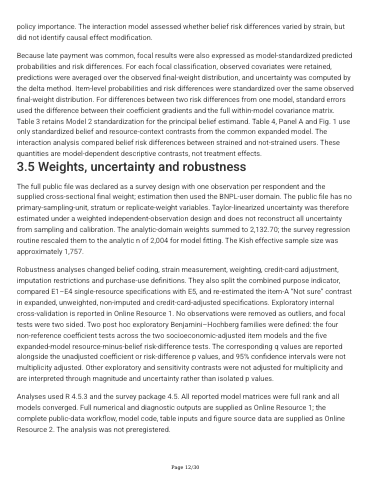 p.12
 p.13
 p.14
 p.15
 p.16
 p.17
 p.18
 p.19
 p.20
 p.21
 p.22
 p.23
 p.24
 p.25
 p.26
 p.27
 p.28
 p.29
 p.30
Funders mentioned
Topics and entities
Summary and figures generated from the document and checked automatically: every number shown appears on the cited page. Publishers can request removal.