Sustainability Investing in Family Offices: Evidence from Singapore
Family offices globally manage an estimated US$10 trillion in assets, with total sector numbers ranging from 8,000 to 17,000.
Central bank · SI · 19 documents
Family offices globally manage an estimated US$10 trillion in assets, with total sector numbers ranging from 8,000 to 17,000.
An estimated €4 trillion is laundered annually worldwide, with only around 1-2 per cent successfully confiscated under existing compliance frameworks.
As of October 1, 2026, VARA's public register recorded 56 licenses issued under Dubai's specialized virtual asset regulatory framework.
The article examines the institutional foundations, prudential control mechanisms, and indicators used in the risk monitoring system of Uzbekistan.
Traditional supervisory methods based on retrospective data analysis and on-site inspections are losing effectiveness due to the dynamic nature of financial risks.
Vietnam's Law on Public-Private Partnerships 2020 defines 5 eligible sectors but omits specialized financial, digital data, and legal sandbox infrastructure.
The Financial Stability Board (FSB) identified 12 sound practices to help all financial institutions realise the benefits of AI while managing its risks responsibly.
A stocktake conducted by the FSB gathered 126 modernisation efforts from 24 jurisdictions and 3 SSBs across various financial sectors and entity types.
According to KPMG, 71% of surveyed financial firms have deployed AI tools, with global banking sector AI spending estimated at USD 31.3 billion in 2024.
A structured questionnaire survey was conducted with 309 individual investors in Vietnam who have experience using AI for financial analysis and investment decision-making.
The automated processing level of regulatory reporting (SupTech) in Ukraine is projected to reach 72.8% in 2025, up from 31.0% in 2023.
Hong Kong's insurance sector relies heavily on approximately 120,000 sales agents, causing digital adoption to lag behind peers.
The note categorizes single-ledger arrangements into 4 operating models: integration, distribution, separation, and permissionless.
The IMF mandate is governed by the central banks and finance ministries of 190 member countries.
By August 2021, total crypto asset volume had grown by 230 percent year over year in Asian emerging market economies.
Central banks in Brazil, Canada, the Euro Area/Japan, Singapore, South Africa, and Thailand have conducted large-value interbank payment DLT experiments.
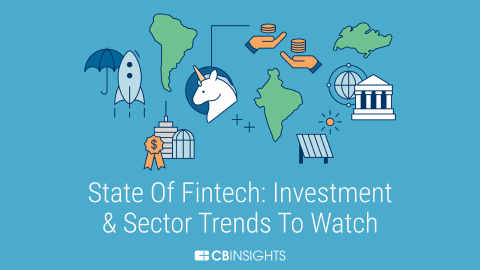
Global fintech investment across M&A, PE, and VC reached $135.7 billion across 2,693 deals in 2019.
The IMF note examines the institutional frameworks for fintech regulation and supervision across 10 selected jurisdictions.
In 2019, global VC-backed fintech funding reached $34.5B across 1,913 deals, a 15% year-over-year decline largely due to 2018 being inflated by Ant Financial's $14B round.