When Do Distributional Alarms Improve Downside Risk Control? Evidence from Four Equity Markets (Research Square)
SaveSummary
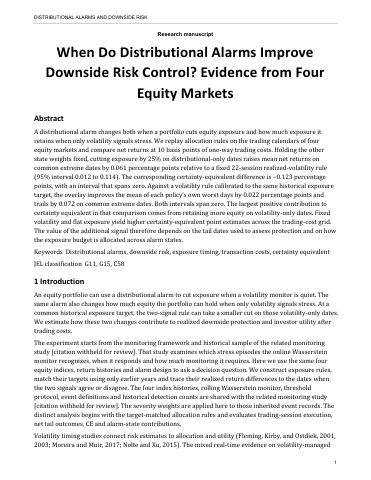
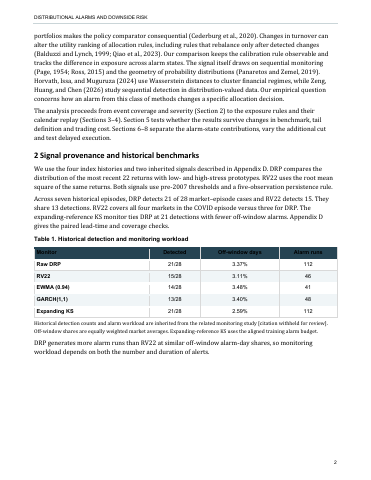
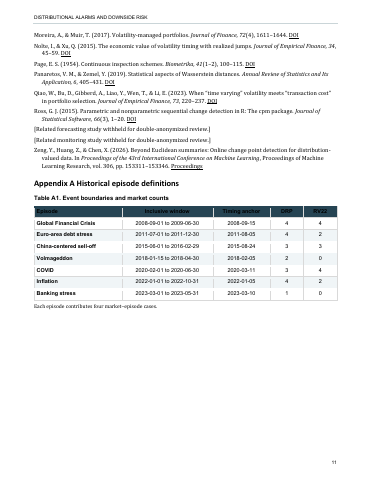
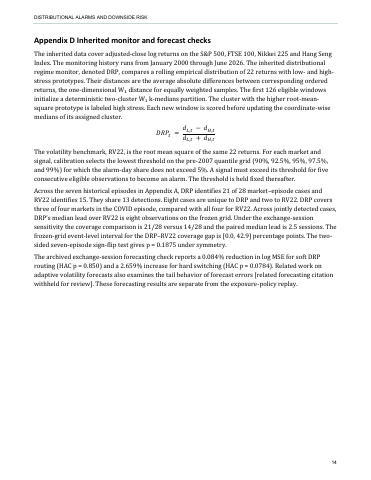
- Across seven historical market episodes, the DRP monitor detects 21 of 28 cases compared to 15 for RV22.p.3
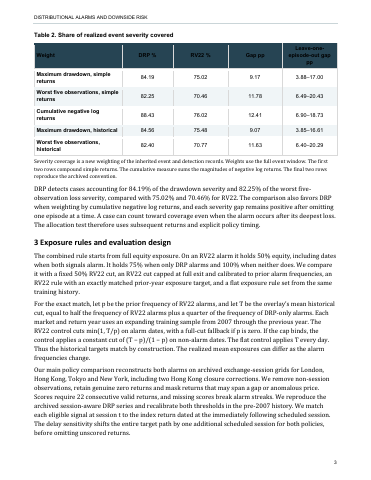
- DRP covers 84.19% of maximum drawdown simple-return severity versus 75.02% for RV22.p.4
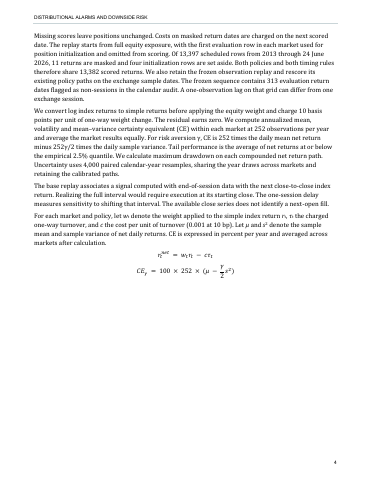
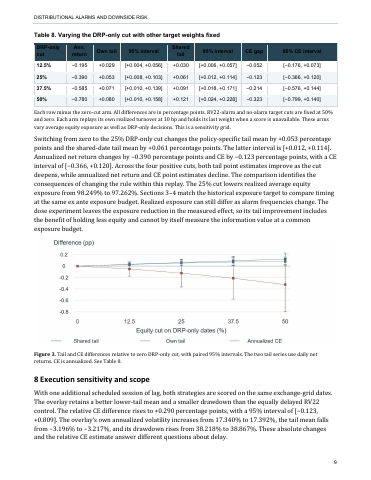
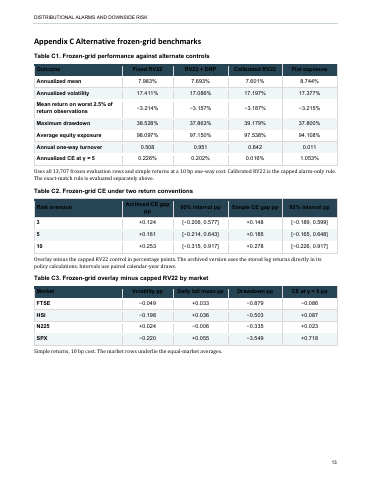
- Increasing the DRP-only cut from 0% to 25% improves the shared-tail mean return by 0.061 percentage points while reducing certainty equivalent by 0.123 percentage points.p.10
Key insights
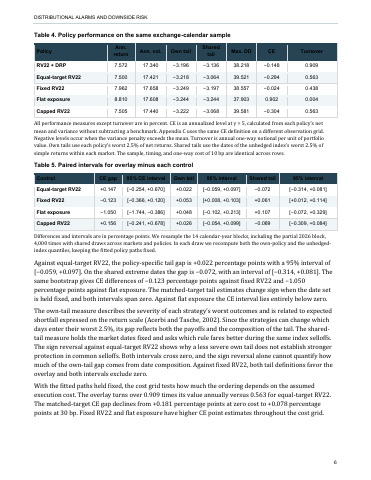
- Cutting exposure by 25% on DRP-only dates improves return on common extreme dates by 0.061 percentage points over a fixed RV22 rule.p.2
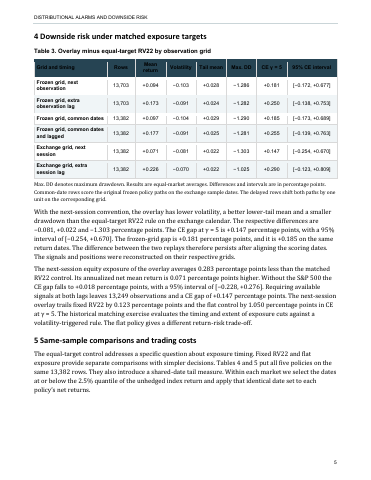
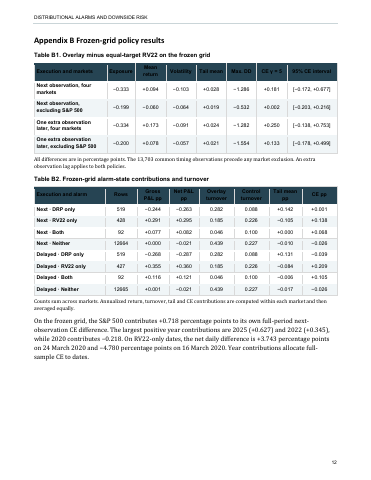
- The distributional overlay lowers volatility by 0.081 percentage points and maximum drawdown by 1.303 percentage points compared to an equal-target RV22 control on an exchange grid.p.6
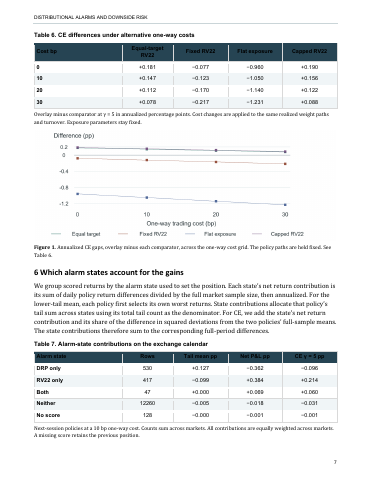
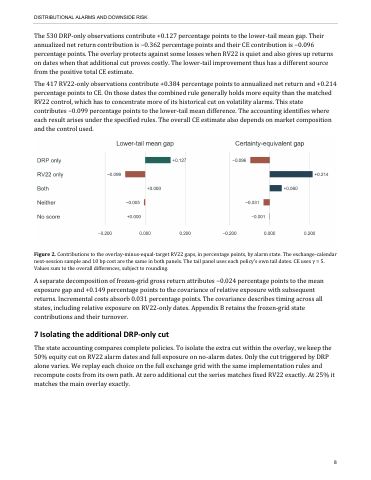
- Holding more equity on volatility-only dates generates the single largest positive contribution (+0.214 percentage points) to the certainty-equivalent difference over equal-target RV22.p.9
- The own-tail mean performance gap between the overlay and equal-target RV22 is +0.022 percentage points, but changes sign to -0.072 percentage points on shared unhedged index extreme dates.p.7
- Excluding the S&P 500 reduces the certainty-equivalent gap between the overlay and equal-target RV22 from +0.147 percentage points to +0.018 percentage points.p.6
- Deepening the DRP-only cut improves downside tail metrics monotonically but lowers overall annualized net return and certainty equivalent.p.10
- Introducing an extra session of execution lag increases the certainty-equivalent gap between the overlay and equal-target RV22 to +0.290 percentage points.p.10
Pages
 p.1
 p.2
 p.3
 p.4
 p.5
 p.6
 p.7
 p.8
 p.9
 p.10
 p.11
 p.12
 p.13
 p.14
 p.15
Topics and entities
Summary and figures generated from the document and checked automatically: every number shown appears on the cited page. Publishers can request removal.