The unintended effects of green finance development on corporate credit risk: a dual-channel analysis of financing and investment (Frontiers in Environmental Science)
SaveSummary
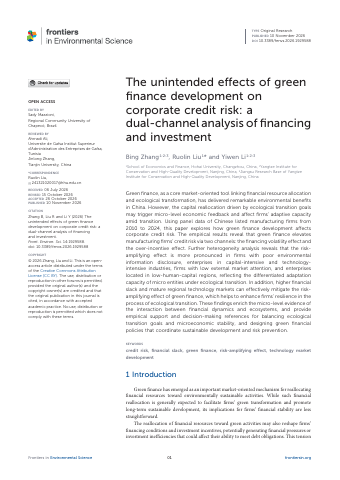
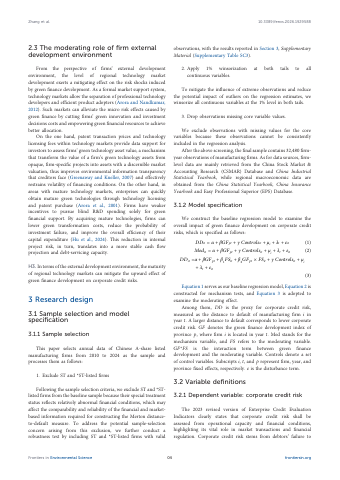
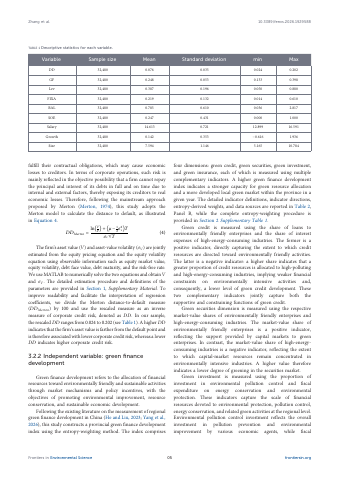
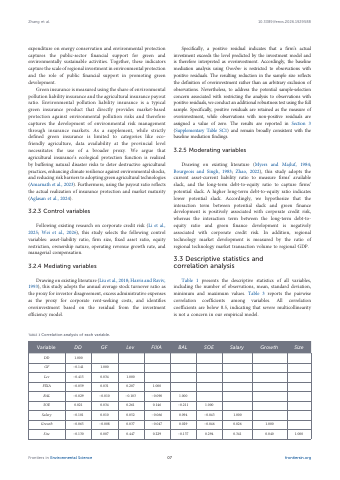
- The study analyzes panel data from 32,480 firm-year observations of Chinese listed manufacturing companies covering the period from 2010 to 2024.p.4
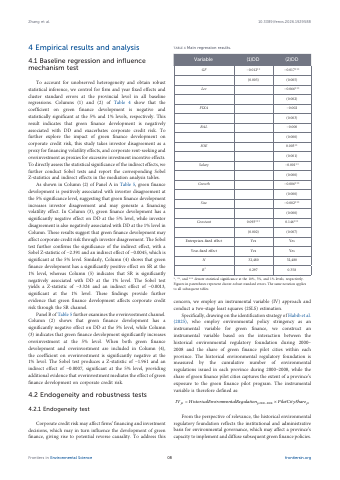
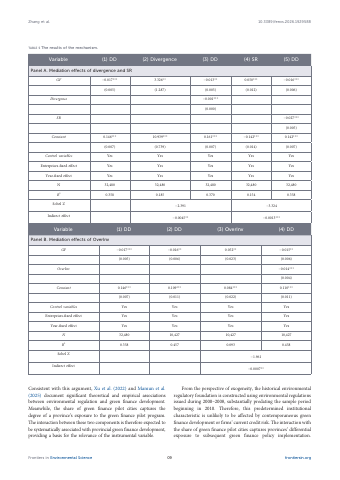
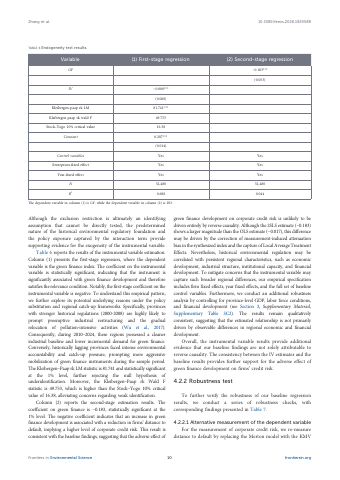
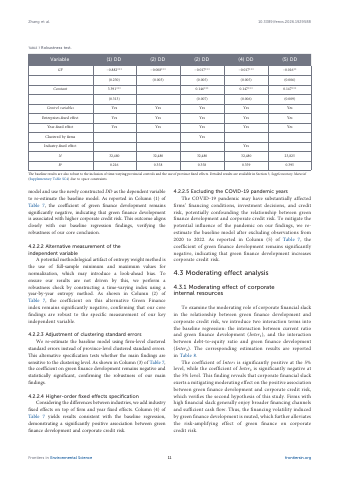
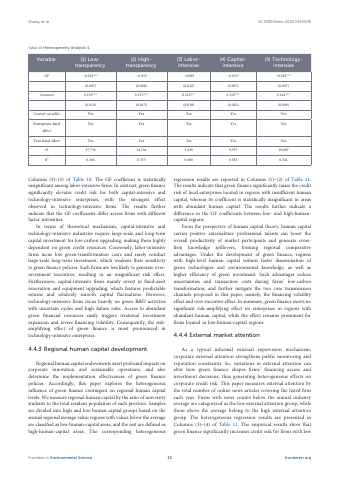
- The empirical findings show a baseline negative association between green finance development and distance to default (DD), with baseline regression coefficients of -0.012 and -0.017.p.8
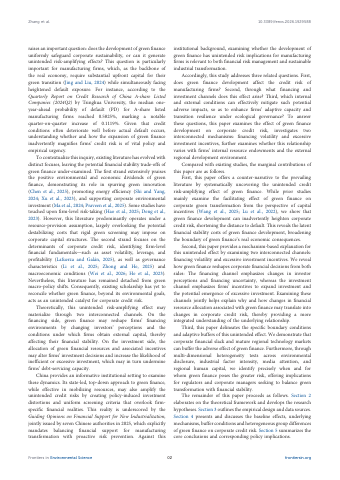
- The median one-year-ahead probability of default (PD) for A-share listed manufacturing firms reached 0.5825% in 2024Q2, reflecting a quarter-on-quarter increase of 0.1119%.p.2
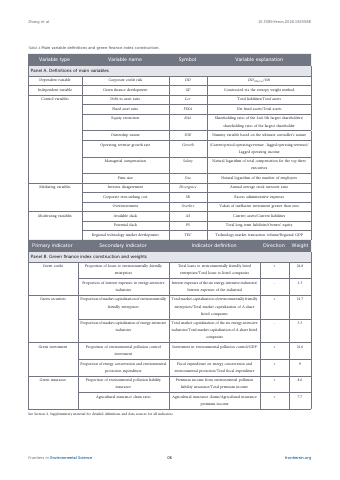
- The research identifies two specific transmission mechanisms driving heightened credit risk: financing volatility (investor disagreement) and excessive investment incentives (rent-seeking and overinvestment).p.8
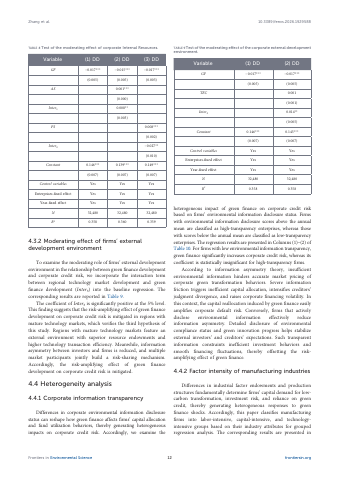
- Corporate internal available slack and mature regional technology markets act as mitigating factors against the risk-amplifying effects of green finance.p.12
Key insights
- Green finance development exhibits an unintended side effect by elevating corporate credit risk in Chinese listed manufacturing companies.p.1
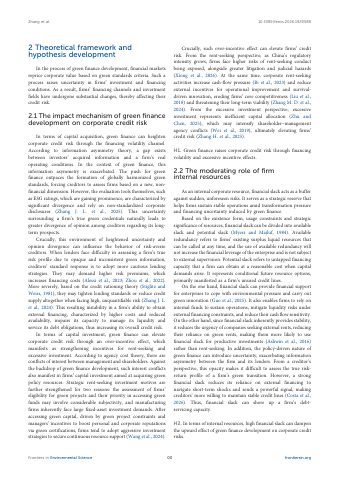
- Information asymmetry regarding green credentials drives investor disagreement, leading to heightened financing volatility for transitioning firms.p.3
- Green finance policies can induce excessive investment incentives, leading to corporate rent-seeking behaviors and inefficient capital allocation.p.3
- Having corporate financial slack buffers companies against sudden, unforeseen credit risks during green transition processes.p.3
- Developing regional technology markets helps reduce firm-level green innovation costs and mitigates financing volatility shocks.p.4
- Firms with low environmental information disclosure transparency suffer significantly higher default risks under green finance expansion.p.12
- The credit risk-amplifying impact of green finance is statistically significant in technology-intensive and capital-intensive sectors but insignificant in labor-intensive sectors.p.13
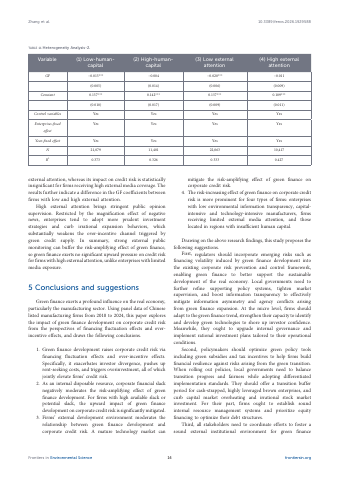
- High external public and media attention acts as a restraining mechanism against overinvestment and reduces credit risk escalation.p.14
Pages
 p.1
 p.2
 p.3
 p.4
 p.5
 p.6
 p.7
 p.8
 p.9
 p.10
 p.11
 p.12
 p.13
 p.14
 p.15
 p.16
Funders mentioned
Topics and entities
Summary and figures generated from the document and checked automatically: every number shown appears on the cited page. Publishers can request removal.