The Tradeoff Theory as a Method of Choosing Capital Structure: Effects of Debt and Tax on the Firm Value (Archives of Business Research)
SaveSummary
- Using the Extended Merton model, the paper finds that characteristics of the levered firm are inferior to those of the unlevered firm, contrary to the belief that medium-size debt is beneficial.p.1
- In a UK survey cited in the paper, 51% of firms seek to maintain a target debt level consistent with the trade-off theory, while 59% follow the pecking-order theory.p.12
- 32% of surveyed firms claim to follow both theories and 22% follow neither of them.p.12
- US SMEs make up 99.9% of all businesses, which motivates the example of two small- or medium-sized firms.p.15
- In the levered-firm example, a bank loan of A = 100 dollar units is taken for Tm = 5 yrs at r = 0.05, giving a total debt of 128.4 dollar units.p.18
Key insights
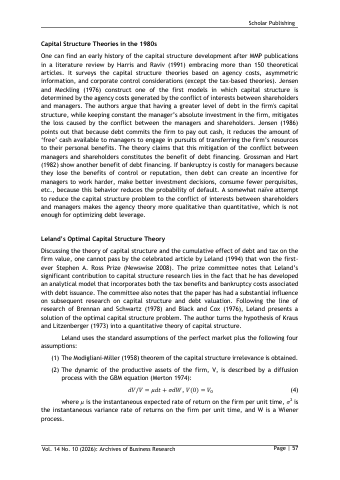
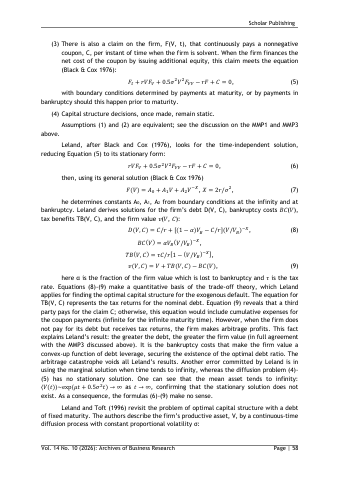
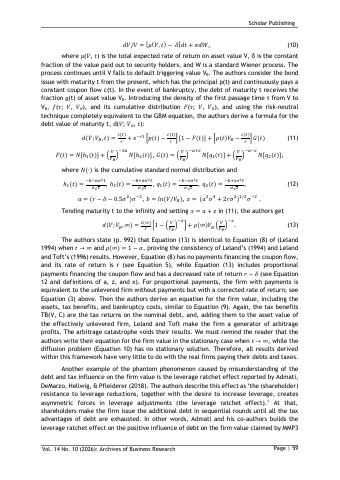
- Papers underpinning the trade-off theory do not consider debt redemption, which the author argues turns the firm into a generator of arbitrage profits.p.1
- Anticipated gains from tax deductions are described as phantoms created by errors in the earlier papers.p.1
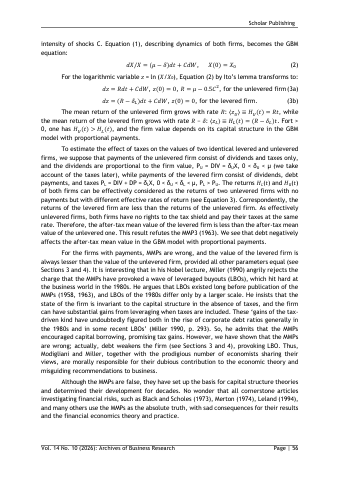
- The author argues that the use of the GBM equation, which includes no payments or investments, is the principal error of static and dynamic trade-off theories.p.2
- The paper argues that the firm value as a function of debt leverage has no maximum and is a monotonously decreasing function of debt.p.9
- Of UK firms surveyed, 51% seek a target debt level consistent with the trade-off theory and 59% report following the pecking-order theory.p.12
- After debt payment, the levered firm distribution falls to the left of the initial distribution, indicating that debt payment of this size is detrimental to asset growth.p.21
- The author concludes that there is no optimal debt level in the spirit of Leland and that debt negatively affects the levered firm value and stability.p.23
Pages
 p.1
 p.2
 p.3
 p.4
 p.5
 p.6
 p.7
 p.8
 p.9
 p.10
 p.11
 p.12
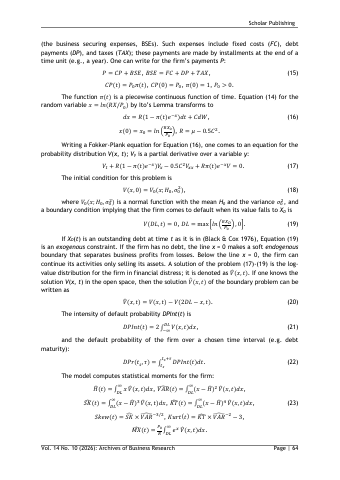 p.13
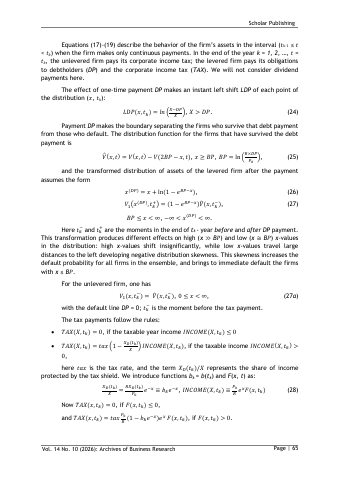 p.14
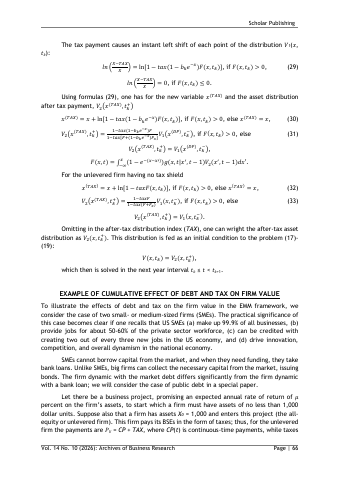 p.15
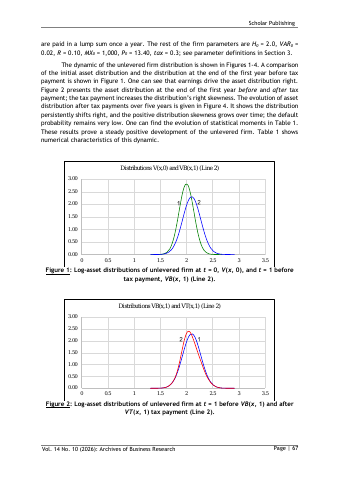 p.16
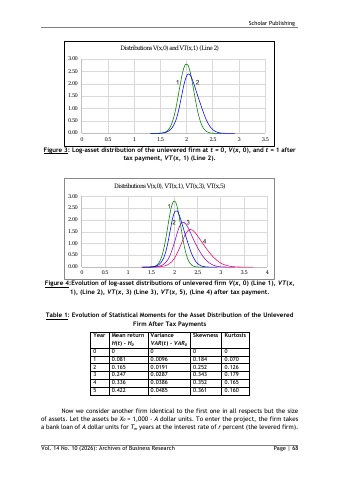 p.17
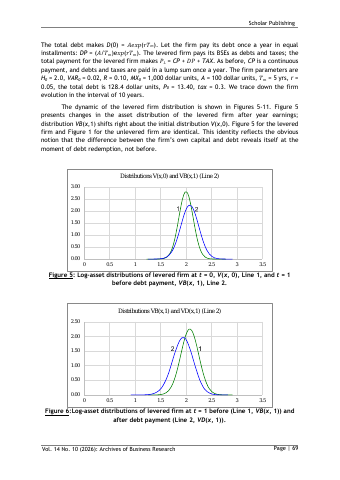 p.18
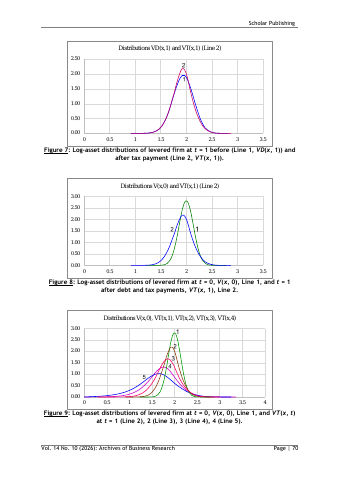 p.19
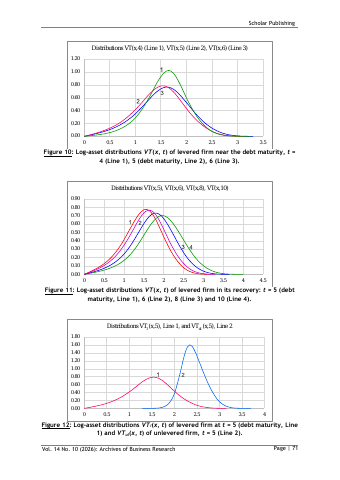 p.20
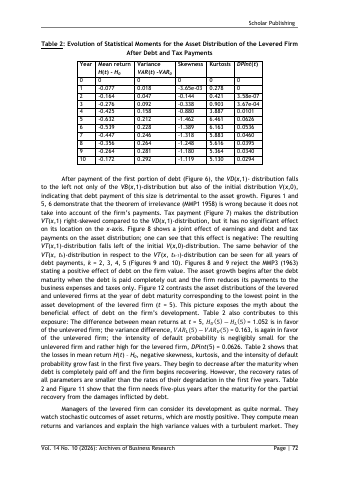 p.21
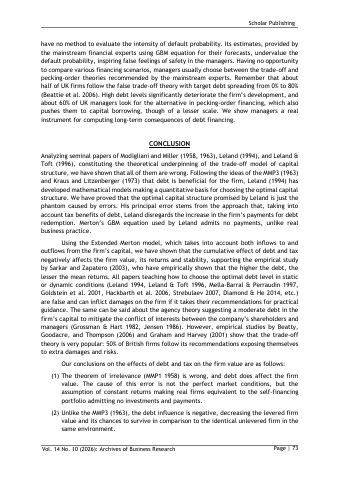 p.22
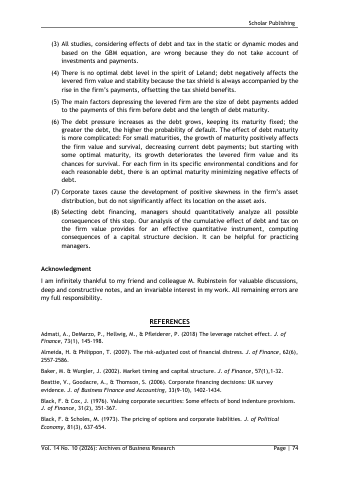 p.23
 p.24
 p.25
Funders mentioned
Topics and entities
Summary and figures generated from the document and checked automatically: every number shown appears on the cited page. Publishers can request removal.