Rethinking Infrastructure Financing in Nigeria: A Theoretical Analysis of Factors Influencing Alternative Financing Selection (International Journal of Earth Design and Innovation Research)
SaveSummary
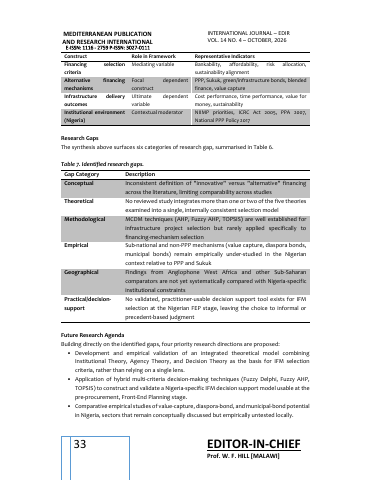
- Nigeria faces an infrastructure financing gap estimated at well above US$3 trillion over two decades to raise its infrastructure stock toward the 70% of GDP benchmark.p.2
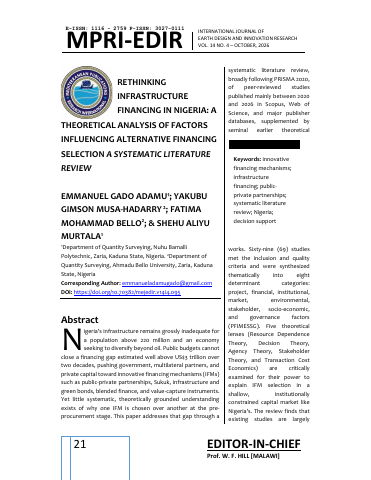
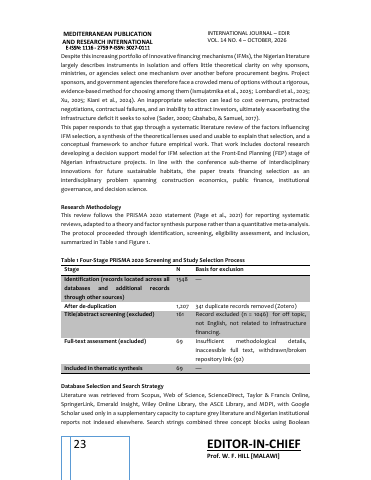
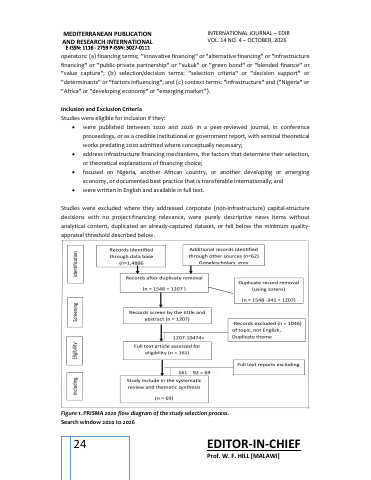
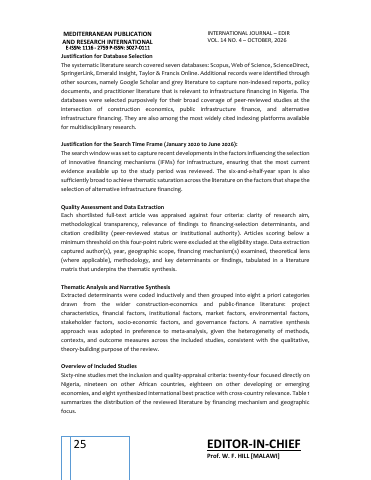
- A systematic literature review following PRISMA 2020 identified 69 peer-reviewed studies published mainly between 2020 and 2026 on infrastructure financing selection determinants.p.1
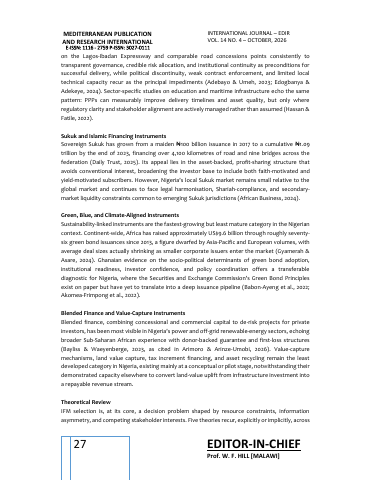
- Nigeria's Debt Management Office raised ₦1.09 trillion across six sovereign Sukuk issuances between 2017 and 2023 to finance road construction.p.2
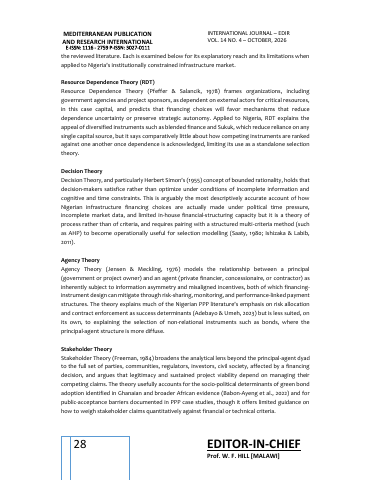
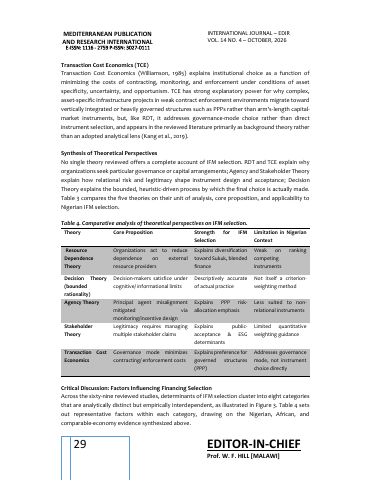
- The review critically examined 5 theoretical lenses—Resource Dependence Theory, Decision Theory, Agency Theory, Stakeholder Theory, and Transaction Cost Economics—for explaining financing choices.p.1
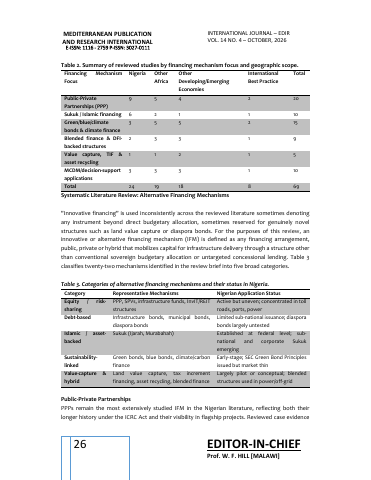
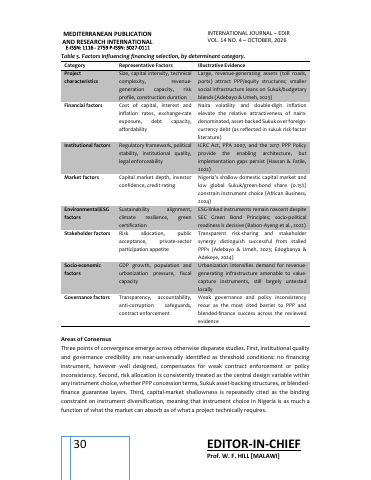
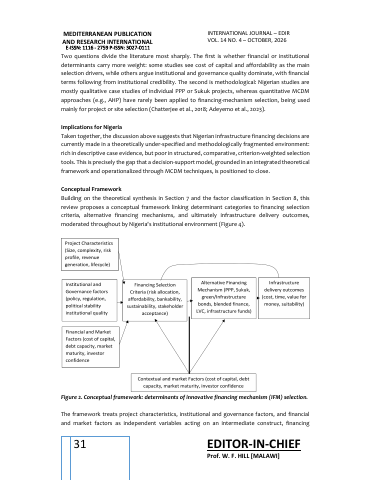
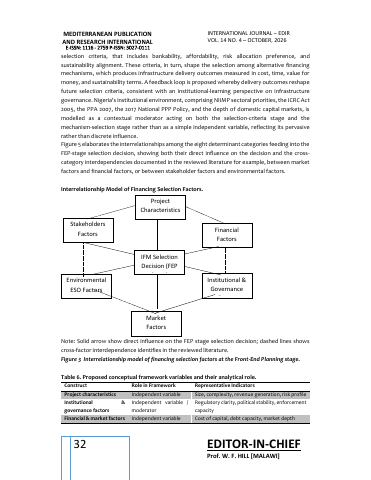
- The 69 synthesized studies were categorized into eight determinant groups: project, financial, institutional, market, environmental, stakeholder, socio-economic, and governance factors.p.1
Key insights
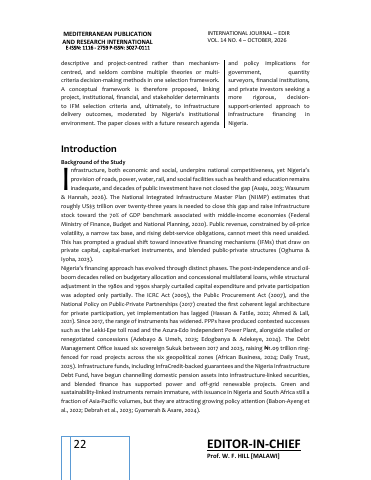
- Public budgetary allocations in Nigeria cannot meet an infrastructure financing requirement estimated at US$3 trillion over twenty-three years.p.2
- Sovereign Sukuk issuances in Nigeria generated ₦1.09 trillion by late 2023, funding over 4,100 kilometres of road networks and nine bridges across six geopolitical zones.p.7
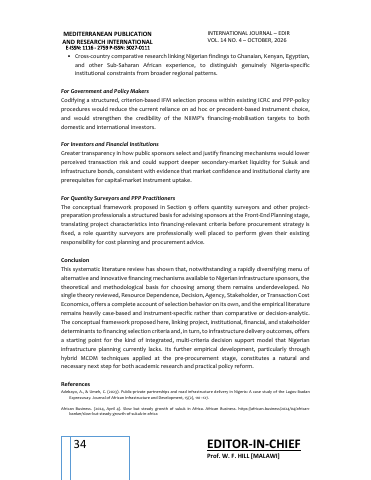
- No single economic or management theory provides a complete explanation for alternative infrastructure financing mechanism selection in Nigeria.p.9
- Nigeria's low share of global Sukuk and green bond markets at 0.15% underscores domestic capital market shallowness as a constraint on instrument choice.p.10
- Existing infrastructure research in Nigeria remains predominantly descriptive and project-centered rather than comparative or decision-support focused.p.2
Pages
 p.1
 p.2
 p.3
 p.4
 p.5
 p.6
 p.7
 p.8
 p.9
 p.10
 p.11
 p.12
 p.13
 p.14
 p.15
 p.16
Funders mentioned
Topics and entities
Summary and figures generated from the document and checked automatically: every number shown appears on the cited page. Publishers can request removal.