Operationalising the Impact-Finance Protocol: Institutional Architecture and the Role of DLT in Digital Sustainable Finance (Frontiers in Blockchain)
SaveSummary
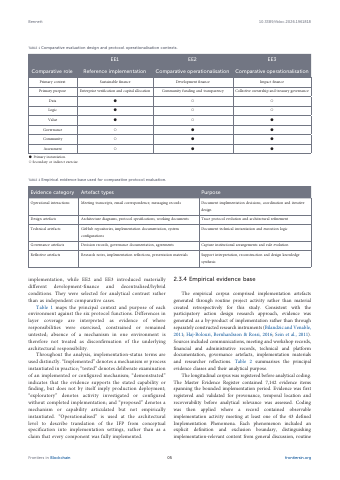
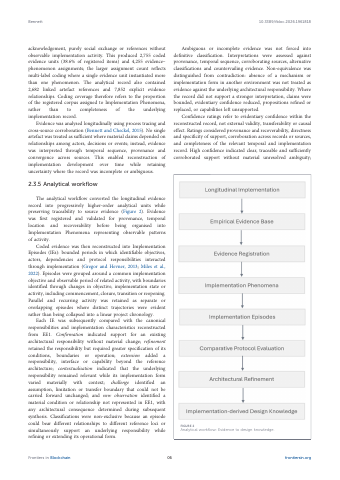
- The coded evidence base comprised 2,755 evidence units (38.6% of registered items) and 4,255 evidence–phenomenon assignments.p.6
- The analytical record also contained 2,682 linked artefact references and 7,852 explicit evidence relationships.p.6
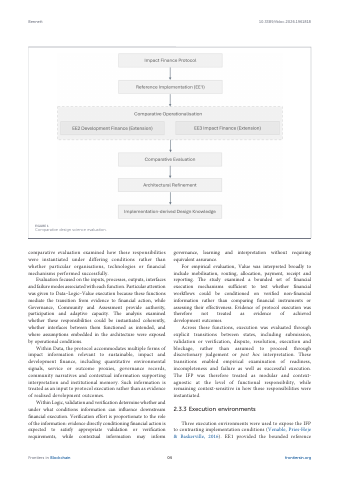
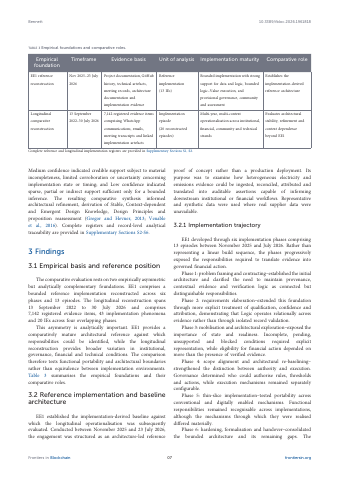
- The longitudinal comparative reconstruction drew on 7,142 registered evidence items across 20 reconstructed episodes.p.7
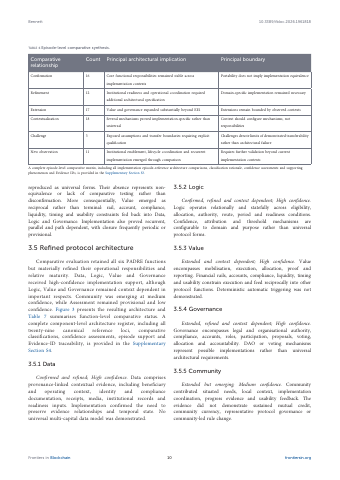
- Episode-level comparison found 16 confirmations, 12 refinements, 17 extensions, 18 contextualisations, 3 challenges and 11 new observations.p.10
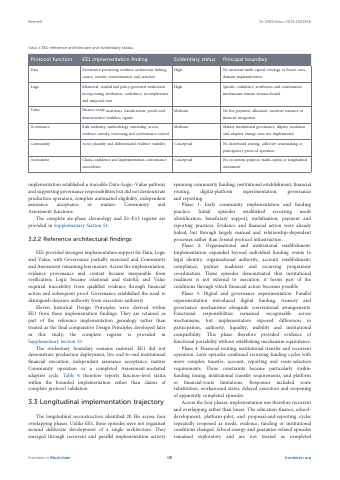
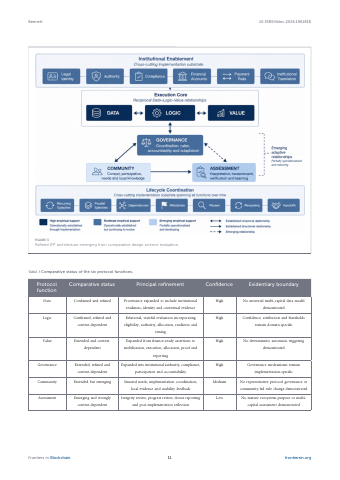
- Data, Logic, Value and Governance were rated high confidence, Community medium and Assessment low.p.11
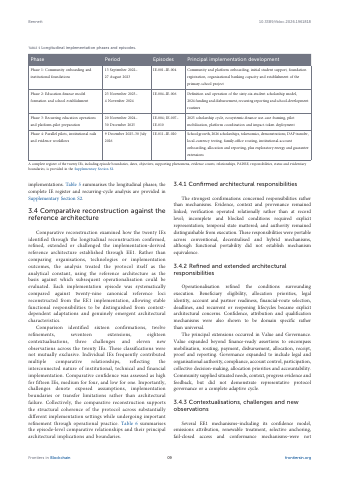
- The reference implementation reconstruction (EE1) covered 13 implementation episodes between Nov 2025 and 23 July 2026.p.7
Key insights
- Impact information is still used mainly for reporting and retrospective assessment rather than as an operational input into financial decisions.p.1
- The reference implementation gave strong support for Data and Logic, but no live payment, allocation or incentive issuance was demonstrated for Value.p.8
- Value proved reciprocal rather than terminal: Data informs Logic, Logic conditions Value, and payment-route constraints feed back into Data, Logic and Governance.p.15
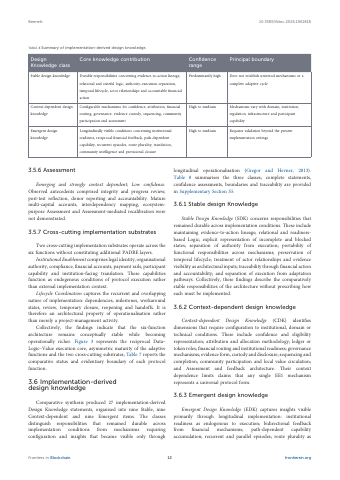
- DLT-related mechanisms such as selective anchoring were optional and context-dependent rather than architecturally required.p.16
- Financial-system designers should represent blocked, incomplete and pending states explicitly instead of forcing binary decisions.p.17
- Assessment remains emerging and strongly context dependent, with no mature ecosystem-purpose or multi-capital assessment demonstrated.p.11
- The six functional responsibilities of the protocol remain analytically coherent, but their empirical expression varies by context.p.18
Pages
 p.1
 p.2
 p.3
 p.4
 p.5
 p.6
 p.7
 p.8
 p.9
 p.10
 p.11
 p.12
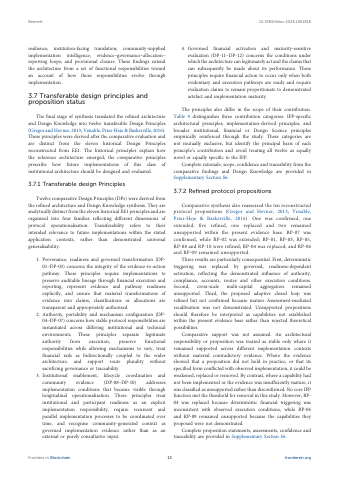 p.13
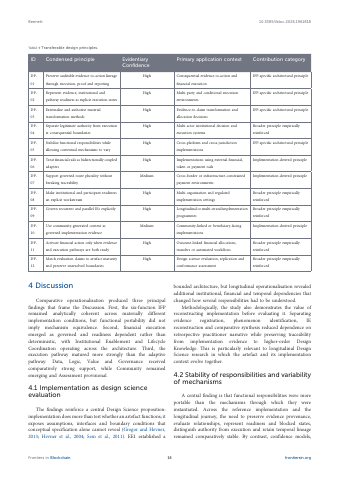 p.14
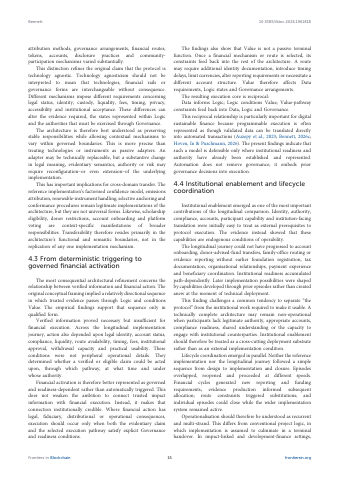 p.15
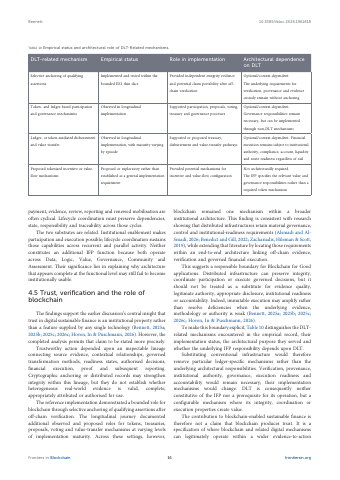 p.16
 p.17
 p.18
 p.19
 p.20
Funders mentioned
Topics and entities
Summary and figures generated from the document and checked automatically: every number shown appears on the cited page. Publishers can request removal.