Legal Analysis of Foreign Direct Investment Joint Venture Schemes in Renewable Energy Development in Indonesia: Case Study of the PT PLN Indonesia Power and GCL Intelligent Energy Consortium (Jurnal Hukum Indonesia)
SaveSummary
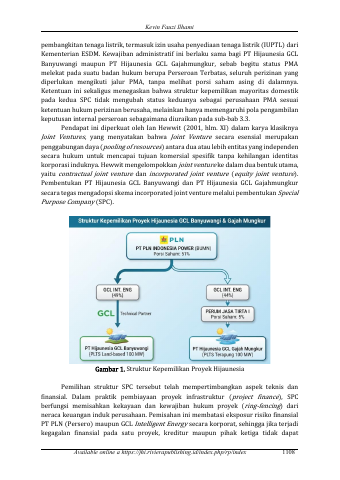
- The 100 MW Banyuwangi photovoltaic project is held through PT Hijaunesia GCL Banyuwangi, with 51% PLN IP and 49% GCL.p.1
- The 100 MWac Gajahmungkur floating solar project is held through PT Hijaunesia GCL Gajahmungkur, with 51% PLN IP, 44% GCL and 5% Perum Jasa Tirta I.p.1
- Under the earlier negative investment list, generation above 1 MW up to 10 MW limited foreign ownership to 49%, while above 10 MW allowed up to 95%.p.9
- Generation capacity above 10 MW has since been opened to 100% foreign ownership without a domestic partnership obligation.p.9
- GCL holds reserved matters requiring qualified approval of 75% or even 100% of votes for strategic corporate actions.p.10
- Solar panels generally have an operational life of 20 to 25 years.p.5
Key insights
- The 51% majority stake of SOEs reflects the constitutional doctrine of state control under Article 33 paragraph (3) of the 1945 Constitution.p.1
- The decision to keep 51% for PT PLN Indonesia Power is a voluntary corporate policy, not compliance with a legally mandated foreign ownership limit.p.9
- A 51% stake alone does not allow PLN Indonesia Power to unilaterally amend the articles of association or dissolve the SPC.p.10
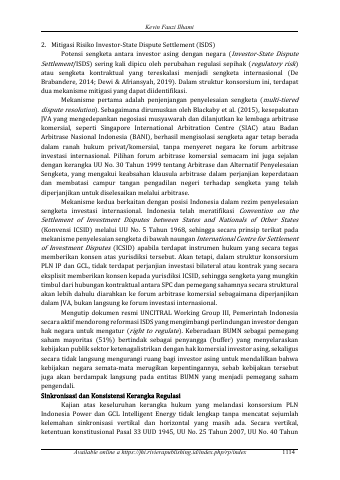
- Indonesia ratified the ICSID Convention through Law No. 5 of 1968.p.13
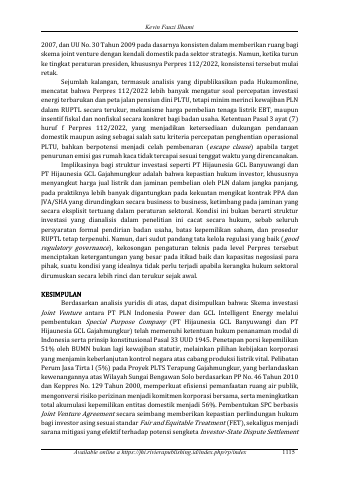
- Perpres 112/2022 does not specify the mechanism and formula for renewable power purchase prices, so investor certainty relies largely on PPA contracts.p.12
- Including Perum Jasa Tirta I in the ownership structure turns water-space permitting risks into a shared corporate commitment.p.11
Pages
 p.1
 p.2
 p.3
 p.4
 p.5
 p.6
 p.7
 p.8
 p.9
 p.10
 p.11
 p.12
 p.13
 p.14
 p.15
 p.16
 p.17
Funders mentioned
Topics and entities
Summary and figures generated from the document and checked automatically: every number shown appears on the cited page. Publishers can request removal.